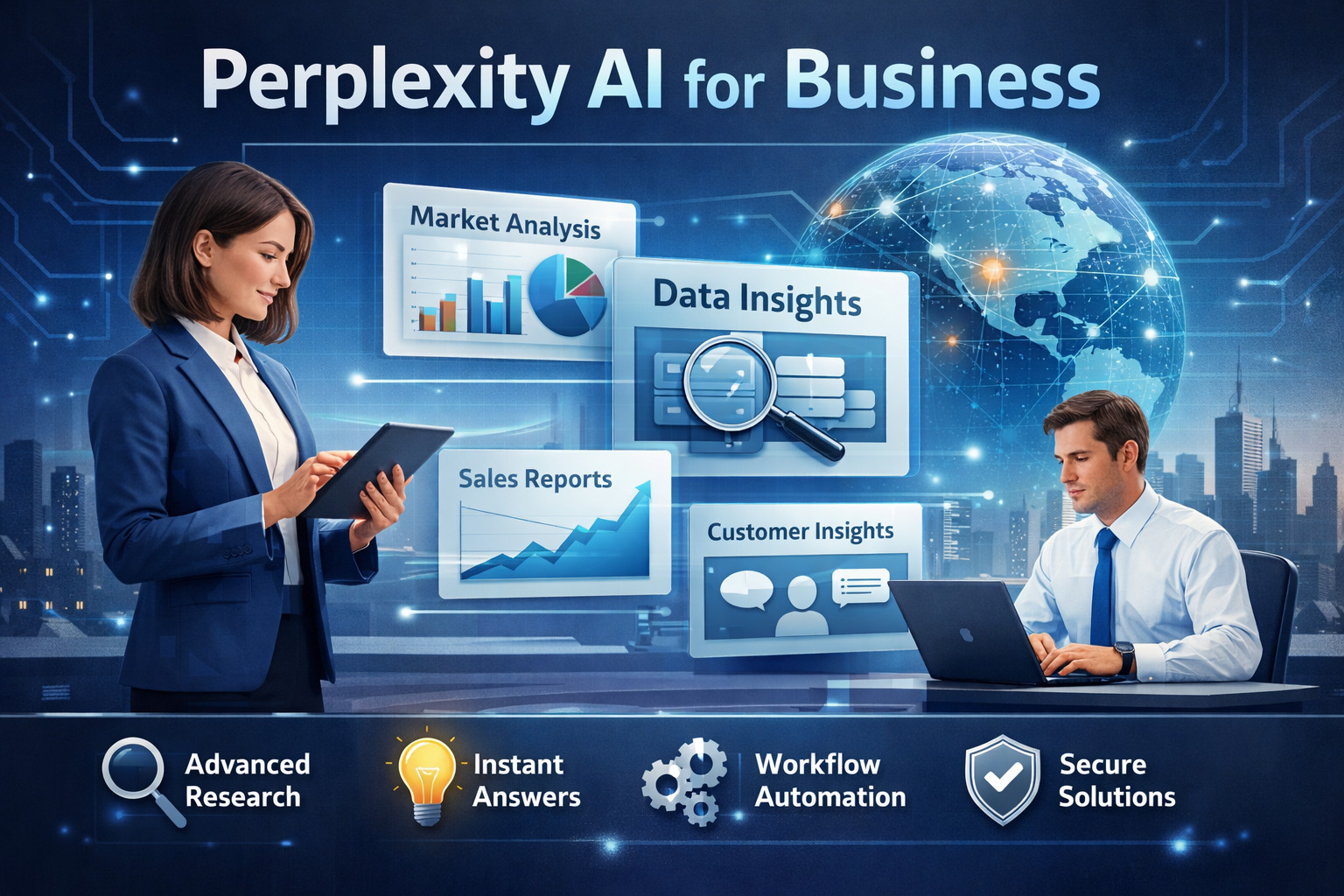
Let’s be honest—business today moves fast. Blink, and your competitor has already launched a new product, optimized their marketing funnel, and captured your audience’s attention. In this high-speed digital economy, information isn’t just power—it’s survival. That’s exactly why understanding How To Use Perplexity AI for Business can give you a serious competitive edge. That’s where Perplexity AI steps in.
Perplexity AI isn’t just another chatbot. It’s a research-focused AI platform designed to provide accurate, source-backed answers in real time. Think of it as having a highly skilled research analyst sitting beside you 24/7—one who reads thousands of web pages in seconds and presents summarized insights with citations.
For businesses, this is a game changer. Whether you’re conducting market research, analyzing competitors, planning marketing campaigns, or developing new products, the speed and depth of insights you can gather directly affect your bottom line. Instead of juggling dozens of browser tabs, spreadsheets, and scattered notes, you can ask Perplexity AI focused questions and receive organized, referenced responses.
But here’s the thing: using Perplexity AI effectively requires strategy. It’s not just about asking random questions. It’s about knowing how to structure your queries, verify information, and integrate insights into your workflow.
In this guide, we’ll break down exactly how to use Perplexity AI for business—from market research and content marketing to sales strategy and operational improvements. By the end, you won’t just understand what Perplexity AI does—you’ll know how to turn it into a competitive advantage.
What Is Perplexity AI?

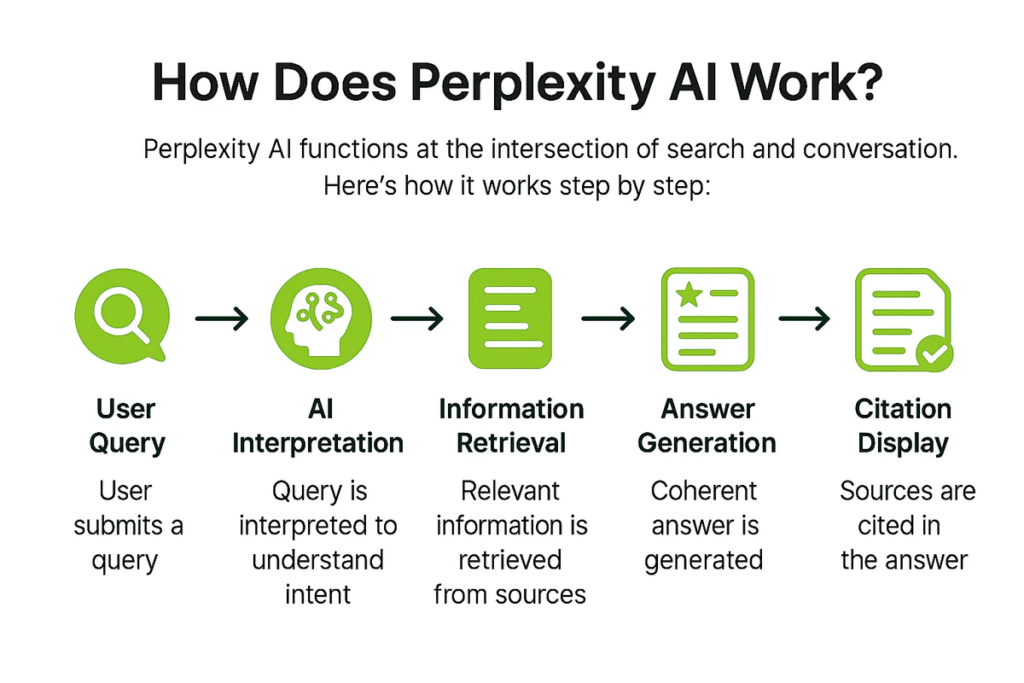
Perplexity AI is an AI-powered research and answer engine that combines conversational AI with real-time web search capabilities. Unlike traditional search engines that give you a list of blue links, Perplexity delivers direct answers backed by sources. It doesn’t just tell you something—it shows you where the information came from.
At its core, Perplexity AI functions as:
- A real-time research assistant
- A summarized search engine
- A citation-backed information tool
- A conversational AI platform
Imagine asking, “What are the top SaaS marketing trends in 2026?” Instead of scrolling through ten different blog posts, you receive a synthesized summary with clickable sources. That means less time searching and more time analyzing.
For business owners, this changes how research is done. Traditionally, research meant hours of reading, comparing data, and verifying credibility. Now, you can compress that process into minutes.
Another standout feature is transparency. Each response includes citations, making it easier to validate data before making business decisions. This is critical. Decisions based on unverified AI outputs can be risky, but Perplexity reduces that risk by showing you exactly where the information comes from.
In simple terms, Perplexity AI blends the intelligence of AI conversation with the reliability of referenced research. It’s like combining Google, Wikipedia, and a research analyst into one streamlined platform.
And for businesses that rely on fast, informed decision-making? That’s not just useful—it’s powerful.
How Perplexity AI Differs from Traditional Search Engines
Let’s compare two scenarios.
You open Google and type: “Best CRM software for small businesses.” You get ads, sponsored content, SEO-optimized blog posts, affiliate articles, and comparison websites. Now you have to filter through marketing bias, check publication dates, compare features, and verify credibility.
Now imagine asking Perplexity AI the same question.
Instead of links, you receive a structured summary of top CRM options, key features, pricing considerations, pros and cons, and cited sources. The difference is clear: Perplexity focuses on answers, not rankings.
Traditional search engines prioritize:
- SEO optimization
- Paid advertising
- Keyword matching
- Website authority
Perplexity AI prioritizes:
- Direct answers
- Summarization
- Context understanding
- Source citation
For businesses, this means less noise and more clarity.
Another major difference is conversational continuity. With Google, each query starts fresh. With Perplexity, you can ask follow-up questions naturally. For example:
- “Which CRM integrates best with Shopify?”
- “What are the pricing tiers?”
- “Which option scales best for enterprise growth?”
The AI remembers context, building layered insights over time. It’s like having an interactive strategy session instead of performing isolated searches.
However, this doesn’t mean you should abandon traditional search engines. Instead, think of Perplexity as a strategic research partner. Use it for synthesis and insight generation, and then validate deeper findings when necessary.
In business, speed plus accuracy equals advantage. Perplexity AI compresses research time while maintaining transparency—something traditional search engines were never designed to do.
Why Businesses Are Turning to AI-Powered Research Tools
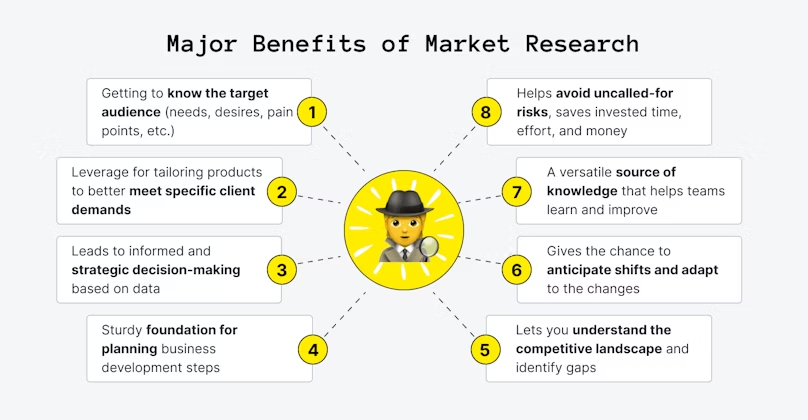
Business used to reward those who had the most information. Today, it rewards those who can process information the fastest. That’s a huge shift. We’re drowning in data—reports, whitepapers, blog posts, industry updates, financial statements, customer reviews, social media chatter. The real challenge isn’t access anymore. It’s filtration and interpretation.
That’s exactly why businesses are turning to AI-powered research tools like Perplexity AI.
Think about your average workday. How much time do you or your team spend searching for data? How often do you open 10 tabs, skim articles, copy-paste notes, then try to make sense of everything? It’s inefficient. It’s exhausting. And honestly, it’s outdated.
AI-powered research tools streamline that chaos. Instead of manually scanning sources, Perplexity AI reads and summarizes for you. It identifies patterns, extracts key insights, and presents digestible answers—with citations. That last part is critical. Business decisions need evidence, not guesses.
Here’s why companies are adopting these tools rapidly:
- Speed: Research that once took hours now takes minutes.
- Scalability: Small teams can perform enterprise-level research.
- Cost savings: Less reliance on external research consultants.
- Competitive advantage: Faster insight equals faster action.
Imagine a startup founder evaluating market entry into a new region. Traditionally, that means commissioning market research reports, reading government data, studying competitor websites, and analyzing industry forecasts. With Perplexity AI, much of the preliminary research can be synthesized instantly.
But there’s another reason businesses are embracing AI research tools: decision fatigue. Leaders make hundreds of micro-decisions daily. Having a tool that condenses complex information reduces cognitive load. It clears mental space for strategic thinking.
In a world where timing matters, AI-powered research tools aren’t optional luxuries. They’re becoming foundational infrastructure for smart businesses.
Understanding the Core Features of Perplexity AI
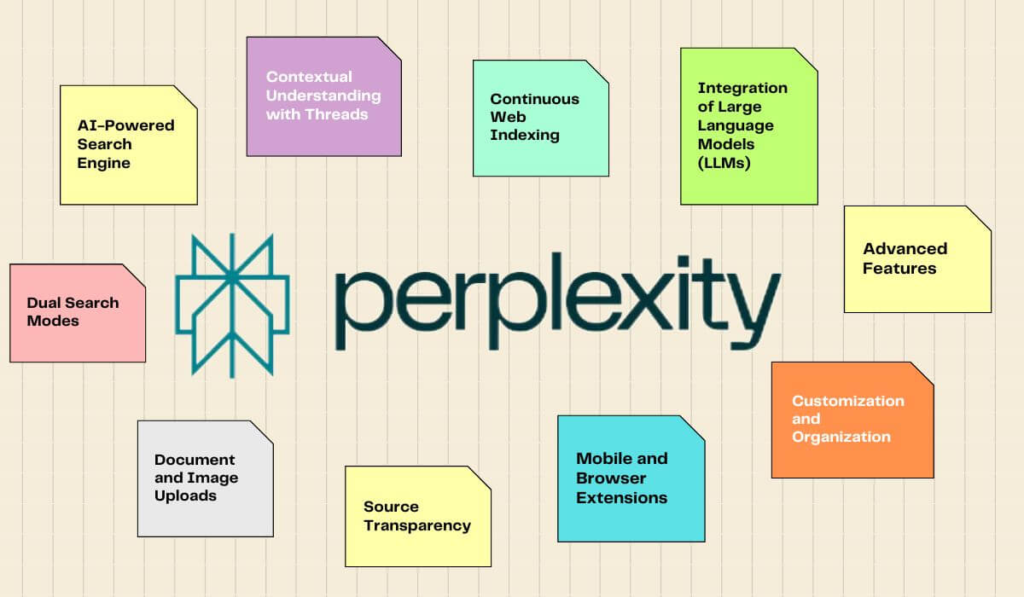
Before using any tool strategically, you need to understand its engine. Perplexity AI isn’t magic—it’s a set of powerful features working together. When you understand those features, you can unlock its full business potential.
Let’s break down the most important ones.
Real-Time Web Search Capabilities
Unlike static AI models trained only on historical data, Perplexity AI can pull information from the live web. That means when you ask about current stock trends, emerging technologies, or recent regulatory changes, you’re not getting outdated information.
For businesses, this is crucial. Imagine researching:
- New compliance regulations
- Current competitor pricing
- Breaking industry news
- Updated consumer behavior statistics
Outdated data can lead to costly mistakes. Real-time access reduces that risk.
It’s like having a news radar scanning the internet continuously, filtering only what matters to your question.
Source Citations and Transparency
One of the biggest criticisms of AI tools is hallucination—generating confident but incorrect information. Perplexity addresses this by citing sources directly in its responses.
This matters enormously in business. You wouldn’t make a million-dollar decision based on a rumor, right? Citations allow you to:
- Verify credibility
- Check original context
- Assess bias
- Cross-reference findings
Transparency builds trust. And in business, trust in data is everything.
Conversational Research Interface
Research isn’t linear. You ask one question, which leads to another. Perplexity supports follow-up queries without losing context.
For example:
- “What are the top fintech trends in 2026?”
- “Which of these trends is attracting the most venture capital?”
- “What regions are leading in fintech investment?”
Instead of starting over each time, you build layered intelligence. It’s dynamic, like having a strategic brainstorming session with an analyst.
File Upload and Document Analysis
Some versions of Perplexity allow document analysis. This means you can upload reports, PDFs, or internal documents and ask questions about them.
Imagine uploading:
- A 100-page market report
- Your competitor’s annual report
- Internal sales performance data
Instead of reading line by line, you can ask:
- “What are the key growth drivers mentioned?”
- “Summarize risks outlined in this report.”
- “Identify revenue trends.”
This saves enormous time and enhances internal productivity.
Understanding these features isn’t just technical knowledge—it’s strategic leverage. When used properly, Perplexity AI becomes a high-speed research engine embedded in your business workflow.
Benefits of Using Perplexity AI for Business
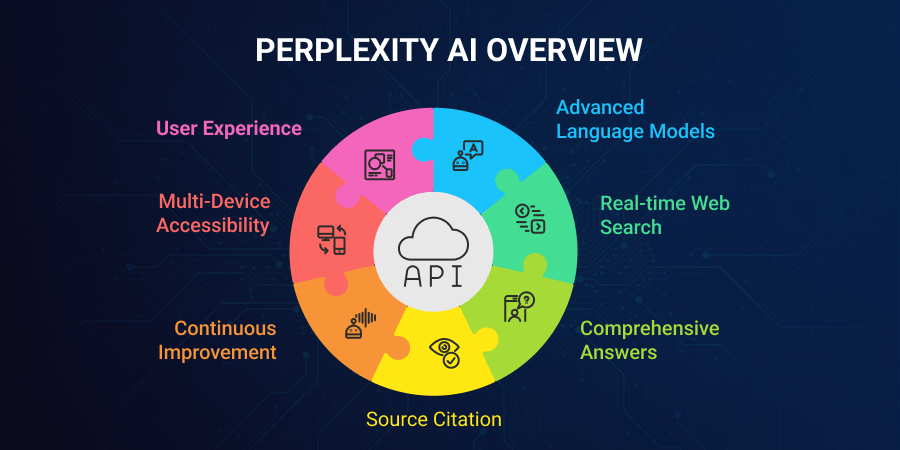
Now let’s move from features to impact. What does all this actually mean for your business?
The benefits go far beyond convenience.
Faster Market Research
Market research used to be a slow, expensive process. You’d commission reports, conduct surveys, and spend weeks compiling insights. Perplexity accelerates the initial research phase dramatically.
You can quickly identify:
- Industry size and growth rates
- Emerging competitors
- Consumer behavior patterns
- Regulatory landscapes
This speed allows businesses to test ideas faster. And in entrepreneurship, speed often beats perfection.
Improved Decision-Making
Good decisions require good information. Perplexity AI doesn’t replace human judgment—but it enhances it.
By presenting summarized, sourced insights, leaders can:
- Compare multiple viewpoints
- Analyze trends
- Identify risks
- Validate assumptions
Instead of relying on gut feeling alone, decisions become data-informed.
Cost Efficiency and Productivity Gains
Hiring research analysts or consultants can be expensive. While AI doesn’t replace expert analysis entirely, it reduces dependency for preliminary research.
Small businesses especially benefit. With limited budgets, they can now access high-level research capabilities previously reserved for large enterprises.
Time savings also translate to financial savings. If your team spends 30% less time researching and 30% more time executing, that’s a productivity boost with real revenue impact.
Competitive Intelligence Advantage
Understanding competitors is critical. Perplexity can help analyze:
- Product positioning
- Pricing strategies
- Recent funding rounds
- Market expansion plans
Competitive intelligence used to require detective-level effort. Now, much of the groundwork can be streamlined.
In business, knowledge gaps are vulnerabilities. Perplexity helps close those gaps quickly.
How to Use Perplexity AI for Market Research
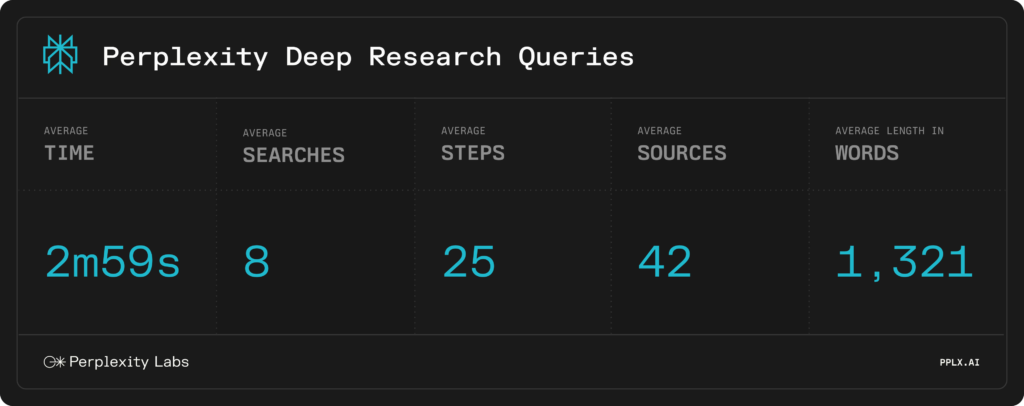
Market research is one of the strongest use cases for Perplexity AI. But here’s the key: it’s not about asking vague questions. Precision matters.
Let’s break down how to use it effectively.
Identifying Industry Trends
Start broad, then narrow down.
Instead of asking:
“What’s happening in e-commerce?”
Ask:
“What are the top emerging e-commerce trends in North America for 2026, with supporting data?”
Specificity yields stronger answers.
Then follow up:
- “Which trend shows the highest growth rate?”
- “What consumer demographics are driving this trend?”
- “What risks are associated with this trend?”
Layering questions builds depth.
Competitor Analysis
You can analyze competitors by asking:
- “What are the key strengths and weaknesses of [Competitor Name]?”
- “What differentiates their product offering?”
- “What recent partnerships or expansions have they announced?”
Perplexity can summarize news, company reports, and reviews.
For deeper analysis, combine it with structured frameworks like SWOT:
| Category | Questions to Ask Perplexity |
|---|---|
| Strengths | What advantages does the company highlight? |
| Weaknesses | What criticisms appear in reviews? |
| Opportunities | What market trends favor them? |
| Threats | What regulatory or competitive risks exist? |
This transforms raw research into strategic insight.
Customer Insights and Behavior Research
Understanding customers is gold.
Ask:
- “What factors influence purchasing decisions in the fitness app market?”
- “What are common complaints about budget airlines?”
- “What demographics are adopting electric vehicles fastest?”
Perplexity can surface consumer reports, surveys, and industry analysis.
The trick is to cross-reference. Always check cited sources before implementing large-scale changes.
Market research isn’t just about collecting data. It’s about interpreting signals. Perplexity AI accelerates signal detection—so you can act faster than competitors.
Using Perplexity AI for Content Marketing
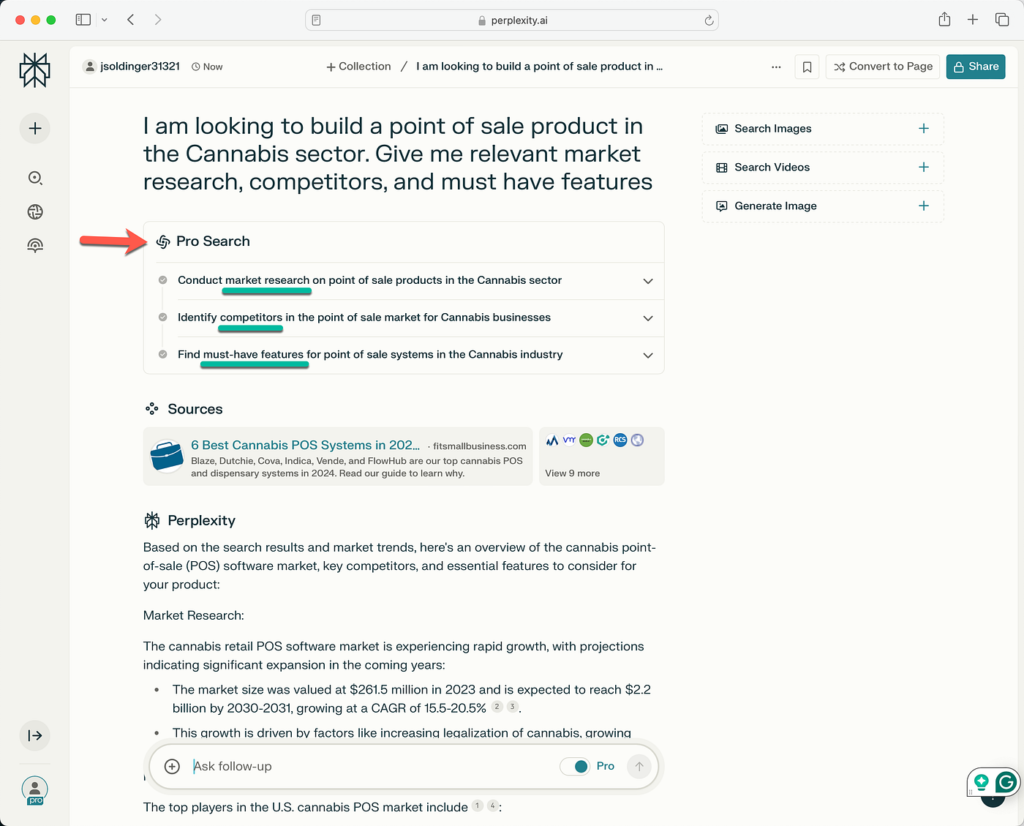
Content marketing runs on one fuel: information. If your information is outdated, shallow, or inaccurate, your content will flop. But if your insights are timely, well-researched, and strategic, your content becomes a magnet for traffic and trust. This is where Perplexity AI becomes incredibly useful.
Instead of spending hours researching statistics, trends, and expert opinions, you can use Perplexity to gather structured, source-backed insights quickly. But here’s the key: don’t just ask it to “write a blog post.” Use it as a research accelerator, not a content crutch.
Generating Blog Post Ideas
Creative block happens. You sit down to brainstorm ideas and… nothing. With Perplexity AI, you can spark ideation by asking:
- “What are trending topics in B2B SaaS marketing in 2026?”
- “What questions are small business owners asking about tax planning?”
- “What are common challenges faced by remote teams?”
Because Perplexity pulls real-time information, your ideas are grounded in current conversations—not recycled content from five years ago.
Once you get a list, dig deeper:
- “Which of these topics has growing search demand?”
- “What angle hasn’t been covered extensively?”
That’s how you move from generic content to strategic content.
Creating SEO-Optimized Content Briefs
Instead of guessing what to include in your article, use Perplexity to outline essential elements:
- Key subtopics
- Supporting statistics
- Expert quotes
- Frequently asked questions
- Relevant case studies
Ask:
“What key subtopics should be covered in a comprehensive guide about sustainable packaging for e-commerce?”
You’ll get structured suggestions with references. From there, build a detailed content brief for your writers. This ensures depth, authority, and SEO relevance.
Fact-Checking and Source Verification
Nothing destroys credibility faster than incorrect data. Before publishing, verify:
- Industry statistics
- Market size numbers
- Legal references
- Financial projections
Perplexity provides citations, which means you can click through and confirm. That transparency makes it a powerful editorial companion.
Repurposing Content Across Platforms
Let’s say you’ve written a long-form article. Use Perplexity to extract:
- Key statistics for social media posts
- Summary points for LinkedIn articles
- Data-driven talking points for webinars
- FAQ sections for landing pages
It’s like squeezing every drop of juice from a single orange. One research session can fuel multiple content formats.
In short, Perplexity AI strengthens your content marketing by making it smarter, faster, and more credible.
Leveraging Perplexity AI for Business Strategy
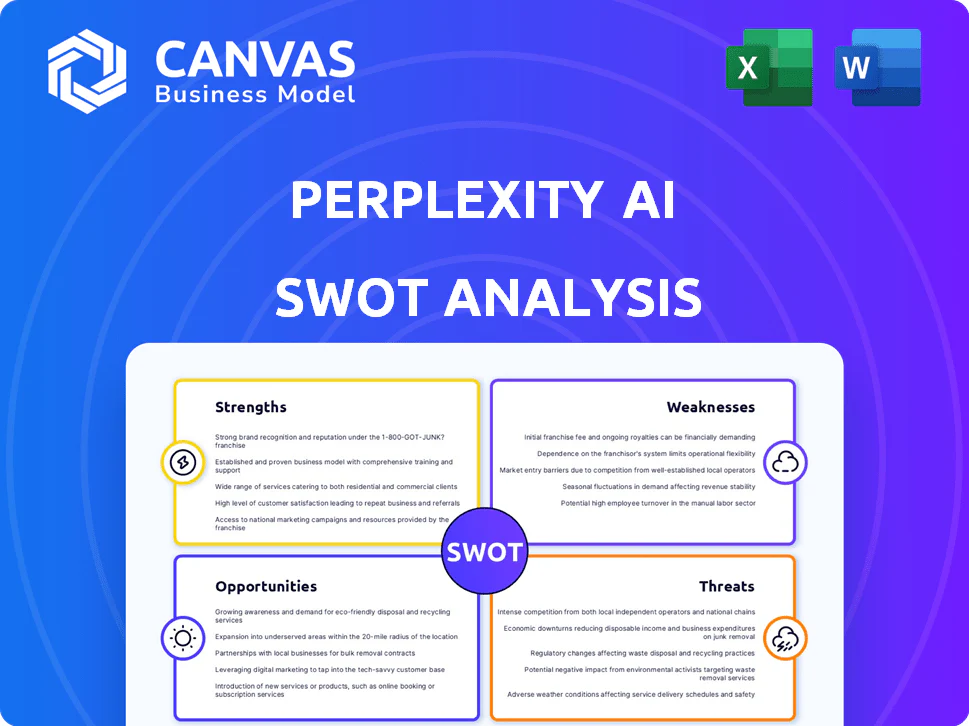
Strategy without research is like sailing without a compass. You might move, but you won’t know if you’re heading in the right direction. Perplexity AI can serve as a strategic support tool, helping you analyze markets, risks, and opportunities with greater clarity.
SWOT Analysis with AI Assistance
SWOT (Strengths, Weaknesses, Opportunities, Threats) is simple—but gathering accurate inputs is hard.
Use Perplexity to research:
- Industry growth forecasts
- Regulatory challenges
- Consumer sentiment trends
- Competitive movements
For example:
“What are the main risks facing renewable energy startups in Europe in 2026?”
The response can feed directly into the “Threats” section of your SWOT.
Then ask:
“What government incentives support renewable energy businesses in Europe?”
That supports your “Opportunities.”
By layering research questions, you build a well-informed strategic framework instead of relying on assumptions.
Product Development Research
Before launching a product, validate demand.
Ask:
- “What unmet needs exist in the project management software market?”
- “What features do users complain about in current tools?”
- “What pricing models are common in subscription-based fitness apps?”
Perplexity can surface user feedback, review summaries, and trend reports. That insight helps you design products aligned with market gaps.
Risk Assessment and Forecasting
Every business decision carries risk. AI can’t eliminate uncertainty, but it can illuminate patterns.
Research:
- Economic forecasts
- Supply chain vulnerabilities
- Emerging regulations
- Industry disruption trends
For example:
“What risks do AI-driven companies face regarding data privacy regulations?”
The output provides a foundation for risk planning and compliance strategies.
Strategic planning becomes stronger when it’s informed by aggregated intelligence rather than isolated opinions.
How Sales and Marketing Teams Can Use Perplexity AI
Sales and marketing teams thrive on information—about prospects, competitors, and market shifts. The faster they access accurate insights, the sharper their outreach becomes.
Prospect Research
Before reaching out to a potential client, gather context:
- Recent company news
- Funding rounds
- Product launches
- Leadership changes
Ask:
“What recent developments has [Company Name] announced in the past six months?”
This allows sales reps to personalize outreach. Instead of sending generic emails, they can reference specific initiatives.
Personalization increases engagement. And engagement drives conversions.
Personalizing Sales Outreach
Use insights from Perplexity to tailor messaging.
If research shows a company is expanding into new markets, your pitch can focus on scalability. If they’re hiring aggressively, emphasize efficiency solutions.
It’s like entering a conversation already knowing what matters to the other person. That gives you a serious edge.
Campaign Research and Planning
Marketing campaigns perform better when rooted in real trends.
Ask:
- “What messaging resonates most with Gen Z consumers in sustainable fashion?”
- “What digital channels show the highest ROI for B2B SaaS?”
Use the responses to refine targeting, tone, and platform strategy.
Campaign planning becomes data-driven instead of guesswork-driven.
Using Perplexity AI for Operational Efficiency
Operations often get overlooked, but they’re the backbone of profitability. Even small improvements in efficiency can create massive financial impact over time.
Process Optimization Research
If you’re trying to improve internal processes, ask:
- “What are best practices for reducing warehouse fulfillment errors?”
- “How can small businesses streamline invoice processing?”
Perplexity summarizes operational strategies from various industries. That cross-industry perspective can spark innovation.
Sometimes the best solution to your problem has already been implemented somewhere else—you just need to find it.
Vendor and Supplier Comparison
Choosing vendors is critical. Instead of relying solely on marketing materials, research:
- Reputation
- Client reviews
- Financial stability
- Market positioning
Ask:
“What are the pros and cons of using [Vendor A] vs [Vendor B] for cloud hosting?”
Then verify through cited sources.
Better vendor decisions reduce long-term risk.
Policy and Compliance Research
Regulations evolve constantly. Staying compliant is non-negotiable.
Use Perplexity to research:
- Updated labor laws
- Data privacy regulations
- Industry-specific compliance requirements
This doesn’t replace legal counsel—but it helps you stay informed and ask better questions.
Operational efficiency isn’t flashy. But it’s powerful. And Perplexity AI can quietly strengthen the systems that keep your business running smoothly.
Integrating Perplexity AI into Daily Workflows
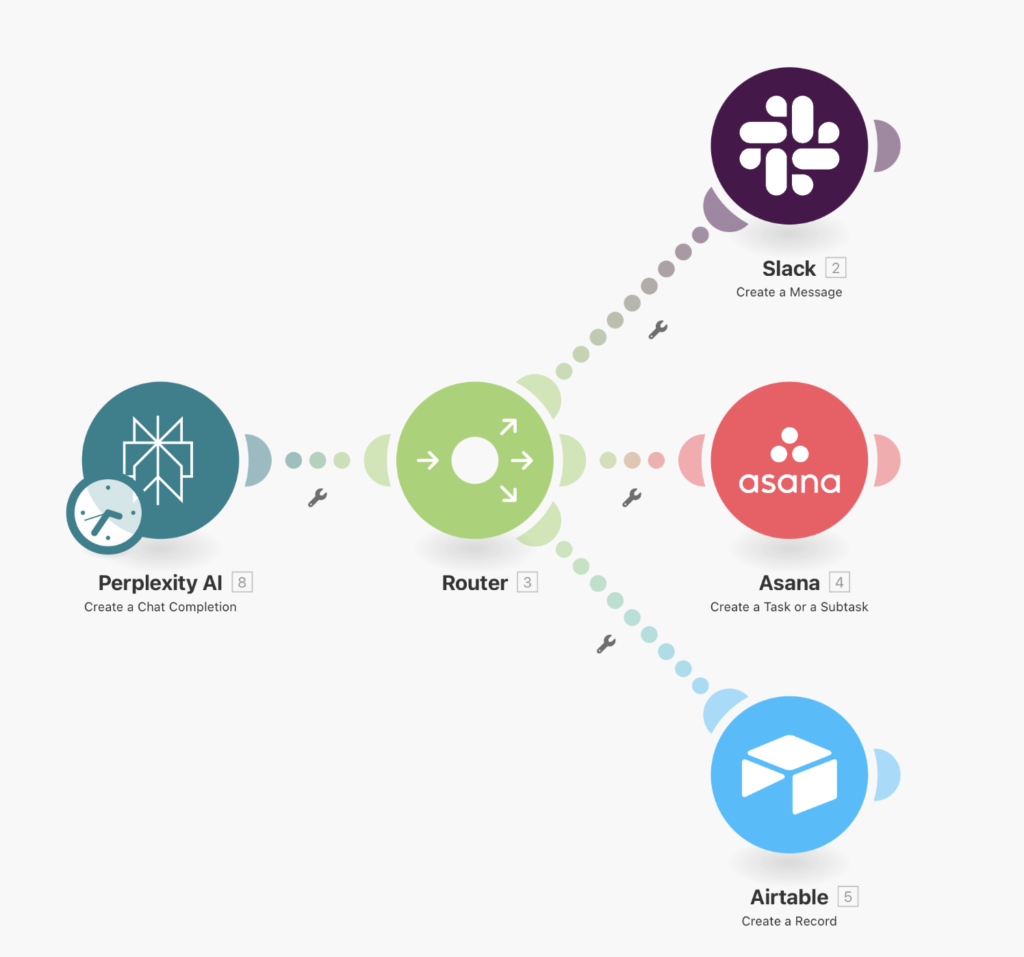
Adopting a tool is easy. Integrating it into daily workflows? That’s where the real transformation happens. Many businesses sign up for AI platforms, experiment for a week, and then forget about them. The difference between occasional use and strategic integration is consistency.
To make Perplexity AI a core part of your operations, treat it like a digital research department—not a novelty.
Setting Up Efficient Query Structures
The quality of your results depends heavily on how you ask your questions. Vague prompts create vague answers. Precise prompts unlock strategic insights.
Instead of:
“Tell me about digital marketing.”
Try:
“What are the most effective digital marketing channels for B2B SaaS startups with limited budgets in 2026? Include supporting data.”
Notice the difference? Specific industry. Specific audience. Specific timeline.
Train your team to structure queries with:
- Clear objective
- Defined audience or market
- Geographic scope (if relevant)
- Timeframe
- Desired format (summary, comparison, data-driven analysis)
Over time, this habit alone dramatically improves research output.
Creating Research Templates
To standardize AI usage, create internal research templates. For example:
Market Entry Template
- Industry size and growth rate
- Key competitors
- Regulatory considerations
- Consumer behavior insights
- Risks and barriers to entry
Each time you explore a new opportunity, follow the same structured approach using Perplexity.
This prevents random, unorganized research. It also ensures consistency across departments.
Training Teams to Use AI Effectively
Tools are only as powerful as the people using them.
Conduct internal training sessions covering:
- How to craft effective prompts
- How to verify cited sources
- When to rely on AI—and when not to
- Ethical and data privacy considerations
Encourage employees to treat AI as an assistant, not an authority. The goal isn’t blind trust. It’s enhanced productivity.
When integrated properly, Perplexity becomes part of daily decision-making—from marketing brainstorms to executive strategy sessions.
Best Practices for Getting Accurate Results
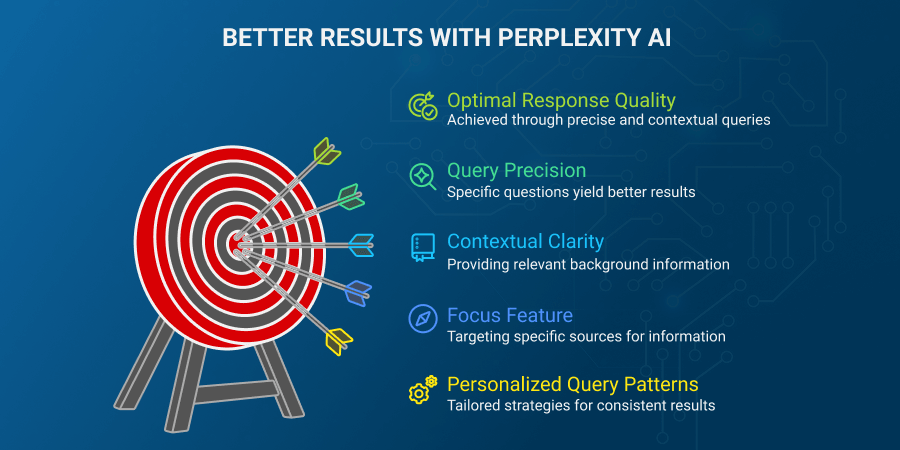
AI is powerful, but it isn’t perfect. The way you use it determines the quality of insights you receive. Following best practices ensures you extract maximum value while minimizing risk.
Writing Better Prompts
Here’s a simple formula:
Context + Objective + Constraints + Desired Output
Example:
“I’m launching a mid-priced skincare brand targeting women aged 25–40 in the U.S. What market trends should I consider in 2026? Include data sources and competitor examples.”
By adding context and constraints, you reduce ambiguity. The AI can focus on what actually matters.
Avoid overly broad or emotionally loaded questions. Keep it analytical and structured.
Verifying Sources and Cross-Checking Data
Always click the citations.
Check:
- Publication date
- Author credibility
- Potential bias
- Relevance to your market
If a statistic appears critical to a decision, cross-check it through an additional reputable source.
AI accelerates research, but human verification protects your business.
Avoiding Common Mistakes
Common pitfalls include:
- Over-relying on AI without validation
- Asking shallow questions
- Ignoring publication dates
- Confusing summaries with comprehensive analysis
Remember: Perplexity provides a strong starting point. It doesn’t replace deep due diligence when major investments are at stake.
Think of it as a high-speed compass—not autopilot.
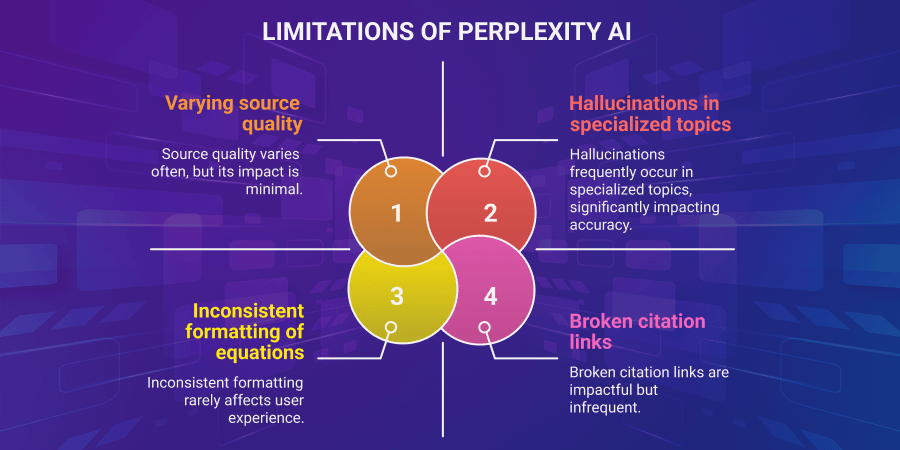
Limitations of Perplexity AI in Business Use
No tool is flawless. Understanding limitations prevents overconfidence and costly errors.
Data Privacy Concerns
When using AI platforms, avoid sharing sensitive company data unless you fully understand the platform’s privacy policies.
Do not upload:
- Confidential contracts
- Proprietary algorithms
- Unreleased financial data
Always consult your IT or legal team regarding acceptable usage.
Accuracy Limitations
Even with citations, summaries may omit nuance. Complex topics like legal interpretation, medical guidance, or financial compliance require expert review.
AI can surface information—but it cannot replace licensed professionals.
Over-Reliance on AI
There’s a subtle risk: decision laziness.
If teams begin accepting AI outputs without critical thinking, strategic depth weakens. Encourage debate, analysis, and discussion around AI-generated insights.
Balance speed with scrutiny.
Real-World Business Use Cases

Seeing practical applications makes everything clearer. Let’s explore how different types of businesses can leverage Perplexity AI.
Startups
Startups operate under extreme resource constraints. Perplexity acts as:
- A low-cost research assistant
- A competitor analysis tool
- A product validation resource
Founders can rapidly assess market opportunities without expensive reports.
E-commerce Businesses
E-commerce brands can research:
- Trending products
- Consumer purchasing behavior
- Shipping regulations
- Influencer marketing strategies
Quick insights help adapt inventory and campaigns faster.
Consulting Firms
Consultants can use Perplexity to:
- Accelerate background research
- Summarize industry reports
- Validate statistics for presentations
It improves turnaround time while maintaining data-backed credibility.
Corporate Enterprises
Large enterprises can integrate AI into strategic planning, risk assessment, and innovation teams. With structured workflows, it enhances cross-departmental intelligence.
No matter the size, the advantage lies in speed plus insight.
Comparing Perplexity AI with Other AI Tools
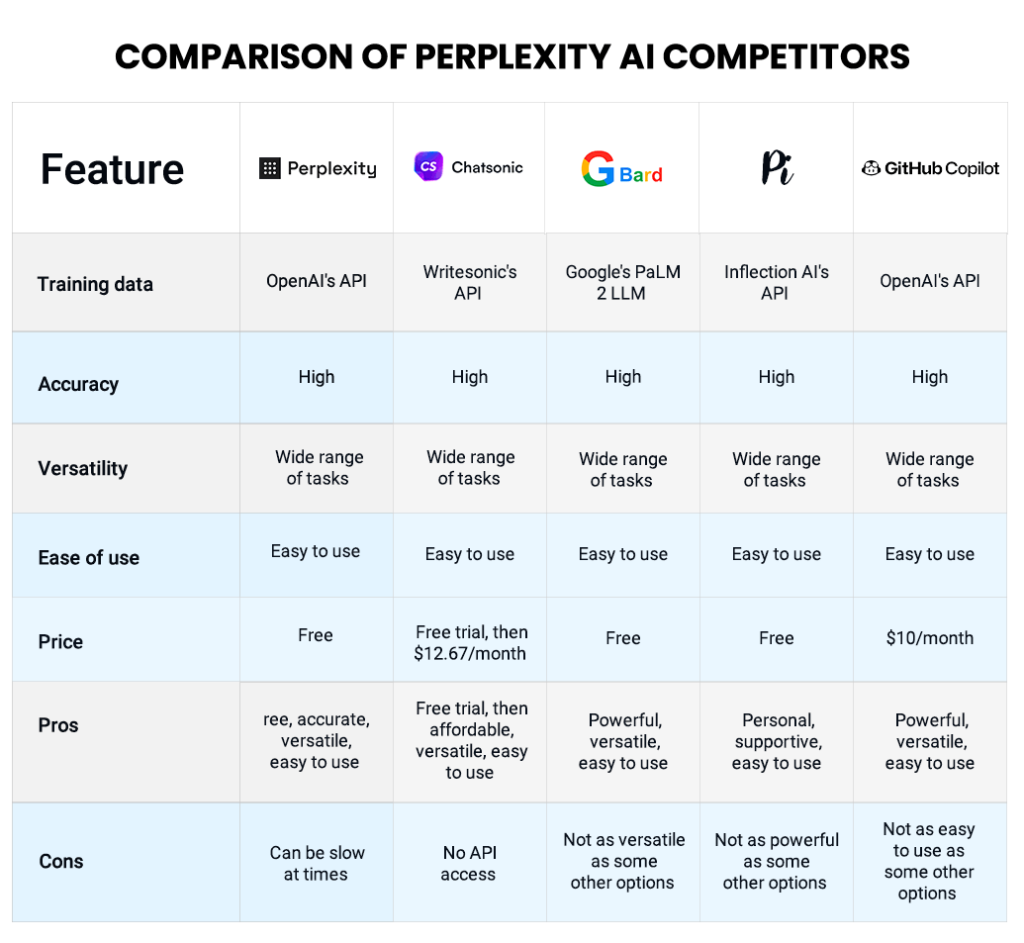
Choosing the right tool depends on your objective.
Perplexity AI vs ChatGPT
- Perplexity emphasizes real-time search and citations.
- ChatGPT excels in creative generation and conversational drafting.
For research-heavy tasks, Perplexity often provides stronger transparency.
Perplexity AI vs Google Search
- Google delivers links.
- Perplexity delivers summarized answers with sources.
Google is powerful for broad exploration. Perplexity is stronger for synthesis.
Choosing the Right Tool for Your Business
Ask yourself:
- Do I need summarized research?
- Do I require citation-backed answers?
- Is real-time information essential?
Often, the smartest approach is combining tools strategically.
The Future of AI Research Tools in Business
AI research tools are evolving rapidly. Expect:
- Deeper integration with enterprise systems
- Enhanced data visualization
- Improved accuracy through model refinement
- Stronger privacy controls
Businesses that adapt early build institutional intelligence advantages. Those that ignore AI risk falling behind competitors who move faster and make better-informed decisions.
The future belongs to businesses that combine human judgment with machine speed.
Conclusion
Perplexity AI is more than a search tool—it’s a research accelerator for modern businesses. From market analysis and content marketing to strategic planning and operational efficiency, it compresses hours of research into minutes of insight.
But the real power lies in how you use it. Ask better questions. Verify sources. Integrate it into workflows. Balance AI efficiency with human critical thinking.
In today’s competitive landscape, information is abundant—but clarity is rare. Perplexity AI helps transform scattered data into structured intelligence. And when intelligence moves faster than your competition, growth follows.