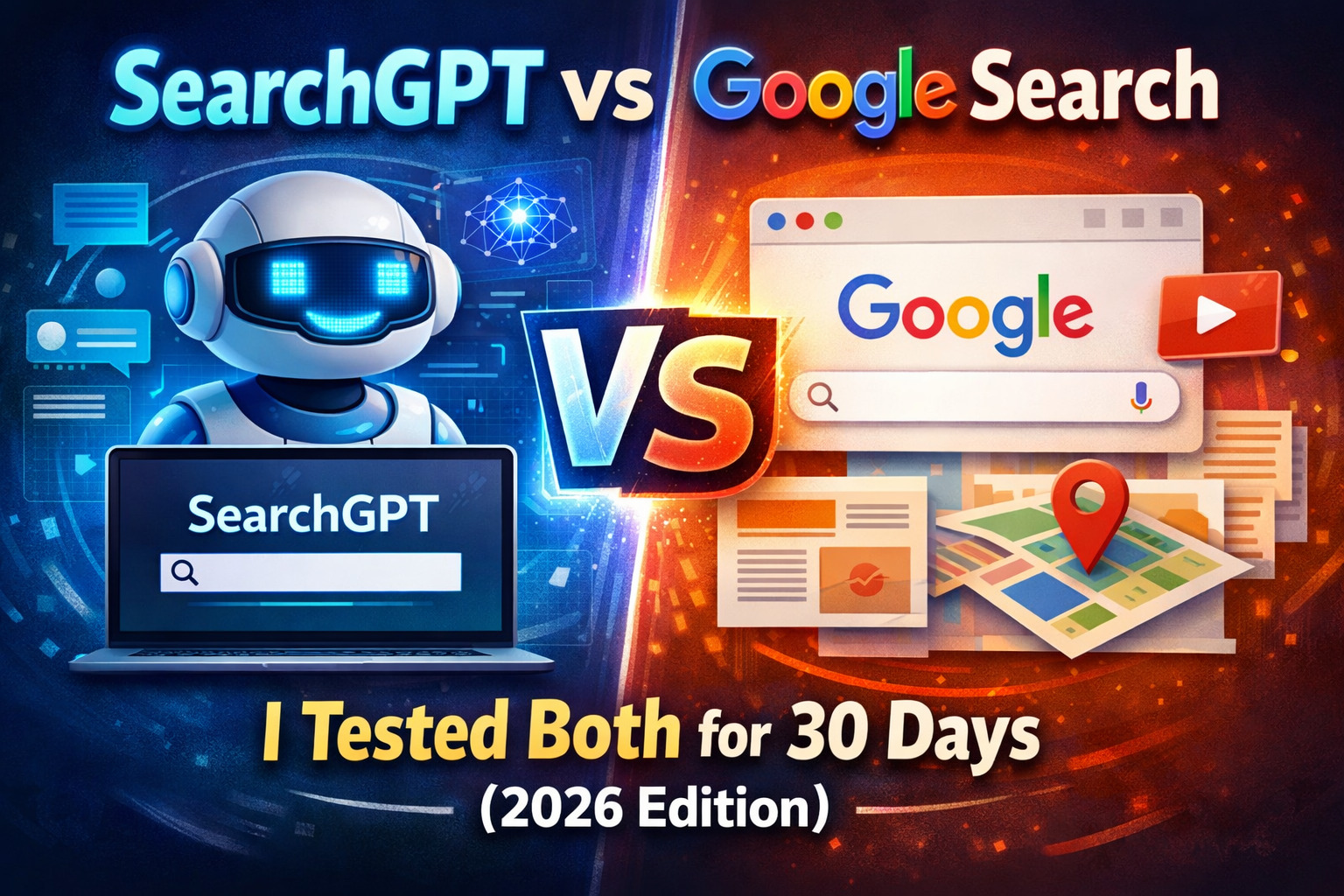
Search in 2026 doesn’t look anything like it did five years ago. Remember when typing a few keywords into a search bar felt cutting-edge? Now, we talk to search engines like they’re personal assistants. We ask full questions. We expect summarized answers. We want context, not just links. That’s exactly why the debate around SearchGPT vs Google Search has become so important today.
Table of Contents
That shift is exactly why I decided to run a 30-day experiment comparing SearchGPT vs Google Search. I wanted to know something simple: which one actually works better in real life?
Not in theory. Not in tech demos. Not in marketing claims.
In real, everyday usage.
For 30 days straight, I used SearchGPT and Google Search side by side. I searched for everything — from “best budget laptops 2026” to “how to structure a startup pitch deck,” from quick weather updates to deep research on AI regulations.
I tracked:
- Speed
- Accuracy
- Depth
- Usability
- Transparency
- SEO implications
- Privacy
What I found surprised me. Sometimes Google felt like an organized library. Other times, SearchGPT felt like having a researcher sitting next to me.
But they’re not the same tool.
And if you’re a student, marketer, business owner, or everyday internet user, the difference matters more than ever.
Let’s break it down step by step.
The Evolution of Search: From Keywords to Conversations
Search has evolved from rigid keyword matching to intelligent, conversational systems. The transformation didn’t happen overnight — it happened gradually, then suddenly.
Five years ago, you’d type something like:
“best mirrorless camera low light 2024”
Today, you might ask:
“What’s the best mirrorless camera for low-light photography under $1500, and why?”
That difference changes everything.
Traditional search engines like Google were built around crawling, indexing, and ranking web pages. Their power lies in scale — trillions of pages analyzed, categorized, and ranked.
AI-powered search tools like SearchGPT, however, don’t just retrieve pages. They generate structured answers.
Instead of saying, “Here are 10 links,” they say, “Here’s your answer.”
That’s a fundamental shift from search engine to answer engine.
But does that make it better?
Not always.
Let’s dig deeper.
How Traditional Search Engines Work
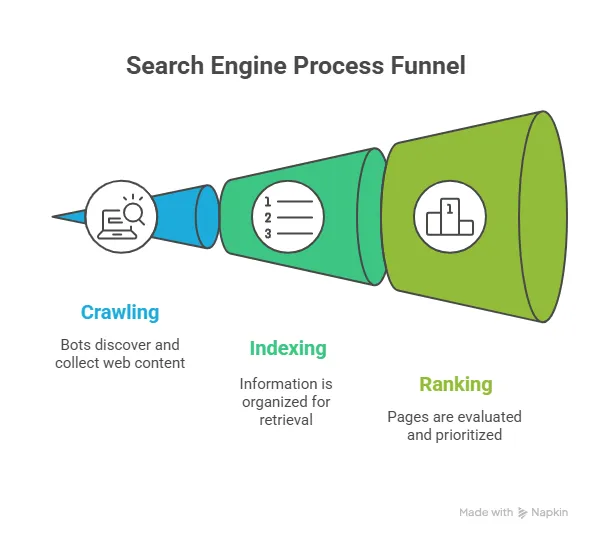
Google Search operates on three core pillars:
- Crawling
- Indexing
- Ranking
Google bots crawl billions of web pages. Those pages are indexed. Then, when you type a query, Google’s algorithm determines which pages are most relevant and authoritative.
Ranking factors in 2026 include:
- Content quality
- E-E-A-T (Experience, Expertise, Authoritativeness, Trustworthiness)
- Page speed
- User engagement signals
- Backlinks
- Semantic relevance
- AI content quality detection
Google doesn’t “write” your answer (although AI summaries are now integrated). It primarily shows you ranked web pages.
That means:
- You get multiple viewpoints.
- You choose what to click.
- You verify sources yourself.
It’s powerful, but it requires effort. You have to sift through ads, snippets, and sometimes SEO-optimized fluff.
It’s like walking into a giant bookstore. Everything is there. But you have to find it.
How AI-Powered Search Engines Work

SearchGPT operates differently.
Instead of showing 10 blue links, it analyzes your query, interprets intent, retrieves relevant information, and synthesizes a conversational response.
It doesn’t just match keywords. It understands context.
For example:
If you ask, “Is it better to lease or buy a car in 2026 if I drive 20,000 miles per year?”
SearchGPT doesn’t send you to five finance blogs.
It gives you a direct comparison tailored to your mileage.
This saves time. A lot of time.
But here’s the catch:
AI-generated answers rely on training data, contextual understanding, and real-time access (when available). If information is outdated or niche, it may require verification.
It’s like asking a very smart assistant who summarizes everything for you. Convenient? Absolutely. Perfect? Not always.
The Shift Toward Intent-Based Search
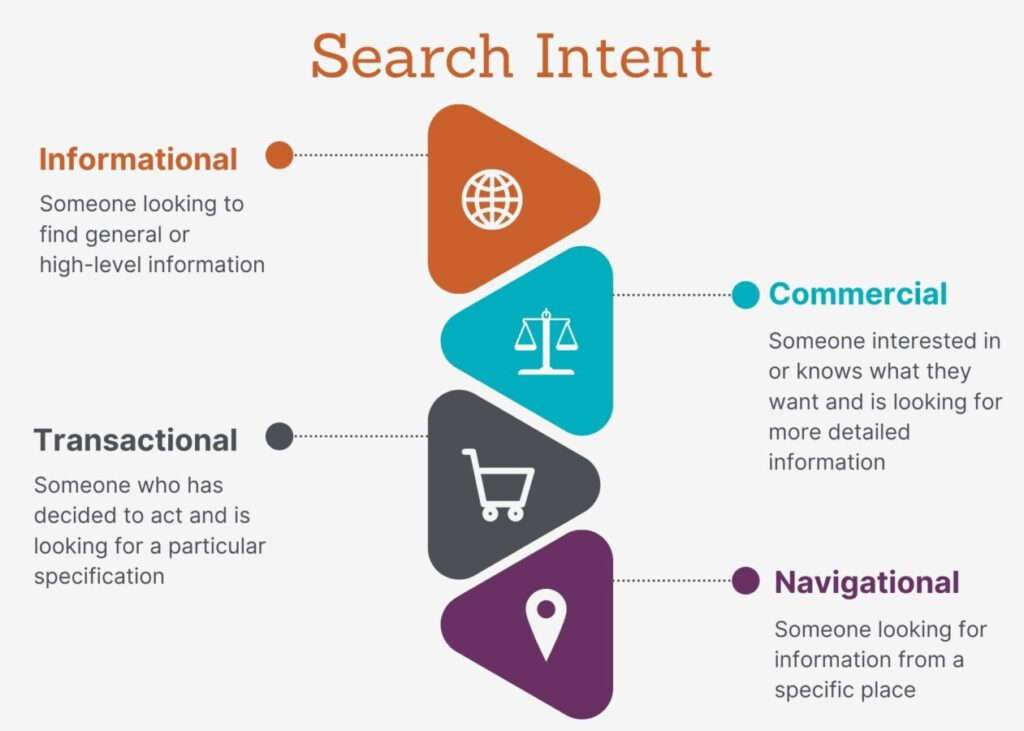
Search in 2026 is less about keywords and more about intent.
Google has adapted by integrating AI summaries (Search Generative Experience), while SearchGPT was built with intent-first architecture.
There are four main types of search intent:
- Informational
- Navigational
- Transactional
- Commercial investigation
SearchGPT excels at informational and research-based queries. Google still dominates transactional and local intent searches.
So the battle isn’t about “which is better overall.”
It’s about “which is better for what?”
That’s what my 30-day test aimed to uncover.
What Is SearchGPT? A Deep Dive into AI Search

When I first started using SearchGPT consistently, it didn’t feel like a search engine. It felt like a research partner. Instead of tossing me into a sea of links, it handed me structured answers, summaries, comparisons, and even step-by-step explanations — all in one place.
SearchGPT is built around conversational AI. That means it doesn’t just respond to keywords; it understands full questions, context, and follow-ups. If I asked, “What’s the best CRM for small businesses in 2026?” it would give me a breakdown. If I followed up with, “What about something under $50 per month?” it remembered the context.
That continuity changes how you search.
Core Features of SearchGPT
Here’s what stood out during my 30-day test:
- Conversational follow-ups without retyping context
- Structured summaries instead of raw links
- Comparison tables on request
- Simplified explanations for complex topics
- Ability to refine answers instantly
Instead of clicking five blog posts to compare products, I could simply ask: “Compare HubSpot, Zoho, and Pipedrive for startups.”
And I’d get a direct comparison.
That’s powerful. Especially for research-heavy tasks.
How SearchGPT Generates Answers
SearchGPT analyzes user intent, processes context, and synthesizes information into a cohesive answer. It doesn’t just retrieve a webpage. It generates a tailored response based on your specific wording.
It’s like asking a knowledgeable friend who has read hundreds of articles — and summarizes them instantly.
However, there’s a nuance here: the quality of the answer depends heavily on how specific your question is. Vague questions produce broad answers. Precise questions produce incredibly detailed ones.
Strengths and Limitations of AI-Driven Search
Strengths:
- Time-saving
- Context-aware
- Great for brainstorming and research
- Excellent for explaining complex topics
Limitations:
- Sometimes lacks real-time updates
- May not always provide direct source links upfront
- Can oversimplify nuanced issues
After 30 days, I realized something important: SearchGPT isn’t just about finding information. It’s about compressing information.
And in a world drowning in content, that compression is gold.
What Is Google Search in 2026?
Google Search in 2026 is no longer just “10 blue links.” It has evolved dramatically, integrating AI summaries, predictive suggestions, and a more personalized experience.
But at its core, it’s still the world’s largest indexed database of web content.
Google’s AI Integration and Search Generative Experience
Google now includes AI-generated summaries at the top of many search results. These summaries attempt to answer your question directly before you scroll into traditional links.
During my test, I noticed this especially for:
- Health queries
- Product comparisons
- “How-to” questions
- Quick definitions
However, unlike SearchGPT, Google’s AI responses often feel like an introduction rather than a complete answer. They’re helpful — but frequently push you toward clicking external sites.
Which, of course, is Google’s ecosystem strength.
Core Algorithm and Ranking Factors
Google’s ranking system in 2026 emphasizes:
- Experience-driven content
- Trust signals
- Authority and backlinks
- User engagement metrics
- Structured data
- Helpful content updates
If SearchGPT feels like a consultant, Google feels like a marketplace. You’re not just getting answers. You’re seeing competition between publishers.
And sometimes that competition leads to higher-quality content — because multiple experts weigh in.
Strengths and Weaknesses of Google Search
Strengths:
- Real-time indexing
- Multiple perspectives
- Strong local search capabilities
- Integrated maps, reviews, and shopping
Weaknesses:
- Ads can dominate the top of the page
- SEO-driven fluff content
- Requires more clicking
- Information overload
After 30 days, I felt like Google was still unbeatable for local searches and breaking news. But for deep research? The experience was more fragmented.
My 30-Day Testing Methodology
I didn’t want this comparison to be vague. So I structured the experiment carefully.
Every single day for 30 days, I performed at least 20 searches — 10 on SearchGPT and 10 on Google.
That’s over 600 searches total.
Types of Searches I Conducted
I categorized searches into:
- Informational (e.g., “What is quantum computing?”)
- Transactional (e.g., “Buy running shoes size 10 near me”)
- Navigational (e.g., “Netflix login page”)
- Research-intensive (e.g., “Impact of AI regulation on startups 2026”)
This gave a balanced evaluation across everyday and professional use cases.
Devices and Browsers Used
- Desktop (Chrome and Safari)
- iPhone
- Android tablet
I wanted to see if performance varied by device — especially mobile, where user experience matters most.
Evaluation Criteria
I scored each search on:
- Speed
- Accuracy
- Depth
- Ease of use
- Distraction level (ads, clutter)
- Follow-up usability
I also tracked how often I needed to refine my query.
One surprising pattern emerged: I refined Google searches more often. With SearchGPT, I refined by conversing, not restarting.
That distinction matters more than you’d think.
Speed and Accuracy: Which Delivers Faster, Better Answers?

Speed isn’t just about loading time. It’s about time-to-answer.
Google loads fast — almost instantly. But finding the right link sometimes takes longer.
SearchGPT may take a few extra seconds to generate a response. But when it does, the answer is already structured.
Response Time Comparison
In raw load speed:
- Google wins by milliseconds.
In time-to-solution:
- SearchGPT often wins for complex questions.
If I searched, “Best dividend stocks 2026 with low volatility,” Google required clicking 2–3 articles. SearchGPT gave me a summarized list with reasoning immediately.
Accuracy in Complex Queries
For straightforward facts (e.g., “Capital of Japan?”):
- Both performed perfectly.
For nuanced, multi-layered questions:
- SearchGPT handled complexity better in one go.
- Google required cross-referencing.
Real-World Examples
Example 1:
“Should I incorporate my startup as an LLC or C-Corp if I plan to raise venture capital?”
SearchGPT gave a structured comparison immediately.
Google gave articles — some outdated.
Example 2:
“Pizza near me open now.”
Google crushed it.
Maps. Reviews. Directions. Done.
This is where Google still dominates: real-world local intent.
User Experience and Interface Comparison
Design matters more than we admit.
Google’s interface is familiar. It’s minimal at first glance — but scroll down and you’ll see ads, shopping boxes, video carousels, “People also ask,” and more.
It’s a content ecosystem.
SearchGPT feels cleaner. One response. Scrollable. Expandable.
No banner ads. No sponsored results interrupting flow.
Design and Simplicity
SearchGPT:
- Conversation-first
- Clean layout
- Focused interaction
Google:
- Multi-layered results
- Feature-rich
- Potentially overwhelming
Ads and Distractions
Google includes sponsored placements — especially for commercial queries.
SearchGPT doesn’t inject ads into responses.
For research sessions, that lack of interruption made a noticeable difference in focus.
Mobile Experience
On mobile:
- Google’s layout can feel crowded.
- SearchGPT’s conversational format feels more natural.
In fact, I found myself using SearchGPT more on mobile for learning and Google more for navigation.
Different tools. Different strengths.
Content Quality and Depth of Answers
This is where things got interesting.
Google provides access to deep content. But you must assemble it yourself.
SearchGPT synthesizes depth into a single structured narrative.
Surface-Level vs In-Depth Information
Google:
- Wide coverage
- Multiple expert opinions
- Requires manual comparison
SearchGPT:
- Immediate depth
- Structured summaries
- Easier digestion
However, for academic-level citations, Google still offers direct access to primary sources more easily.
Citation and Source Transparency
Google naturally shows source URLs.
SearchGPT may summarize without immediately listing multiple sources unless requested.
That’s not necessarily worse — but it shifts responsibility to the user to verify when needed.
Trustworthiness of Information
Trust often comes from transparency.
Google’s strength is visible sourcing.
SearchGPT’s strength is clarity and coherence.
Both require critical thinking.
SEO Impact: What This Means for Website Owners
If you’re a blogger, niche site owner, affiliate marketer, SaaS founder, or content strategist, this is where things get serious. The rise of AI search isn’t just a user-experience shift — it’s an SEO earthquake.
After 30 days of testing SearchGPT vs Google Search, one thing became clear: traffic behavior is changing.
Let’s break it down.
How SearchGPT Changes SEO Strategy
SearchGPT doesn’t prioritize “ranking” in the traditional sense. It prioritizes clarity, structure, and informational depth. That means content optimized purely for keywords — without real substance — struggles to matter in an AI-driven environment.
In practical terms, here’s what wins in AI search ecosystems:
- Clear, structured answers
- Direct responses to specific questions
- Logical formatting (headings, bullet points, summaries)
- Expert-level explanations written in natural language
- Up-to-date and experience-driven insights
Thin content? It fades away.
Keyword stuffing? Useless.
What matters now is topical authority and contextual completeness.
If your article answers a question better than anyone else — in depth — AI tools are more likely to reference or synthesize similar material.
This pushes content creators toward higher standards. Less fluff. More clarity. More real-world insight.
And honestly? That’s not a bad thing.
Google’s Ranking Factors in 2026
Google still runs on its ranking system, even with AI integration layered on top.
Key ranking priorities now include:
- Experience (first-hand knowledge)
- Expertise
- Authoritativeness
- Trustworthiness
- Engagement signals
- Page performance
- Structured data
Google’s Helpful Content updates have made one thing clear: content written “for search engines” instead of humans doesn’t perform long-term.
Ironically, the rise of SearchGPT makes Google’s own ranking system even stricter. Because now Google must compete not only with other websites — but with AI answers.
That means content creators must:
- Provide unique insights
- Share case studies
- Include real examples
- Demonstrate credibility
In 2026, surface-level content doesn’t survive.
Traffic Implications for Content Creators
Here’s the uncomfortable truth: informational traffic may decrease.
If users get a complete answer without clicking a link, why would they visit a website?
But here’s the flip side:
High-intent traffic increases.
Users who do click are often:
- Further along in decision-making
- Looking for deeper validation
- Ready to purchase
So while raw traffic numbers might drop, conversion quality can improve.
The SEO game isn’t dying.
It’s evolving.
Privacy and Data Handling: Who Protects Users Better?

Privacy is no longer a side conversation. It’s front and center in 2026.
After using both platforms for 30 days, I paid close attention to personalization, tracking, and ad targeting behavior.
Data Collection Policies
Google’s business model still heavily involves advertising. That means:
- Search behavior influences ad personalization
- Location data enhances local results
- Search history impacts recommendations
Google provides privacy controls — but personalization is deeply integrated into the ecosystem.
SearchGPT, on the other hand, operates differently depending on implementation and platform settings. It focuses more on conversational context rather than ad-targeting signals.
During my test, I noticed:
- Fewer personalized commercial pushes
- No visible ad-driven adjustments
- Less “retargeting feeling” after product searches
The difference feels subtle — but noticeable.
Personalization vs Privacy
Here’s the tradeoff:
Google personalization improves convenience.
SearchGPT prioritizes contextual continuity within conversation.
Google might remember what you searched last week.
SearchGPT remembers what you asked five minutes ago.
Both forms of memory serve different purposes.
User Control Over Data
Google provides extensive account-level privacy settings.
SearchGPT implementations also allow varying degrees of conversation management, depending on platform.
But here’s the key takeaway from my experience:
Google feels like a data ecosystem.
SearchGPT feels like a conversation session.
That psychological difference changes how users perceive privacy — even if both use advanced data systems behind the scenes.
Best Use Cases: When to Use SearchGPT vs Google
After 600+ searches, I stopped asking, “Which one is better?”
Instead, I started asking:
“What is each one best for?”
Because they shine in different scenarios.
For Students and Researchers
SearchGPT wins for:
- Breaking down complex concepts
- Summarizing long topics
- Brainstorming ideas
- Creating structured outlines
It’s like having a tutor on demand.
Google wins for:
- Accessing academic papers
- Finding primary sources
- Cross-verifying multiple expert opinions
If you’re writing a thesis? You’ll likely use both.
For Shoppers and Buyers
Google dominates transactional search.
Why?
Because it integrates:
- Reviews
- Maps
- Shopping comparisons
- Real-time pricing
- Store availability
SearchGPT can explain product differences beautifully — but Google gets you to checkout faster.
For Quick Facts and News
For breaking news:
Google wins.
Its real-time indexing and news aggregation make it superior for up-to-the-minute updates.
For quick explanations:
SearchGPT feels smoother and more conversational.
For Business Professionals
This one surprised me.
SearchGPT became my go-to for:
- Strategy frameworks
- Market analysis overviews
- Competitive comparisons
- Drafting structured plans
Google became my tool for:
- Industry reports
- Official documentation
- Regulatory references
Professionals may find themselves switching between both — often within minutes.
Pros and Cons Comparison Table
Here’s a simplified breakdown of my findings:
| Feature | SearchGPT | Google Search |
|---|---|---|
| Conversational Context | Excellent | Limited |
| Real-Time Updates | Moderate | Excellent |
| Local Search | Limited | Outstanding |
| Ads | None in responses | Present |
| Depth of Explanation | High | Depends on source |
| Source Transparency | On request | Immediate |
| Research Efficiency | Very High | Moderate |
| Transactional Efficiency | Moderate | Very High |
No clear universal winner.
Just situational dominance.
Key Differences at a Glance
If you remember nothing else, remember this:
SearchGPT is an answer engine.
Google is an indexing engine.
SearchGPT compresses information.
Google distributes information.
SearchGPT feels like talking to someone.
Google feels like browsing a massive library.
SearchGPT reduces clicks.
Google encourages exploration.
Neither replaces the other entirely.
They serve different cognitive needs.
The Future of Search: Who Will Dominate in 2030?
Predicting 2030 is risky. But patterns are visible.
Search is moving toward:
- Multimodal queries (voice, image, video)
- Personalized AI assistants
- Reduced reliance on traditional link browsing
- Greater integration into daily workflows
Google has infrastructure dominance.
SearchGPT has conversational momentum.
The likely future?
Hybrid search experiences.
AI-generated summaries layered over indexed web content.
In other words: convergence.
By 2030, the distinction between “search engine” and “AI assistant” may blur completely.
The real competition won’t be about who retrieves information.
It will be about who delivers it most efficiently.
Final Verdict: Which One Did I Choose After 30 Days?
Here’s the honest answer:
I didn’t choose one.
I changed how I use both.
For deep thinking, structured research, idea generation, and learning:
I reach for SearchGPT first.
For shopping, maps, live updates, and verifying multiple sources:
I use Google.
But if you forced me to pick based on where I spent more time?
SearchGPT slightly edged ahead — simply because it reduces friction.
Less clicking.
Less scrolling.
Less distraction.
More thinking.
That shift alone made it feel like the future.
Conclusion
After 30 days of intensive side-by-side testing, one thing became clear: SearchGPT vs Google Search isn’t a battle for replacement. It’s a redefinition of search behavior.
Google remains the king of indexing, real-time updates, and transactional efficiency. Its ecosystem is vast, powerful, and deeply integrated into everyday life.
SearchGPT, however, represents the evolution of how we interact with information. It shortens the path between question and understanding. It turns search into dialogue.
In 2026, the smartest move isn’t choosing sides.
It’s mastering both.
Because the future of search isn’t about links.
It’s about clarity.