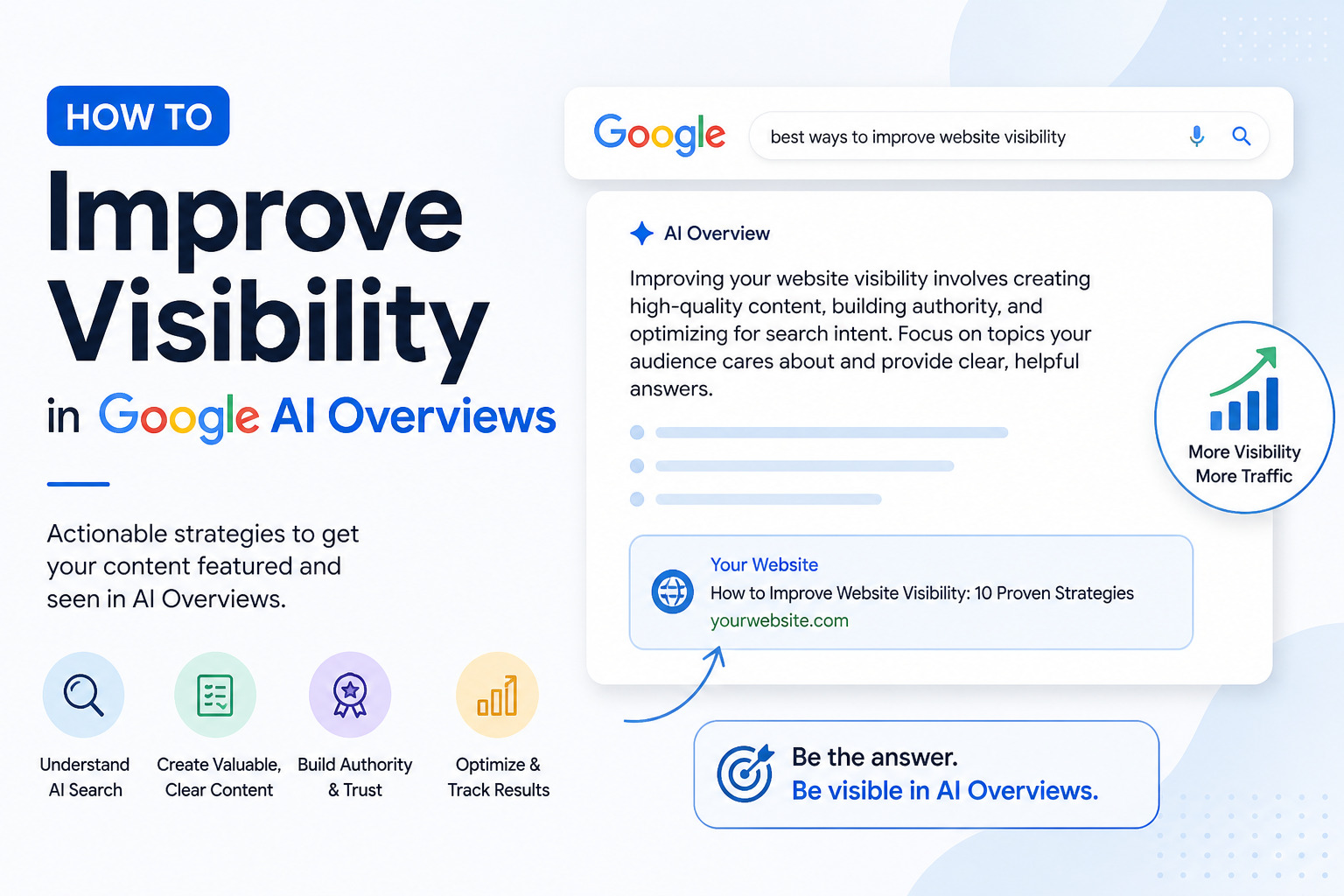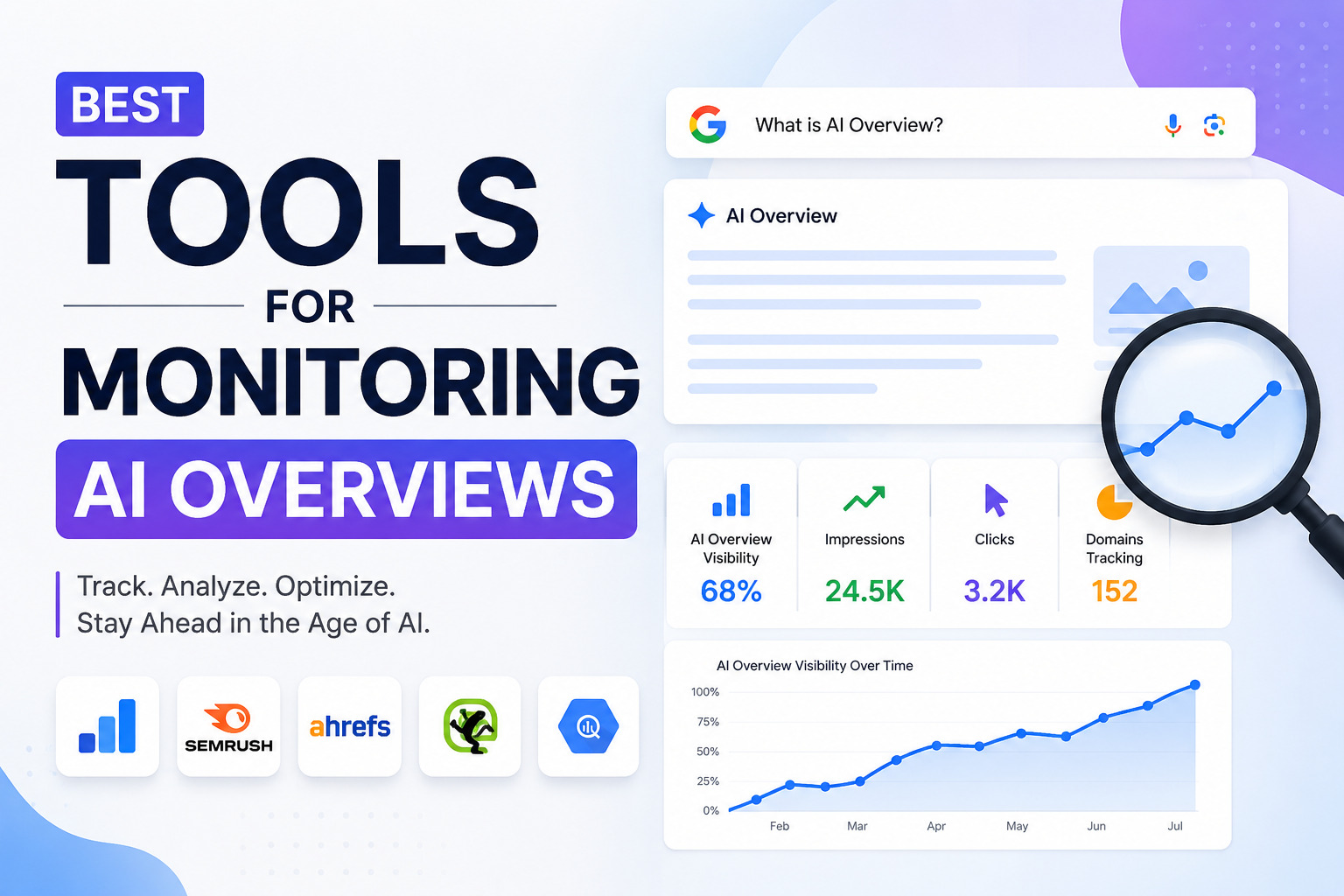
If you’ve searched anything on Google recently, you’ve probably noticed those rich, summarized answers appearing right at the top of the results page. These are AI Overviews, and they’re changing the way people interact with search engines in a big way. As marketers and content creators explore the Best Tools for Monitoring AI Overviews, it becomes clear just how impactful these features are. Instead of clicking through multiple links, users are getting curated, AI-generated summaries pulled from various sources across the web. It’s like having a research assistant who reads everything for you and hands you the highlights instantly.
Table of Contents
Now here’s where things get interesting—and a little unsettling for website owners. These overviews often reduce the need for users to click on actual websites. That means even if your content is ranking, it might not be getting the traffic it used to. So the real game isn’t just ranking anymore—it’s being featured inside the AI Overview itself. That’s a completely different battlefield.
Think of AI Overviews as the new “position zero,” but on steroids. They don’t just highlight one source; they synthesize multiple perspectives. That makes tracking your presence within them much more complex. You’re no longer just asking, “Am I ranking?” but instead, “Am I being cited, summarized, or even mentioned by AI?”
This shift has sparked the need for a new category of tools—AI overview monitoring tools. These tools go beyond traditional SEO tracking and help you understand how your content performs in this AI-driven layer of search. Without them, you’re basically flying blind in a rapidly evolving digital landscape.
Why AI Overviews Matter for SEO
Let’s be honest—SEO has always been about visibility. But with AI Overviews, visibility doesn’t necessarily mean clicks anymore. It means presence within AI-generated answers. That’s a subtle but powerful shift, and if you ignore it, you risk losing relevance even if your rankings look solid on paper.
Here’s the reality: studies suggest that AI Overviews can reduce click-through rates by as much as 20–40% for certain queries. That’s a massive drop. Imagine putting in all the effort to rank on page one, only to have users get their answers without ever visiting your site. Frustrating, right?
But there’s a flip side. If your content is consistently featured in AI Overviews, it can massively boost your brand authority and trust. Users may not always click immediately, but they start recognizing your name as a reliable source. Over time, that builds credibility in ways traditional rankings never could.
This is why monitoring tools are becoming essential. They help you answer questions like:
- Is my content being used in AI summaries?
- Which competitors are dominating AI Overviews?
- What type of content gets picked up by AI?
Without these insights, you’re essentially guessing. And in a world where algorithms evolve faster than ever, guessing isn’t a strategy—it’s a risk.
The Rise of AI-Powered Search Monitoring

How Traditional SEO Tools Fall Short
For years, SEO professionals relied heavily on tools that tracked rankings, backlinks, and keyword performance. Those metrics made perfect sense in a world where search results were a list of blue links. But AI Overviews have disrupted that model in a way that traditional tools simply weren’t built to handle. You might still see your page ranking in the top three positions, yet your traffic could be declining—and that disconnect can feel confusing if you’re only looking at outdated metrics.
The core issue is that traditional SEO tools don’t measure AI-layer visibility. They can tell you where you rank, but not whether your content is being summarized, quoted, or ignored by AI systems. It’s like measuring billboard impressions in a world where everyone has started using GPS navigation—you’re tracking something, but it’s no longer what truly matters.
Another limitation is the lack of contextual understanding. AI Overviews don’t just pull exact keyword matches; they interpret meaning, intent, and relationships between concepts. Older tools are still largely keyword-focused, which means they miss the broader semantic picture. This leaves marketers struggling to understand why certain content gets picked up by AI while other equally optimized pages don’t.
There’s also the issue of competitor visibility. Traditional tools can show who ranks above you, but they don’t reveal who is dominating AI summaries. Sometimes, smaller or less authoritative sites get featured because their content is structured in a way that AI prefers. Without proper monitoring tools, you’d never even notice this shift happening.
This gap has created a pressing need for a new generation of SEO tools—ones that are designed specifically for AI-first search environments. These tools go beyond rankings and dive into how AI systems interpret, select, and present content. And if you’re serious about staying competitive, adapting to this new reality isn’t optional—it’s essential.
The Shift Toward AI Visibility Tracking
The SEO landscape is undergoing a quiet but profound transformation. Instead of obsessing over rankings alone, professionals are now focusing on something much more nuanced: AI visibility tracking. This shift reflects a deeper understanding of how search engines are evolving from simple retrieval systems into intelligent answer engines.
AI visibility tracking is all about understanding how often—and in what context—your content appears within AI-generated responses. It’s not just about being present; it’s about how your content is interpreted and presented. Are you being cited as a primary source, or just mentioned in passing? Are your competitors being highlighted more prominently? These are the kinds of insights that modern tools aim to provide.
What makes this shift particularly interesting is that it aligns SEO more closely with content quality and authority rather than just technical optimization. AI systems tend to favor content that is clear, well-structured, and genuinely helpful. That means the game is less about gaming algorithms and more about creating content that deserves to be featured.
Another key aspect of this transition is the rise of entity-based optimization. Instead of focusing solely on keywords, AI systems look at entities—people, places, concepts—and how they relate to each other. Monitoring tools are beginning to reflect this by tracking how your brand or topics are associated within AI-generated content.
This evolution might feel overwhelming at first, but it also opens up new opportunities. Those who adapt early can gain a significant edge, positioning themselves as authoritative sources in their niche. And with the right tools, you can turn what seems like a black box into something much more transparent and actionable.
Key Features to Look for in AI Overview Monitoring Tools
Real-Time Tracking Capabilities
When it comes to AI Overviews, timing is everything. These summaries can change frequently based on new content, user behavior, and algorithm updates. That’s why real-time tracking capabilities have become one of the most critical features in any AI monitoring tool. Without it, you’re essentially looking at outdated snapshots that don’t reflect what users are seeing right now.
Imagine publishing a piece of content that suddenly gets picked up by an AI Overview. If your tool only updates once a week, you might miss that opportunity entirely. Real-time tracking allows you to spot these moments as they happen, giving you the chance to analyze what worked and replicate that success across other pages.
Another advantage of real-time tracking is the ability to respond quickly to changes. If you notice your content dropping out of AI summaries, you can investigate and make adjustments before the impact becomes significant. This level of agility is crucial in a fast-moving digital environment where even small delays can lead to lost visibility.
It also helps in identifying patterns and trends. Over time, you can see which types of content consistently perform well in AI Overviews and which ones don’t. This kind of insight is invaluable for refining your content strategy and staying ahead of competitors.
In short, real-time tracking isn’t just a nice-to-have feature—it’s a necessity. It transforms your approach from reactive to proactive, allowing you to stay in control even as the rules of search continue to evolve.
Keyword and Entity Monitoring
If traditional SEO revolved around keywords, modern AI-driven SEO is all about keywords plus entities. Monitoring tools need to reflect this shift by tracking not just the phrases you’re targeting, but also the broader concepts and relationships associated with them. This dual approach gives you a much clearer picture of how AI systems understand your content.
Keyword monitoring still matters, of course. You want to know which queries trigger AI Overviews and whether your content appears in them. But focusing solely on keywords is like looking at a map without street names—you’re missing critical context. Entity monitoring fills in those gaps by showing how your content connects to larger topics and ideas.
For example, if you’re writing about “AI SEO tools,” entity monitoring might track related concepts like machine learning, search algorithms, and digital marketing strategies. This helps you understand whether your content is being recognized as part of a broader knowledge network, which is exactly how AI systems operate.
Another benefit is improved content optimization. By understanding which entities are commonly associated with high-performing AI Overviews, you can structure your content in a way that aligns with those patterns. It’s not about stuffing keywords—it’s about building meaningful connections.
Ultimately, combining keyword and entity monitoring gives you a more holistic view of your SEO performance. It moves you beyond surface-level metrics and into a deeper understanding of how AI interprets your content.
Competitor Analysis in AI Results
Keeping an eye on your competitors has always been a cornerstone of SEO, but AI Overviews have added a new layer of complexity to this process. It’s no longer enough to know who ranks above you—you need to know who is being featured within AI-generated summaries and why.
Competitor analysis tools designed for AI monitoring can reveal insights that were previously hidden. For instance, you might discover that a competitor with lower domain authority is consistently appearing in AI Overviews. That raises an important question: what are they doing differently? Is it their content structure, their use of data, or the clarity of their explanations?
These tools also help you identify content gaps. If competitors are being featured for topics you haven’t covered yet, that’s a clear opportunity to expand your content strategy. On the flip side, if you’re covering the same topics but not getting featured, it’s a sign that your approach needs refinement.
Another interesting aspect is understanding content positioning. AI Overviews often present multiple perspectives, and knowing where your competitors fit into that narrative can help you differentiate your own content. Are they being cited as experts, or just as supplementary sources?
By leveraging competitor analysis in AI results, you gain a strategic advantage. You’re not just reacting to changes—you’re anticipating them and positioning yourself accordingly.
Top Tools for Monitoring AI Overviews
Semrush AI Visibility Toolkit
When it comes to staying ahead in the AI-driven search landscape, Semrush AI Visibility Toolkit is often one of the first names that comes up—and for good reason. This tool has evolved beyond traditional SEO tracking and now focuses heavily on how brands appear inside AI Overviews, Google AI answers, and generative search experiences. If you’ve ever felt like your rankings look great but your traffic tells a different story, this is the kind of tool that helps connect the dots.
What makes Semrush stand out is its ability to track AI mentions across multiple queries and topics. Instead of just showing whether you rank, it reveals whether your domain is being referenced, summarized, or cited in AI-generated responses. That’s a completely different level of insight. It’s almost like having a backstage pass to see how search engines are “thinking” about your content.
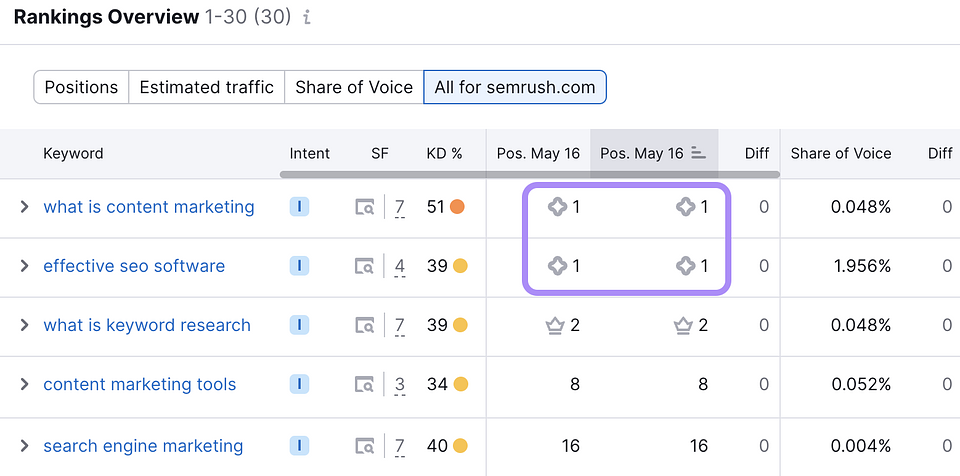
Another strength lies in its visual reporting dashboards. You can quickly identify trends—like which keywords trigger AI Overviews and how often your competitors show up compared to you. This makes it easier to prioritize content updates and spot opportunities where you can gain visibility. The interface is designed to be intuitive, so even if you’re not deeply technical, you can still extract meaningful insights without feeling overwhelmed.
Features and Benefits
The feature set is where Semrush really shines. It combines several layers of data into one cohesive system, making it easier to understand what’s happening beneath the surface. Some of the standout capabilities include:
| Feature | Benefit |
|---|---|
| AI Overview Tracking | Monitor when and where your content appears in AI-generated summaries |
| Brand Mention Analysis | See how often your brand is referenced in AI answers |
| Competitor AI Insights | Identify which competitors dominate AI Overviews |
| Keyword Trigger Detection | Discover which queries activate AI summaries |
| Historical Trends | Track performance changes over time |
What’s particularly valuable is the actionability of the data. It’s not just numbers on a screen—it’s insights you can actually use. For example, if you notice that list-style articles tend to get picked up more often, you can adjust your content accordingly. It’s like having a feedback loop that constantly refines your strategy.
For businesses serious about AI search visibility, Semrush isn’t just a tool—it’s more like a control center for navigating this new terrain.
Ahrefs AI Tracking Capabilities
Ahrefs has long been a favorite among SEO professionals, known for its robust backlink analysis and keyword research tools. But as search evolves, Ahrefs has started adapting to the AI era by introducing features that help track AI-driven search elements, including early-stage AI Overview insights. While it may not be as specialized in this area as some newer tools, it still offers a strong foundation for understanding how your content performs in an AI-influenced ecosystem.
One of Ahrefs’ biggest advantages is its massive data index. This allows users to analyze large volumes of keywords and identify patterns in which queries are more likely to trigger AI Overviews. Even though it doesn’t always directly show AI citations in the same way as dedicated tools, it provides the context needed to make educated decisions.
Another strength is its content gap analysis. By identifying topics your competitors rank for—but you don’t—you can infer potential opportunities for AI visibility. It’s a slightly indirect approach, but still effective when combined with other data points.
Strengths and Limitations
Ahrefs is powerful, but it’s not perfect when it comes to AI monitoring. Understanding both sides helps you decide whether it fits your needs.
| Strengths | Limitations |
|---|---|
| Extensive keyword database | Limited direct AI Overview tracking |
| Strong competitor analysis | Lacks detailed AI citation insights |
| Reliable backlink data | Slower adaptation to AI-first features |
| User-friendly interface | Requires interpretation for AI trends |
Think of Ahrefs as a solid all-rounder rather than a specialized AI tool. It’s great for building a strong SEO foundation, but you might need to pair it with more advanced tools if AI Overviews are your primary focus.
Surfer SEO AI Monitoring
Surfer SEO has always been about content optimization, and its approach to AI monitoring reflects that DNA. Instead of focusing solely on tracking, Surfer emphasizes creating content that is more likely to be picked up by AI systems. It’s a subtle but important distinction—because sometimes the best way to monitor AI performance is to improve the inputs that drive it.
What makes Surfer unique is its data-driven content editor, which analyzes top-performing pages and provides real-time recommendations. These suggestions often align closely with what AI systems prefer—clear structure, relevant entities, and comprehensive coverage of a topic. In a way, Surfer acts as both a monitoring tool and a content coach.
Another standout feature is its ability to analyze SERP structures, including whether AI elements are present. This gives you a clearer picture of how search results are evolving for your target keywords.
Best Use Cases
Surfer isn’t a one-size-fits-all solution, but it excels in specific scenarios:
- Content creators who want to optimize articles for AI inclusion
- Agencies managing multiple client websites and content strategies
- SEO beginners looking for guided recommendations
- Writers aiming to improve readability and structure
The real value of Surfer lies in its proactive approach. Instead of just telling you what happened, it helps you shape what happens next. It’s like having a writing assistant that understands both SEO and AI behavior.
SE Ranking AI Tools
If you’re looking for a balance between affordability and functionality, SE Ranking is worth considering. It has been steadily integrating AI-related features into its platform, making it a practical choice for small to medium-sized businesses that want to explore AI monitoring without breaking the bank.
SE Ranking offers keyword tracking, competitor analysis, and SERP feature monitoring, which now includes elements related to AI Overviews. While it may not have the depth of more specialized tools, it provides enough insight to help you understand where you stand.
Affordability and Performance
One of the biggest selling points of SE Ranking is its cost-effectiveness. You get a wide range of features at a price point that’s accessible for smaller teams. This makes it an attractive option for startups or freelancers who are just starting to navigate AI-driven SEO.
Performance-wise, it delivers consistent and reliable data. The interface is clean, and the reports are easy to understand, which reduces the learning curve. It may not have all the bells and whistles, but it covers the essentials well.
In many ways, SE Ranking is like a compact toolkit—not as expansive as enterprise solutions, but highly practical and efficient for everyday use.
Custom AI Monitoring Solutions
Sometimes, off-the-shelf tools just don’t cut it. If you have very specific needs or operate at a large scale, building a custom AI monitoring solution might be the best route. This approach allows you to tailor every aspect of the system to your requirements, from data collection to reporting.
Custom solutions often involve using APIs, machine learning models, and data pipelines to track AI Overviews across different platforms. While this requires technical expertise, it offers unmatched flexibility and control.
When to Build Your Own System
Building your own solution isn’t for everyone, but it makes sense in certain situations:
- You need highly customized data insights
- You operate in a niche where existing tools lack coverage
- You have the technical resources to develop and maintain the system
- You want to integrate AI monitoring with internal analytics
The biggest advantage is ownership of data and methodology. You’re not limited by what a third-party tool decides to track—you define the rules yourself.
That said, it comes with trade-offs. Development time, maintenance costs, and complexity can be significant. For most businesses, starting with established tools and then scaling into custom solutions is often the smartest path.
How to Choose the Right Tool for Your Needs
Budget vs Features
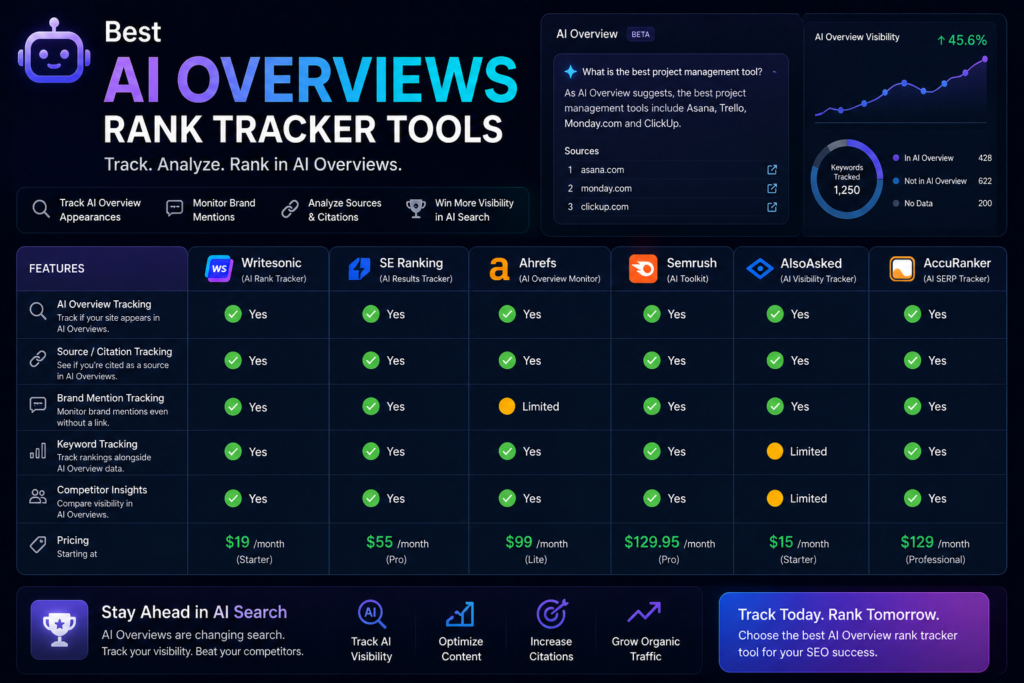
Choosing the right AI overview monitoring tool often comes down to a simple but tricky question: how much are you willing to invest, and what do you expect in return? It’s tempting to go for the most feature-rich option, but that’s not always the smartest move—especially if you’re not going to use half of what it offers.
The key is to align your budget with your goals. If your primary focus is understanding basic AI visibility, a mid-range tool might be more than enough. On the other hand, if you’re managing a large website or multiple clients, investing in a premium solution can save you time and provide deeper insights.
It’s also important to consider the hidden costs. Some tools require additional integrations, training, or even dedicated personnel to operate effectively. These factors can quickly add up, turning what seemed like a reasonable investment into a costly commitment.
A practical approach is to start with a tool that offers scalability. This way, you can expand your usage as your needs grow, without having to switch platforms entirely.
Business Size Considerations
Not all businesses have the same requirements, and that’s especially true when it comes to AI monitoring tools. A solo blogger doesn’t need the same level of detail as a multinational corporation, and choosing the wrong tool can lead to unnecessary complexity.
For small businesses, simplicity and affordability are usually the top priorities. Tools like SE Ranking or Surfer SEO can provide enough insight without overwhelming the user.
For mid-sized companies, the focus shifts toward balancing cost with functionality. This is where tools like Semrush or Ahrefs start to shine, offering a broader range of features while still being manageable.
For large enterprises, customization and scalability become critical. This is often where custom solutions or enterprise-level platforms come into play.
The goal is to find a tool that fits your current needs while leaving room for growth. After all, the digital landscape isn’t standing still—and neither should your strategy.
Strategies for Optimizing AI Overview Visibility
Content Structuring for AI
If you want your content to show up in AI Overviews, you have to start thinking less like a traditional writer and more like a system architect. That might sound a bit technical, but the idea is simple—AI prefers content that is clear, structured, and easy to extract information from. Imagine you’re preparing notes for someone who has to summarize your work in seconds. That’s essentially what AI is doing.
One of the most effective ways to improve your chances is by using logical content hierarchy. This means organizing your article with well-defined headings (H2, H3, H4), each addressing a specific subtopic. AI systems rely heavily on these signals to understand how information is grouped. When your structure is messy or inconsistent, it becomes harder for AI to interpret your content accurately.
Another important factor is direct answer formatting. AI Overviews often pull concise explanations that clearly respond to a query. This doesn’t mean you should oversimplify your content, but you should include sections that directly answer common questions. Think of it like giving both the short answer and the long explanation—AI loves that combination.
Clarity also plays a huge role. Avoid unnecessary jargon and overly complex sentences. While it might feel like you’re adding sophistication, you could actually be making it harder for AI to process your content. Instead, aim for straightforward, conversational language that still delivers depth and value.
There’s also something to be said about content completeness. AI tends to favor pages that cover a topic thoroughly. If your article only scratches the surface, it’s less likely to be included in summaries. On the other hand, comprehensive content signals authority and increases your chances of being selected.
In essence, structuring content for AI is about making it easy to understand, easy to navigate, and rich in useful information. When you get this right, you’re not just optimizing for algorithms—you’re improving the experience for real readers too.
Leveraging Schema and Entities
While content structure handles the visible side of optimization, schema markup and entity relationships work behind the scenes. These elements help search engines—and AI systems—understand the deeper meaning of your content. If content is the story, schema is the metadata that explains what the story is about.
Schema markup allows you to label different parts of your content in a way that machines can easily interpret. For example, you can define whether a section is a FAQ, a product, a review, or an article. This added layer of context can significantly improve your chances of being included in AI Overviews because it removes ambiguity.
Entities, on the other hand, are all about connections. AI systems don’t just look at isolated keywords; they analyze how concepts relate to one another. For instance, if your article mentions tools like Semrush, Ahrefs, and Surfer SEO, AI begins to associate your content with the broader topic of SEO tools and digital marketing. The more clearly these relationships are defined, the easier it is for AI to position your content within its knowledge framework.
One practical way to strengthen entity signals is by naturally incorporating related terms and concepts throughout your content. This doesn’t mean keyword stuffing—it means writing in a way that reflects how topics are interconnected in real life. For example, discussing AI Overviews alongside search intent, user experience, and content quality creates a richer context.
Another strategy is to build topical authority. Instead of writing one-off articles, create clusters of content that revolve around a central theme. This helps establish your site as a reliable source, which increases the likelihood of being referenced by AI systems.
When you combine schema markup with strong entity relationships, you’re essentially giving AI a blueprint for understanding your content. And in a world where machines are making more decisions about what gets seen, that blueprint can make all the difference.
Future of AI Overview Monitoring
Emerging Trends and Technologies
The world of AI-driven search is evolving at a pace that feels almost dizzying. What works today might look outdated in a year, and that’s exactly why keeping an eye on emerging trends is so important. One of the biggest shifts we’re seeing is the move toward multi-modal AI, where search engines don’t just process text but also images, videos, and even voice inputs. This means AI Overviews will become more dynamic, pulling insights from a wider range of content types.
Another trend gaining traction is personalized AI responses. Instead of showing the same overview to everyone, search engines are starting to tailor results based on user behavior, preferences, and context. This adds a new layer of complexity to monitoring because your visibility might vary from one user to another. Tools will need to adapt by providing more granular insights rather than one-size-fits-all data.
We’re also seeing advancements in real-time AI learning. Search engines are becoming better at updating their understanding of content almost instantly. This makes the role of monitoring tools even more critical, as they need to keep up with these rapid changes. Static reports are quickly becoming obsolete; the future lies in continuous, real-time analytics.
Another interesting development is the integration of AI agents into search ecosystems. These agents can perform tasks, answer complex queries, and even make recommendations. As they become more common, the definition of “visibility” will expand beyond search results to include interactions within these systems.
All of this points to a future where SEO is less about static rankings and more about dynamic presence across multiple AI-driven platforms. It’s a challenging shift, but also an exciting one for those willing to adapt.
Preparing for AI-First Search Ecosystems
Adapting to an AI-first world requires more than just new tools—it demands a new mindset. The strategies that worked in the past won’t necessarily translate to this new environment. Instead of focusing solely on rankings, you need to think about how your content fits into a broader information ecosystem.
One of the first steps is to embrace continuous learning. AI systems evolve rapidly, and staying updated is essential. This might involve experimenting with new content formats, testing different structures, or analyzing how AI responds to various approaches.
Another important aspect is collaboration between teams. SEO is no longer a standalone function; it intersects with content creation, data analysis, and even product development. By working together, teams can create more cohesive strategies that align with how AI systems operate.
It’s also worth investing in data-driven decision-making. The more you rely on insights rather than assumptions, the better your chances of सफलता. Monitoring tools play a crucial role here, providing the data needed to refine your approach.
Finally, don’t underestimate the importance of user experience. At the end of the day, AI systems are designed to serve users. If your content genuinely helps people, it’s more likely to be recognized and featured.
Preparing for this shift isn’t about chasing every new trend—it’s about building a flexible, resilient strategy that can adapt as the landscape changes.
Conclusion
AI Overviews have fundamentally changed the rules of search, shifting the focus from simple rankings to true visibility within AI-generated answers. This evolution has created both challenges and opportunities. While traditional SEO metrics still matter, they no longer tell the full story. To stay competitive, you need tools that can reveal how your content is being interpreted, summarized, and presented by AI systems.
From comprehensive platforms like Semrush AI Visibility Toolkit to more specialized or budget-friendly options like Surfer SEO and SE Ranking, there’s no shortage of tools to explore. The key is choosing one that aligns with your goals, resources, and level of expertise. At the same time, optimizing your content through better structure, entity relationships, and schema markup can significantly improve your chances of being featured.
Looking ahead, the shift toward AI-first search ecosystems will only accelerate. Those who adapt early—by combining the right tools with smart strategies—will be in the best position to thrive. It’s not just about keeping up anymore; it’s about staying visible in a world where AI decides what gets seen.