Understanding Digital Marketing Courses
What Is a Digital Marketing Course?
If you’ve ever wondered how brands seem to follow you around the internet—showing ads for exactly what you were just thinking about—you’ve already witnessed the power of digital marketing in action. A digital marketing course duration plays a crucial role in shaping how deeply you understand this field, as it is essentially your gateway into mastering this ever-evolving ecosystem. It’s not just about posting on social media or running ads; it’s about learning how to strategically position products, analyze consumer behavior, and use data to drive decisions.
Table of Contents
A typical digital marketing course covers a wide range of topics including SEO (Search Engine Optimization), SEM (Search Engine Marketing), social media marketing, email campaigns, content creation, analytics, and even emerging areas like AI-driven marketing. Think of it like learning to cook—not just following recipes, but understanding flavors, timing, and presentation so you can create your own signature dishes.
What makes these courses especially appealing is their flexibility. Whether you’re a student, a working professional, or someone looking to switch careers, there’s a course tailored to your needs. Some are crash courses designed to give you a quick overview, while others dive deep into strategy and execution.
The real question isn’t whether you should learn digital marketing—it’s how much time you should invest. That’s where course duration comes into play, and it can dramatically shape your learning experience. Choosing between a 1-month, 6-month, or 1-year course isn’t just about time; it’s about depth, expertise, and ultimately, your career trajectory.
Why Course Duration Matters
Let’s be honest—time is one of the most valuable resources you have. So when choosing a digital marketing course, the duration isn’t just a number; it’s a reflection of how deeply you’ll understand the subject and how prepared you’ll be for the real world.
A shorter course might feel like a quick win. You get in, learn the basics, and get out fast. But here’s the catch: digital marketing isn’t a single skill—it’s a toolbox filled with multiple tools, each requiring practice and refinement. Trying to master everything in a month can feel like trying to learn an entire language over a weekend. You might pick up a few phrases, but fluency? That takes time.
On the other hand, longer courses—like 6 months or even a year—allow you to go beyond surface-level knowledge. You get the chance to work on real projects, analyze case studies, and even make mistakes (which, honestly, is where the real learning happens). These courses often include mentorship, internships, and certifications that add serious weight to your resume.
There’s also the psychological aspect. When you commit to a longer course, you’re more likely to stay consistent and build discipline. Short courses can sometimes feel rushed, leaving you overwhelmed rather than confident.
So, why does duration matter? Because it directly impacts your skill depth, confidence level, and job readiness. Choosing the right duration is less about speed and more about alignment—alignment with your goals, your schedule, and the kind of marketer you want to become.
Overview of Different Course Durations

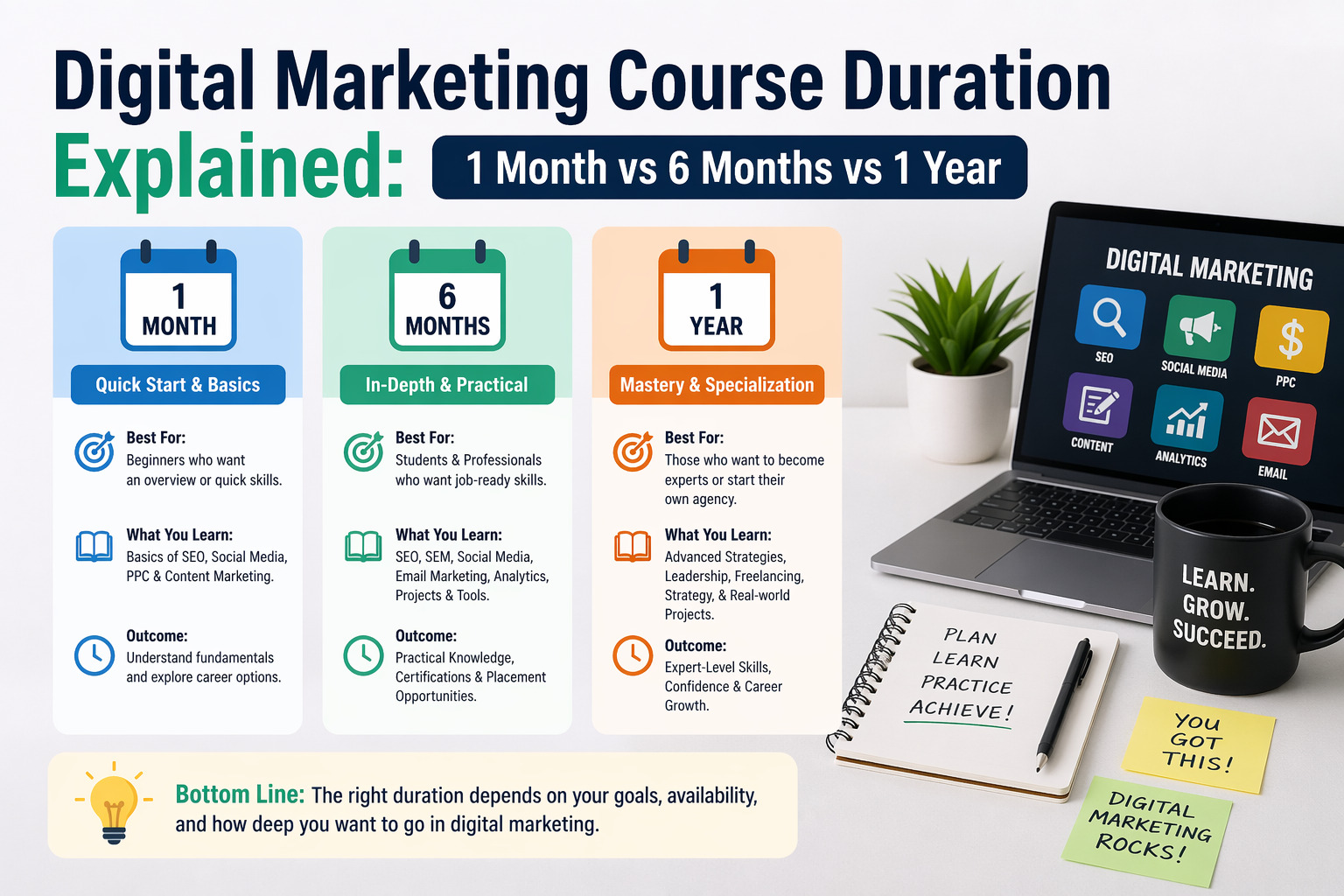
1-Month Digital Marketing Course
A 1-month digital marketing course is like a crash landing into the world of online marketing. It’s fast-paced, intense, and designed for those who want quick exposure rather than deep mastery. If you’re someone who needs a basic understanding—maybe to manage your own business or to get a feel for the industry—this option can be surprisingly useful.
In just four weeks, you’ll typically touch on essential topics like SEO basics, social media marketing, Google Ads, and perhaps a bit of content strategy. However, don’t expect to become an expert overnight. These courses are structured to give you a bird’s-eye view rather than a microscopic analysis. It’s like watching the trailer of a movie—you get the gist, but not the full story.
What makes these courses appealing is their accessibility. They’re usually more affordable and require less time commitment, making them ideal for busy professionals or students juggling multiple responsibilities. Many platforms offer online versions, allowing you to learn at your own pace—even if that pace is a bit rushed.
That said, there’s a trade-off. With limited time, there’s little room for hands-on practice or real-world projects. You might understand the theory behind SEO, but implementing it effectively is a whole different ballgame. Employers often look for practical experience, which short-term courses may not fully provide.
Still, if your goal is to get started quickly, test the waters, or add a basic skill to your toolkit, a 1-month course can be a solid stepping stone. Just don’t expect it to carry you all the way to advanced expertise—it’s more of a launchpad than a destination.
6-Month Digital Marketing Course
A 6-month digital marketing course strikes a balance that many learners find ideal. It’s not too short to feel rushed, and not too long to feel overwhelming. Think of it as the sweet spot where theory meets practice, giving you enough time to actually understand what you’re doing—and why you’re doing it.
Over six months, you’ll dive deeper into core areas like SEO, PPC advertising, social media strategy, email marketing, and analytics. More importantly, you’ll start working on real projects. This is where things get interesting. Instead of just learning concepts, you’ll apply them—running campaigns, analyzing data, and optimizing strategies based on results.
One of the biggest advantages of this duration is the opportunity for hands-on learning. Many programs include assignments, case studies, and even live projects with actual brands. This kind of exposure is invaluable because it bridges the gap between theory and real-world application.
Another key benefit is mentorship. With more time, instructors can provide personalized feedback, helping you refine your skills and avoid common mistakes. You’re not just learning—you’re evolving as a marketer.
From a career perspective, a 6-month course can open doors to entry-level roles such as digital marketing executive, SEO analyst, or social media manager. Employers often view this duration as a sign of serious commitment and foundational competence.
In many ways, a 6-month course is like learning to drive with proper lessons. You don’t just understand the rules—you get behind the wheel, make mistakes, and gradually gain confidence. And that confidence? It’s what sets you apart in the job market.
Deep Dive into 1-Month Courses
Pros of a 1-Month Course
A 1-month digital marketing course often gets dismissed as too short to be meaningful, but that’s not entirely fair. When approached with the right expectations, it can actually be a powerful starting point. Think of it as a “boot camp” for your brain—intense, focused, and designed to push you into action quickly. For someone who thrives under pressure or prefers learning in short bursts, this format can feel energizing rather than limiting.
One of the biggest advantages is speed. In just a few weeks, you gain exposure to multiple areas like SEO basics, social media marketing, Google Ads, and email campaigns. That’s incredibly useful if you’re trying to understand how all the pieces of digital marketing fit together. It’s like getting a map before starting a journey—you may not know every road in detail, but you know where everything is.
Another strong point is affordability and accessibility. These courses are usually budget-friendly, making them ideal for students or small business owners who want to experiment without making a huge financial commitment. Many platforms also offer flexible schedules, allowing you to learn in the evenings or weekends. According to industry data, short-term courses have seen a surge in popularity, especially among entrepreneurs who want to quickly apply digital strategies to their businesses.
There’s also a psychological boost that comes with quick completion. Finishing a course in a month gives you a sense of accomplishment and momentum. That confidence can motivate you to continue learning or even start implementing strategies immediately.
However, the real value lies in how you use it. If you treat it as a stepping stone rather than a final destination, a 1-month course can kickstart your journey effectively. It’s not about mastering everything—it’s about getting your foot in the door and understanding enough to move forward with clarity.
Limitations of Short-Term Learning
Here’s the honest truth: while a 1-month course can open the door, it rarely equips you to walk confidently through it. The biggest limitation is depth. Digital marketing is not a single skill—it’s a layered ecosystem where each component requires time, experimentation, and refinement. Trying to compress all of that into four weeks often results in surface-level understanding.
Imagine trying to learn how to play the guitar in a month. You might learn a few chords, maybe even strum a simple song, but performing confidently in front of an audience? That takes consistent practice over time. The same principle applies here. You might understand what SEO or PPC advertising is, but executing a successful campaign requires more than theoretical knowledge.
Another challenge is the lack of hands-on experience. Many short courses focus heavily on lectures and quick demos, leaving little room for real-world application. Without working on live projects or analyzing actual data, your learning remains incomplete. Employers, on the other hand, are increasingly looking for candidates who can demonstrate practical skills—not just theoretical knowledge.
There’s also the issue of retention. When information is delivered too quickly, it’s easy to forget key concepts. Without enough time to revisit and practice, much of what you learn can fade away just as fast as you acquired it.
That doesn’t mean these courses are useless—it just means they need to be paired with self-learning, practice, and possibly further education. If you rely solely on a 1-month course to build a career, you may find yourself underprepared. But if you use it as a launchpad and continue building your skills, it can still play a valuable role in your journey.
Exploring 6-Month Digital Marketing Programs
Skills You Gain in 6 Months
A 6-month digital marketing course is where things start to feel real. This isn’t just about learning concepts anymore—it’s about building actual skills that you can use in the workplace. Over six months, you move beyond the “what” and start understanding the “how” and “why” behind digital marketing strategies.
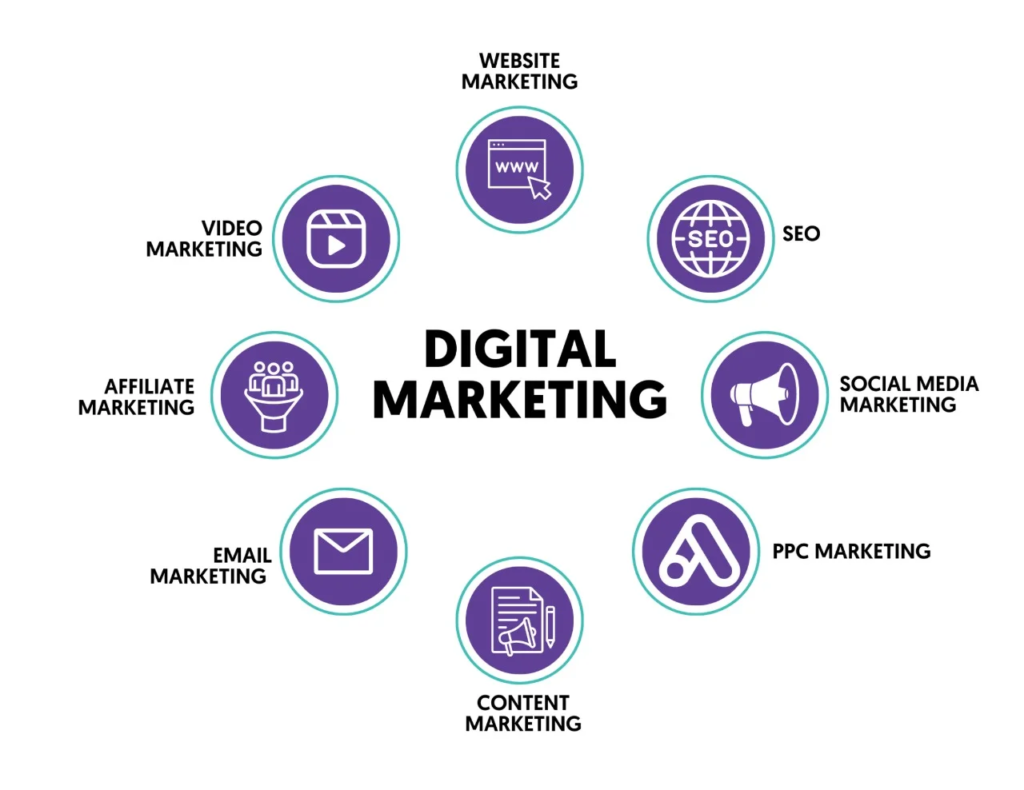
During this period, you typically gain a strong foundation in search engine optimization (SEO), pay-per-click advertising (PPC), social media management, content marketing, email automation, and web analytics. But the difference lies in depth. Instead of just learning definitions, you’ll dive into keyword research, campaign optimization, audience targeting, and performance tracking.
One of the most valuable aspects of a 6-month program is hands-on learning. You’re not just watching tutorials—you’re actively working on projects. For instance, you might create a full digital marketing campaign for a mock or real business, run ads with a small budget, or analyze website traffic using tools like Google Analytics. These experiences are what transform knowledge into skill.
According to industry reports, professionals with practical digital marketing experience are significantly more likely to land entry-level roles compared to those with only theoretical knowledge. This highlights the importance of programs that emphasize application over memorization.
Another key benefit is skill integration. Digital marketing channels don’t operate in isolation. In a 6-month course, you learn how SEO supports content marketing, how social media drives traffic, and how analytics ties everything together. It’s like learning to cook an entire meal instead of just one dish—you understand how each element contributes to the final result.
By the end of six months, you’re not just familiar with digital marketing—you’re capable of executing strategies with confidence. And that’s a game-changer when stepping into the professional world.
Career Opportunities After 6 Months
Completing a 6-month digital marketing course often marks the point where learning starts translating into real career opportunities. At this stage, you’re no longer just a beginner—you’re someone with practical exposure and a portfolio to showcase. That combination can open doors across a wide range of roles in the digital space.
Common entry-level positions include Digital Marketing Executive, SEO Specialist, Social Media Manager, Content Strategist, and PPC Analyst. These roles may vary in responsibility, but they all require a solid understanding of digital channels and the ability to execute campaigns effectively. Employers value candidates who can hit the ground running, and a 6-month program often provides just enough experience to do that.
Freelancing is another avenue worth considering. Many businesses, especially small and medium-sized enterprises, are constantly looking for affordable digital marketing support. With six months of training, you can start offering services like social media management, basic SEO optimization, or ad campaign setup. Platforms like Upwork and Fiverr have made it easier than ever to connect with clients worldwide.
There’s also room for growth. A 6-month course doesn’t lock you into one path—it gives you a foundation to specialize further. Maybe you discover a passion for analytics, or perhaps you enjoy creative content production. Whatever the case, you now have the clarity and skills to move in that direction.
Salary expectations at this stage vary depending on location and industry, but entry-level digital marketers often earn competitive starting salaries, with rapid growth potential. The digital marketing industry itself is expanding quickly, with global spending expected to surpass hundreds of billions of dollars annually.
In essence, a 6-month course positions you at the starting line of a career rather than just the classroom. It’s where learning meets opportunity—and where things start to get exciting.
Understanding 1-Year Digital Marketing Courses
Comprehensive Skill Development
A 1-year digital marketing course is where depth, mastery, and specialization truly come together. If shorter courses are like learning the basics of a language, a one-year program is where you start thinking and communicating fluently. It’s immersive, detailed, and designed to transform you into a well-rounded professional.
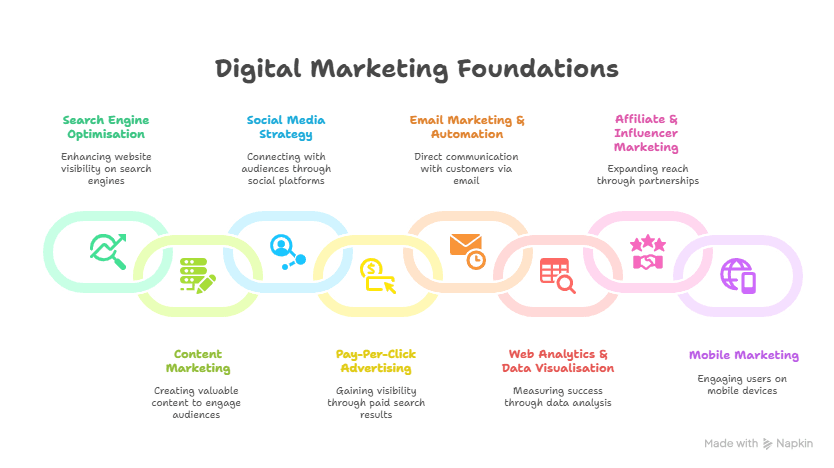
Over the course of a year, you don’t just learn digital marketing—you live it. You explore advanced topics like conversion rate optimization (CRO), marketing automation, advanced analytics, AI-driven marketing tools, and strategic planning. There’s enough time to revisit concepts, practice repeatedly, and refine your approach until it becomes second nature.
One of the standout features of longer programs is the emphasis on real-world projects. You might work with actual clients, manage live campaigns with measurable budgets, and analyze performance data over extended periods. This kind of experience is invaluable because it mirrors the challenges you’ll face in a professional environment.
There’s also a strong focus on building a portfolio. By the end of the course, you’re not just walking away with a certificate—you’re carrying proof of your skills. Case studies, campaign reports, and project outcomes become tangible evidence of your capabilities.
Another advantage is mentorship and networking. Spending a year in a structured learning environment allows you to connect with instructors, industry experts, and fellow learners. These connections can lead to job opportunities, collaborations, and long-term professional relationships.
A 1-year course isn’t just about learning—it’s about transformation. It takes you from curiosity to competence, and from competence to confidence.
Industry Exposure and Internships
One of the defining features of a 1-year digital marketing program is the level of industry exposure it offers. This isn’t just classroom learning—it’s a bridge to the professional world. Many programs include internships, live projects, and collaborations with real companies, giving you firsthand experience of how digital marketing operates in practice.
Internships, in particular, play a crucial role. They allow you to step into a real work environment, understand team dynamics, and apply your skills under professional guidance. It’s one thing to run a mock campaign in a classroom, but it’s a completely different experience when real money, real clients, and real results are involved.
According to career experts, candidates with internship experience are significantly more likely to secure full-time roles quickly. Employers see internships as proof that you can handle real-world responsibilities, not just theoretical tasks.
Industry exposure also helps you stay updated with the latest trends and tools. Digital marketing evolves rapidly—what works today might not work tomorrow. Being in an environment where you’re constantly interacting with professionals ensures that your knowledge remains relevant.
There’s also a confidence factor. When you’ve already worked on real campaigns and dealt with actual challenges, job interviews feel less intimidating. You’re not just talking about what you’ve learned—you’re sharing what you’ve done.
In many ways, this level of exposure is what sets a 1-year course apart. It doesn’t just prepare you for a job—it integrates you into the industry itself, making the transition from student to professional much smoother.
Key Differences Between 1 Month, 6 Months, and 1 Year Courses
Comparison Table of Course Features
Choosing between a 1-month, 6-month, and 1-year digital marketing course can feel a bit like picking a travel itinerary. Do you want a quick weekend getaway, a balanced vacation, or a full immersive journey? Each option offers a different level of depth, experience, and outcome. Instead of guessing, it helps to lay everything out clearly so you can see how these durations stack up against each other.
Here’s a detailed comparison to make things easier:
| Feature | 1-Month Course | 6-Month Course | 1-Year Course |
|---|---|---|---|
| Learning Depth | Basic overview | Intermediate understanding | Advanced mastery |
| Practical Experience | Minimal or none | Moderate (projects & assignments) | Extensive (live projects & internships) |
| Time Commitment | Very low | Moderate | High |
| Cost | Low | Medium | High |
| Skill Development | Introductory skills | Job-ready skills | Industry-level expertise |
| Certifications | Basic certificate | Recognized certification | Advanced certifications + portfolio |
| Career Opportunities | Limited | Entry-level roles | Mid-level roles + faster growth |
| Networking Opportunities | Minimal | Some | Strong industry connections |
| Internships | Rare | Sometimes included | Commonly included |
| Confidence Level | Low to moderate | Moderate to high | High |
Looking at this table, the differences become pretty clear. A 1-month course is like dipping your toes in the water—it’s quick, refreshing, but doesn’t take you very far. A 6-month course, on the other hand, allows you to swim comfortably and explore different areas. Meanwhile, a 1-year program is more like diving deep into the ocean, where you truly understand the ecosystem and how everything connects.
What stands out the most is the gap in practical exposure and confidence. Employers today aren’t just looking for knowledge—they want proof that you can apply it. That’s where longer courses have a clear advantage. According to industry insights, candidates with hands-on experience are up to 60% more likely to secure digital marketing roles compared to those with only theoretical training.
Still, this doesn’t mean longer is always better. The “best” option depends entirely on your goals, schedule, and current situation. The table simply helps you see the trade-offs so you can make a smarter, more informed decision.
Which One Is Right for You?
Now comes the real question: which course duration actually fits your life? Because let’s be honest—there’s no one-size-fits-all answer here. What works perfectly for one person might feel completely wrong for another.
If you’re someone who just wants to understand the basics—maybe you’re a business owner trying to manage your own marketing or a student exploring career options—a 1-month course might be enough. It gives you clarity without demanding too much time or money. But you’ll need to accept that this is just the beginning, not the finish line.
If your goal is to start a career in digital marketing, the 6-month option often hits the sweet spot. It gives you enough time to build real skills, work on projects, and feel confident applying for jobs. You’re not rushing through concepts, but you’re also not committing an entire year. For many people, this balance makes it the most practical choice.
Now, if you’re aiming higher—maybe you want to stand out in a competitive job market, secure better roles, or even move into strategic positions—a 1-year course makes a lot of sense. It’s a bigger investment, but it also delivers deeper expertise, stronger networks, and real industry exposure. Think of it as planting a tree instead of buying fruit—you wait longer, but the rewards last much longer too.
There’s also your personal learning style to consider. Do you prefer fast-paced learning or a more gradual, in-depth approach? Can you stay consistent over a long period, or do you need quick wins to stay motivated?
Ultimately, the right choice is the one that aligns with your goals, time availability, and level of commitment. Instead of chasing the “best” course, focus on the one that fits your journey. Because at the end of the day, it’s not just about how long you study—it’s about how effectively you learn and apply what you’ve learned.
Factors to Consider Before Choosing Course Duration
Career Goals and Learning Pace
Before committing to any digital marketing course duration, it’s worth asking yourself a simple but powerful question: What do I actually want from this? Because your answer will shape everything—from the course you choose to the effort you put in.
If your goal is to quickly add a new skill or support your existing job or business, a shorter course might do the trick. But if you’re planning a full career shift into digital marketing, you’ll need more than just surface-level knowledge. Employers are looking for individuals who can strategize, execute, and analyze campaigns—not just understand them theoretically.
Your learning pace matters just as much. Some people thrive in fast-paced environments where they can absorb information quickly and move on. Others need time to process, practice, and revisit concepts before they truly stick. There’s no right or wrong here—it’s about knowing yourself.
For example, if you rush through a 1-month course but struggle to retain what you’ve learned, you may end up spending more time relearning later. On the flip side, committing to a 1-year program without the discipline to stay consistent can lead to burnout or incomplete learning.
Another factor is how comfortable you are with self-learning. Shorter courses often require you to fill in the gaps on your own, using online resources, practice projects, and experimentation. Longer courses, however, tend to provide more structured guidance, which can be helpful if you prefer a clear roadmap.
Think of it like fitness training. Some people can follow a quick workout plan and stay disciplined on their own, while others benefit from a long-term coaching program. Both approaches can work—the key is choosing the one that matches your mindset and goals.
When your course duration aligns with your career ambitions and learning style, everything feels more natural. You’re not forcing yourself into a structure—you’re growing within one that actually supports you.
Budget and Time Commitment
Let’s talk about two realities that no one can ignore: money and time. No matter how motivated you are, these factors will influence your decision when choosing a digital marketing course.
Short-term courses are generally more affordable, making them an attractive option if you’re on a tight budget. They also require less time commitment, which is perfect if you’re juggling work, studies, or other responsibilities. But remember, lower cost often comes with fewer resources, limited mentorship, and less practical exposure.
Mid-length courses, like the 6-month option, usually fall into a moderate price range. They offer a better balance between cost and value, providing more hands-on experience and structured learning without being overly expensive. For many learners, this feels like a worthwhile investment because it increases job readiness without stretching resources too far.
A 1-year digital marketing course, however, is a bigger commitment—both financially and in terms of time. You’re not just paying for lessons; you’re investing in mentorship, projects, internships, and networking opportunities. While the upfront cost may seem high, the long-term return can be significant if it leads to better job opportunities and faster career growth.
Time is equally important. Can you realistically dedicate several hours a week for a year? Will you stay consistent, or will other responsibilities take over? Being honest about your schedule can save you from frustration later.
There’s also an opportunity cost to consider. Spending a year learning means delaying full-time work, but it could also mean entering the job market with stronger skills and higher earning potential.
In the end, it’s about balance. You don’t need to choose the most expensive or the longest course—you need to choose the one that gives you the best return on your time, money, and effort. When those three align, your learning experience becomes not just effective, but genuinely rewarding.
Conclusion
Choosing between a 1-month, 6-month, and 1-year digital marketing course isn’t about picking the “best” option—it’s about choosing the one that fits your life and ambitions. Each duration serves a different purpose. A short course gives you a quick introduction, a mid-length program builds job-ready skills, and a longer course transforms you into a confident, industry-ready professional.
The real difference lies in depth, experience, and opportunity. Digital marketing isn’t something you master overnight—it’s a skill that grows with time, practice, and real-world exposure. The more you invest in learning, the more equipped you become to handle the challenges of the industry.
At the end of the day, your success won’t depend solely on the duration of your course. It will depend on how consistently you practice, how curious you remain, and how willing you are to adapt in a constantly evolving field. Choose wisely, stay committed, and treat your learning journey as an ongoing process rather than a one-time decision.