Artificial intelligence has fundamentally changed how SEO professionals work. From generating content briefs and drafting long-form articles to analyzing competitor gaps and suggesting schema markup, AI tools have become indispensable in the modern SEO workflow.
But with three major AI platforms — OpenAI’s ChatGPT, Anthropic’s Claude, and Google’s Gemini — all vying for your attention, the question isn’t whether to use AI for SEO. It’s which AI to use, and when.
This article puts all three through their paces across every major SEO use case: keyword research, content creation, on-page optimization, technical SEO, link building, and local SEO. We’ll score each tool, break down their strengths and weaknesses, and give you a clear recommendation based on your specific needs.
Let’s get into it.
Quick Comparison: At a Glance
| SEO Use Case | ChatGPT | Claude | Gemini |
|---|---|---|---|
| Keyword Research | ⭐⭐⭐⭐ | ⭐⭐⭐ | ⭐⭐⭐⭐⭐ |
| Long-Form Content | ⭐⭐⭐⭐ | ⭐⭐⭐⭐⭐ | ⭐⭐⭐⭐ |
| On-Page Optimization | ⭐⭐⭐⭐ | ⭐⭐⭐⭐ | ⭐⭐⭐⭐⭐ |
| Technical SEO | ⭐⭐⭐⭐⭐ | ⭐⭐⭐⭐ | ⭐⭐⭐ |
| Schema Markup | ⭐⭐⭐⭐⭐ | ⭐⭐⭐⭐ | ⭐⭐⭐⭐ |
| Link Building Strategy | ⭐⭐⭐⭐ | ⭐⭐⭐⭐⭐ | ⭐⭐⭐ |
| Local SEO | ⭐⭐⭐ | ⭐⭐⭐ | ⭐⭐⭐⭐⭐ |
| Content Briefs | ⭐⭐⭐⭐ | ⭐⭐⭐⭐⭐ | ⭐⭐⭐⭐ |
| SERP Analysis | ⭐⭐⭐⭐ | ⭐⭐⭐ | ⭐⭐⭐⭐⭐ |
| E-E-A-T Signals | ⭐⭐⭐ | ⭐⭐⭐⭐⭐ | ⭐⭐⭐⭐ |
Understanding the Contenders
Before we dive into specific use cases, let’s understand who these tools are and what makes each one unique from an SEO standpoint.
ChatGPT (OpenAI)
ChatGPT, powered by GPT-4o, is the most widely used AI tool in the world. With a massive plugin and GPT ecosystem, it has become the Swiss Army knife of content creation. Its browsing capability (available in the paid tier) allows it to access live web data, which is critical for SEO tasks that require up-to-date SERP analysis. The Custom GPT feature also allows SEO professionals to build specialized workflows — from automated content factories to on-page auditors.
Best for: Versatility, automation via GPTs, technical content, and users who need a broad AI ecosystem.
Claude (Anthropic)
Claude — currently available as Claude Sonnet 4.6 and Claude Opus 4.6 — has established itself as the gold standard for long-form writing quality, reasoning depth, and nuanced instruction-following. Claude’s extended context window (up to 200,000 tokens) makes it exceptional for analyzing entire websites, large content briefs, or competitor pages in a single prompt. It also excels at following complex, multi-step prompts without “forgetting” instructions midway.
Best for: Long-form SEO content, E-E-A-T-rich articles, complex analysis, and content that needs to sound genuinely human.
Gemini (Google)
Gemini is Google’s AI — and that lineage matters enormously for SEO. Gemini has access to real-time Google Search data, Google Trends, and Google’s broader knowledge graph. The Gemini Advanced tier (via Google One) integrates directly into Google Workspace, meaning it can work alongside Google Search Console, Google Analytics, and Google Docs in ways that ChatGPT and Claude simply cannot. For SEO professionals who live inside the Google ecosystem, Gemini offers native integrations that are genuinely game-changing.
Best for: Real-time SERP data, local SEO, Google-native integrations, and keyword research tied to live search trends.
Round 1: Keyword Research
Keyword research is the foundation of any SEO strategy, and the AI that helps you uncover the right keywords faster has a massive advantage.
ChatGPT
ChatGPT is strong at generating seed keyword lists, brainstorming long-tail variations, and organizing keywords into topic clusters. With web browsing enabled, it can pull “People Also Ask” data and suggest related queries. However, it lacks native integration with Google Search data, meaning its keyword volume estimates are educated guesses rather than data-driven figures. Where it shines is in semantic keyword grouping — ask it to cluster a list of 100 keywords by user intent and it does an impressive job.
Prompt that works well: “Act as an SEO strategist. Given the seed keyword [X], generate 30 long-tail keywords grouped by search intent: informational, navigational, commercial, and transactional. Include a difficulty assessment for each.”
Claude
Claude’s keyword research capabilities are solid but not its strongest suit. It’s excellent at analyzing keyword intent and helping you understand the why behind a query, but it lacks real-time data access by default. Where Claude adds value in keyword research is in the strategic layer — it can help you build an entire topical authority map, identify content gaps, and create pillar-cluster structures that align with how Google’s algorithms evaluate expertise. Claude is particularly good at analyzing competitor content to surface keyword opportunities hidden in the text.
Prompt that works well: “Here is a list of [X] competitor URLs. Analyze the topics they cover most thoroughly and identify 20 keyword opportunities they’ve missed based on common user questions in this niche.”
Gemini
Gemini is the clear winner for keyword research — and it’s not particularly close. Because it’s built by Google and has access to real-time Google Search data, Gemini can pull trending queries, suggest keywords based on actual search behavior, and integrate with Google Trends in a way no other AI can match. When you ask Gemini about keyword opportunities, it draws on the same underlying data infrastructure that powers Google’s own search suggestions. For SEO professionals, this is an enormous advantage.
Prompt that works well: “Using current Google Search trends, identify 25 rising keywords in the [industry] space that have low competition but growing search volume. Group them by topic cluster and suggest a content calendar.”
Winner: Gemini — its native Google data access makes it the most accurate and relevant tool for keyword research.
Round 2: Long-Form SEO Content Creation

Creating long-form content that ranks requires more than stringing together keywords. The content needs to demonstrate expertise, be genuinely useful, maintain a consistent voice, and satisfy user intent at every section.
ChatGPT
ChatGPT produces solid, reliable content. It’s fast, follows structure well, and can generate a 2,000-word article without much prompting. However, it has a tendency toward generic phrasing and a detectable “AI voice” that often feels list-heavy and formulaic. For SEO content, this matters because Google’s Helpful Content Update increasingly rewards originality, depth, and genuine expertise over keyword-stuffed mediocrity. That said, with the right system prompts and iterative editing, ChatGPT content can be polished to a high standard.
Strengths: Speed, structure, reliable instruction-following Weaknesses: Generic tone, tendency toward surface-level depth, predictable sentence structure
Claude
Claude is the best AI for long-form SEO content creation — and this is where the gap between the tools is most visible. Claude’s writing is noticeably more nuanced, varied in sentence structure, and capable of sustaining a consistent editorial voice across thousands of words. It’s also significantly better at incorporating E-E-A-T signals naturally — weaving in first-person expertise cues, citing reasoning, and structuring arguments in a way that reads as authoritative rather than assembled. Claude is particularly strong at writing sections that answer specific search queries deeply, which aligns with how Google evaluates content quality.
The 200,000-token context window is also a practical superpower. You can feed Claude an entire content brief, competitor articles, interview transcripts, and brand guidelines in a single prompt and it will synthesize all of it into a cohesive article. ChatGPT and Gemini both hit context limits that force you to break this workflow into chunks.
Strengths: Writing quality, E-E-A-T signals, long-context handling, natural voice Weaknesses: No real-time data access, slightly slower than ChatGPT
Gemini
Gemini produces competent, well-structured content, but it doesn’t match Claude’s writing depth or ChatGPT’s speed. Where Gemini adds value in content creation is in research integration — it can pull real-time examples, statistics, and news to support content claims in a way the other two cannot by default. This makes Gemini especially useful for news-adjacent content, trend pieces, and anything requiring current data.
Strengths: Real-time research integration, Google Docs native workflow Weaknesses: Writing quality lags behind Claude, less nuanced tone
Winner: Claude — for long-form content that needs to rank, Claude’s writing quality, depth, and context window are unmatched.
Round 3: On-Page SEO Optimization

On-page SEO involves optimizing title tags, meta descriptions, header structures, internal linking suggestions, URL slugs, and semantic keyword integration within existing content.
ChatGPT
ChatGPT is a reliable on-page SEO workhorse. Give it a URL (with browsing enabled) or paste in content, and it can quickly generate optimized title tags, meta descriptions, and revised header structures. It’s excellent at producing multiple variations of meta titles for A/B testing and understands the character constraints and click-through optimization principles behind effective titles.
Practical use: Generating 5–10 title tag variations for high-priority pages, then testing with a tool like Google Optimize or Search Console.
Claude
Claude is strong at on-page analysis when you provide it with content directly. Its ability to analyze large documents means you can paste an entire 5,000-word page and ask for a comprehensive on-page audit — covering header hierarchy, semantic keyword gaps, internal linking opportunities, readability scores, and E-E-A-T improvements — in a single pass. This holistic analysis approach is where Claude differentiates itself from the more task-by-task interaction style of ChatGPT and Gemini.
Practical use: Comprehensive on-page audits of individual pages, with specific, actionable recommendations tied to ranking goals.
Gemini
Gemini has an edge in on-page SEO because it can analyze the live SERP for a target keyword before making recommendations. Rather than optimizing in a vacuum, Gemini can tell you what the top-ranking pages are doing with their title tags, headers, and content structure — and use that to inform its optimization suggestions. This real-world SERP anchoring makes Gemini’s on-page recommendations more grounded in what’s actually working right now.
Practical use: Pre-optimization SERP analysis + recommendations calibrated to what currently ranks.
Winner: Gemini (narrow) — SERP-informed optimization gives it a practical edge, though Claude’s holistic analysis is also extremely valuable.
Round 4: Technical SEO

Technical SEO encompasses site architecture, crawlability, schema markup, page speed recommendations, robots.txt and .htaccess configurations, Core Web Vitals analysis, and more.
ChatGPT
ChatGPT is the strongest of the three for technical SEO tasks. It can generate clean, accurate schema markup in JSON-LD format for virtually any schema type (Article, FAQ, Product, LocalBusiness, HowTo, etc.), debug robots.txt files, write .htaccess redirect rules, explain Core Web Vitals concepts clearly, and even help with log file analysis when you paste in data. With the Code Interpreter feature, it can also analyze CSV data exports from crawl tools like Screaming Frog.
Standout capability: Generating complex JSON-LD schema for nested entities (e.g., a Product with AggregateRating, Offer, and Review schemas combined) is something ChatGPT does remarkably well.
Claude
Claude handles technical SEO competently and is excellent at explaining technical concepts clearly — useful when communicating with developers or clients. Its ability to process long inputs means it can analyze large XML sitemaps, robots.txt files, or structured data outputs in full. It’s also strong at generating schema markup and can produce accurate, clean JSON-LD. However, it lacks the code execution capabilities of ChatGPT’s Code Interpreter, which limits its ability to do hands-on data analysis.
Gemini
Gemini is the weakest of the three for technical SEO. While it understands the concepts and can generate schema markup, it doesn’t have ChatGPT’s code execution capabilities or Claude’s depth of analysis. For purely technical tasks — debugging crawl issues, analyzing log files, or generating structured data — Gemini is the tool you’d reach for last.
Winner: ChatGPT — Code Interpreter integration, strong schema generation, and reliable technical knowledge make it the top choice for technical SEO.
Round 5: E-E-A-T and Content Quality Signals
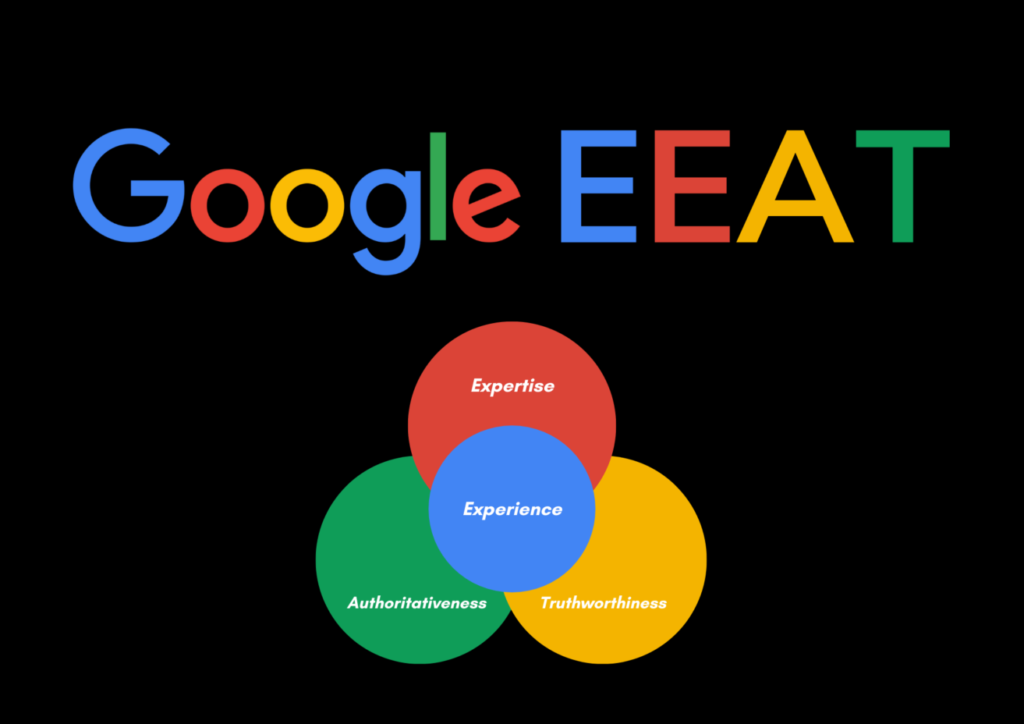
Google’s E-E-A-T framework (Experience, Expertise, Authoritativeness, Trustworthiness) has become central to ranking in competitive niches, especially YMYL (Your Money, Your Life) categories. AI-generated content often fails E-E-A-T checks because it lacks genuine first-person experience, specific examples, and authoritative sourcing.
ChatGPT
ChatGPT understands E-E-A-T conceptually and can add signals when instructed, but the results often feel forced. Phrases like “As an expert in this field…” or “Based on my experience…” ring hollow when they come from a model without genuine experience. The writing style also tends toward generic statements that lack the specificity Google’s quality raters look for.
Claude
Claude is significantly better at writing content that feels authoritative. Its writing naturally incorporates nuanced reasoning, acknowledges complexity and counterarguments, and builds arguments with supporting logic rather than just assertions. When prompted well — with specific expertise to incorporate, quotes, data, or case studies — Claude can produce content that passes E-E-A-T quality checks better than any other AI on the market. Its instruction-following precision also means it reliably incorporates expertise signals when asked, rather than defaulting to generic language.
Gemini
Gemini’s access to real-time sources means it can pull recent studies, statistics, and expert quotes to support content — a meaningful E-E-A-T advantage. Content backed by real, current sources is more trustworthy by definition. However, Gemini’s writing quality and ability to synthesize those sources into genuinely expert-sounding prose lags behind Claude.
Winner: Claude — for creating content that demonstrates genuine expertise, nuance, and authoritativeness, Claude leads the field.
Round 6: Local SEO
Local SEO involves optimizing for location-based searches, Google Business Profile management, local citation strategies, and creating location-specific landing pages.
ChatGPT
ChatGPT can generate location-specific landing page content, create Google Business Profile descriptions, and suggest local citation sources. It’s competent at the content side of local SEO but lacks any real-time local data or direct integration with Google’s local search ecosystem.
Claude
Claude’s local SEO capabilities are similar to ChatGPT’s — strong on the content and strategy side, but limited by the absence of real-time local data. Claude is excellent at creating large volumes of location-specific pages that feel genuinely different from each other (rather than templated), which is a common problem with scaled local SEO content.
Gemini
Gemini wins local SEO by a significant margin. Its integration with Google Maps data, Google Business Profiles, and local search trends gives it visibility into what’s actually ranking in local SERPs. It can analyze local competitor profiles, suggest categories, identify review response strategies, and provide locally relevant keyword data in a way no other AI can match. For agencies managing multi-location clients or local businesses trying to dominate their market, Gemini is an essential tool.
Winner: Gemini — Google’s local data infrastructure gives Gemini an unassailable advantage in local SEO.
Round 7: Link Building Strategy
Link building requires creativity, research, and strategic thinking — identifying link opportunities, crafting outreach, and developing content worth linking to.
ChatGPT
ChatGPT is solid at generating outreach email templates, suggesting link building tactics, and helping ideate linkable assets. Its broad training data means it can suggest creative link building strategies across many industries. It’s also useful for identifying broken link building opportunities when provided with crawl data.
Claude
Claude is the strongest AI for link building strategy. Its analytical depth means it can take a complex brief — your site’s existing backlink profile, competitor profiles, target audience, and content capabilities — and produce a genuinely strategic link building plan rather than a generic list of tactics. It’s also the best AI for writing truly personalized outreach emails that don’t sound templated, which dramatically improves response rates. Claude can analyze what makes a piece of content naturally link-worthy and help you design content specifically engineered to earn links.
Gemini
Gemini’s link building utility is limited compared to the other two. While it understands the concepts, it doesn’t offer meaningful advantages over ChatGPT or Claude for this specific use case, and its real-time data advantage matters less here than in keyword research or local SEO.
Winner: Claude — strategic depth and outreach writing quality give Claude the edge for link building.
Round 8: SEO Workflow Automation and Integration
Beyond raw capabilities, SEO professionals need tools that fit into their existing workflows and can be automated at scale.
ChatGPT
ChatGPT’s Custom GPTs and API access make it the most automatable of the three. You can build dedicated SEO GPTs for specific tasks — a title tag generator, a meta description optimizer, a schema markup tool — and deploy them across your team. The OpenAI API is also the most mature and widely integrated, with connections to tools like Zapier, Make.com, and dozens of SEO platforms.
Claude
Claude’s API is powerful and increasingly well-integrated into SEO tools. Platforms like Surfer SEO, Jasper, and others have added Claude integrations. The large context window makes Claude particularly valuable for API use cases involving large documents. However, Claude doesn’t have a “Custom GPT” equivalent, which limits team-level specialization compared to ChatGPT.
Gemini
Gemini’s native integration with Google Workspace — including Google Docs, Google Sheets, and eventually Search Console — makes it the most seamlessly integrated tool for teams already working in Google’s ecosystem. If your SEO reporting and content workflow runs through Google tools, Gemini’s Workspace integrations will save significant time.
Winner: ChatGPT (slight) — the most mature API and automation ecosystem, though Gemini is catching up fast for Google Workspace users.
Pricing Comparison (2025)
| Plan | ChatGPT | Claude | Gemini |
|---|---|---|---|
| Free | GPT-4o (limited) | Claude Sonnet (limited) | Gemini 1.5 Flash |
| Pro/Plus (~$20/mo) | ChatGPT Plus | Claude Pro | Google One AI Premium |
| Team/Enterprise | ChatGPT Team/Enterprise | Claude Team/Enterprise | Google Workspace AI |
All three offer competitive pricing at the individual level. For teams and agencies, pricing scales similarly. The key differentiator is what you get at each tier — Claude Pro’s extended context window and Claude Opus 4.6 access, ChatGPT Plus’s web browsing and Code Interpreter, or Gemini’s Google Workspace integration.
Which AI Should You Choose for SEO?
The honest answer is: you probably shouldn’t pick just one.
The most effective SEO professionals in 2025 use AI tools the way a craftsperson uses specialized tools — reaching for the right one based on the job at hand. Here’s the practical breakdown:
Use ChatGPT when:
- You need technical SEO help — schema markup, robots.txt, .htaccess, code-level analysis
- You want to build automated SEO workflows with Custom GPTs
- You need to process and analyze data exports from crawl tools
Use Claude when:
- You’re creating long-form content that needs to rank — blog posts, pillar pages, guides
- You need to analyze large documents, competitor content, or lengthy briefs in one shot
- You want content that genuinely demonstrates E-E-A-T signals
- You’re developing link building strategies or personalized outreach
Use Gemini when:
- You’re doing keyword research and need real search data
- You’re managing local SEO for one or multiple locations
- You’re optimizing content based on what’s actually ranking in live SERPs
- You live in Google Workspace and want native AI assistance
The Verdict: Which AI “Wins” for SEO?

If you’re forced to choose just one tool, Claude wins for SEO content quality, Gemini wins for data-driven SEO research, and ChatGPT wins for technical SEO and automation.
For overall SEO value — balancing content quality, strategic depth, and practical output — Claude edges out the competition for most SEO professionals focused on creating content that ranks. Its writing quality, long-context capabilities, and E-E-A-T signal strength are the most directly relevant to what Google’s algorithms reward in 2025.
But if your primary SEO challenges are keyword research and understanding the live SERP landscape, Gemini deserves serious consideration — and its advantages are only likely to grow as Google deepens its AI integration with Search.
The smartest move? Use all three. Subscribe to Claude for content creation and strategy, keep ChatGPT for technical tasks and automation, and use Gemini for keyword and competitive research. The combined monthly cost is less than a single hour of SEO consultant fees — and the productivity gains are orders of magnitude higher.
Frequently Asked Questions
Is AI-generated SEO content safe to use after Google’s Helpful Content Update? Yes — with caveats. Google has repeatedly stated that AI-generated content is not inherently against its guidelines. What matters is whether the content is helpful, accurate, and demonstrates genuine expertise. Content that’s purely auto-generated without human expertise, editing, or original insight is at risk. Content that uses AI as a writing aid while incorporating real expertise and value is fine.
Can AI replace SEO professionals? No — and this view is gaining traction even among AI companies. AI tools accelerate and augment SEO work enormously, but strategy, client relationships, interpretation of data, and the judgment calls that come from real experience remain human responsibilities. AI is best understood as a force multiplier, not a replacement.
Which AI is best for writing meta descriptions at scale? ChatGPT‘s Custom GPTs make it the most scalable option for bulk meta description generation. You can create a specialized GPT with your brand voice guidelines and target keyword lists baked in, then generate hundreds of meta descriptions with consistent quality.
Does using AI for SEO content hurt rankings? Not inherently. Plenty of AI-assisted content ranks well. The quality of the output — helpfulness, accuracy, expertise signals — matters far more than the tool used to create it. The risk comes from publishing low-quality, thin, or factually inaccurate AI content without editorial review.
Which AI is best for SEO beginners? Gemini is arguably the most approachable entry point for SEO beginners because of its Google integration and ability to surface real search data with minimal prompting. ChatGPT’s interface is also extremely intuitive. Claude’s strength for beginners lies in its ability to explain SEO concepts with exceptional clarity and nuance.
Final Thoughts
The AI SEO landscape in 2025 is genuinely competitive, and all three major platforms have meaningful strengths. The era of “one AI to rule them all” is giving way to a more sophisticated, multi-tool approach that mirrors how professional SEO has always worked — multiple specialized tools, each best at its job, combined into a cohesive workflow.
What hasn’t changed is the fundamental goal: create content that genuinely helps users, demonstrates real expertise, and earns the trust of both readers and search engines. AI makes that goal more achievable than ever — but the strategy, oversight, and expertise still have to come from you.