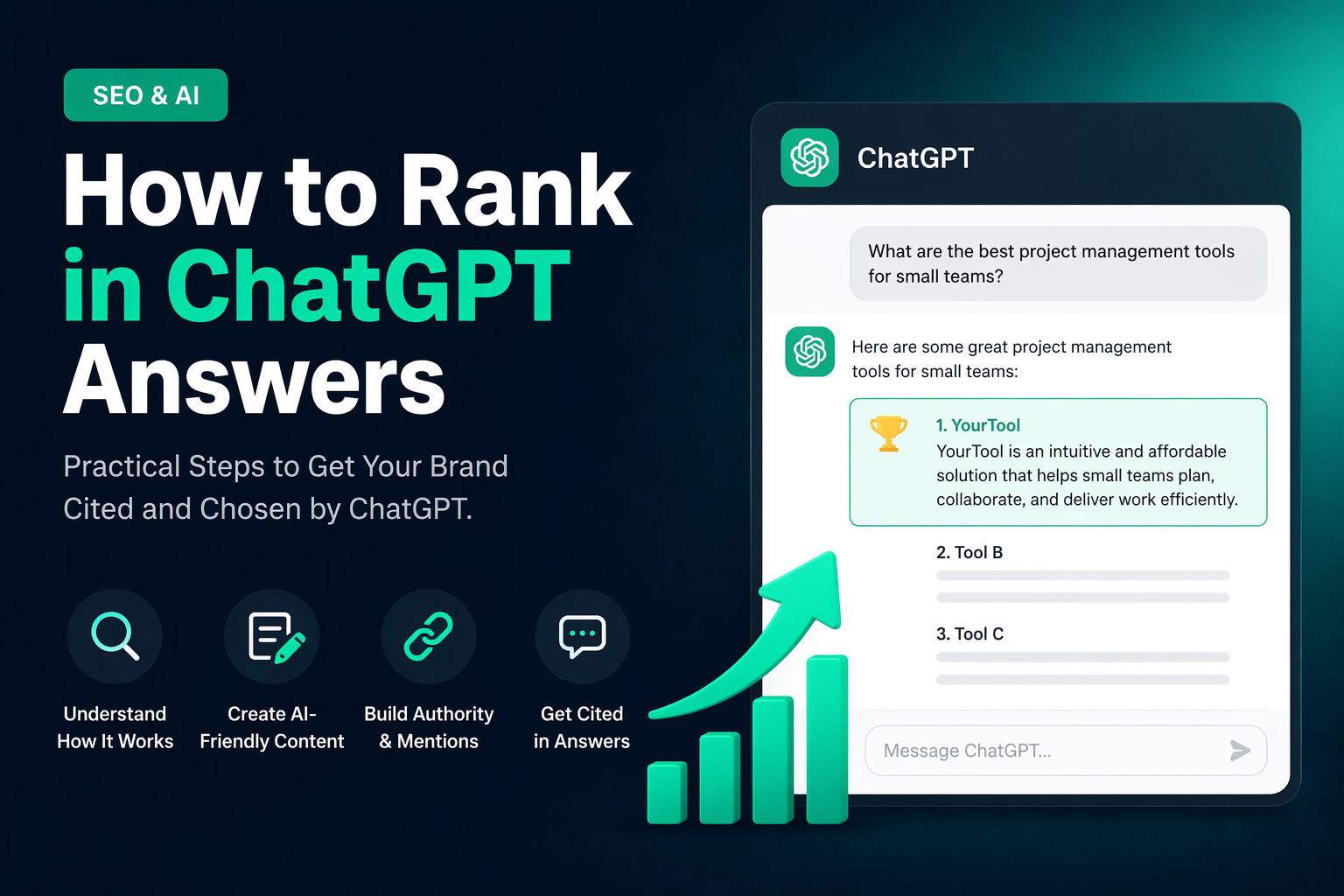
The rules of search are being rewritten. Millions of people now turn to ChatGPT, Claude, Gemini, and other AI assistants as their first stop for answers — and they trust what these systems say. If your business, brand, or content is not being cited in AI-generated answers, you are invisible to a rapidly growing audience.
Table of Contents
This guide explains exactly how ChatGPT decides what content to surface, what ranking signals matter most, and the precise steps you can take to make your content the answer AI models reach for first.
Understanding How ChatGPT Retrieves and Generates Answers
The Two Modes of ChatGPT
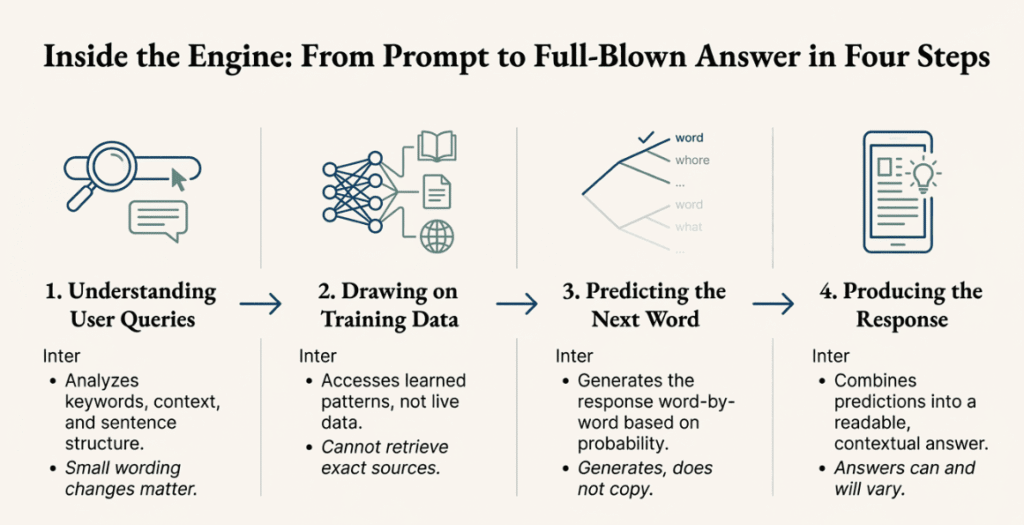
ChatGPT operates in two distinct modes that determine how it finds information:
Base Model (Without Web Browsing)
When ChatGPT answers from its training data alone, it draws on a static snapshot of the internet up to its knowledge cutoff. Content that was well-indexed, widely cited, and authoritative during that window has the highest likelihood of being encoded in the model’s weights.
Browsing / RAG Mode (With Web Search)
When ChatGPT uses its web browsing plugin or Bing integration, it performs real-time retrieval — fetching current pages and synthesizing answers. This is the mode that matters most for ongoing content optimization, because it is dynamic and constantly being refreshed.
| Mode | What It Means for You |
| Base Model | Historical content quality, citation frequency, and domain authority matter most |
| Browsing Mode | Real-time SEO, structured content, and schema markup become critical |
| GPT-4o with Search | Bing indexing, page freshness, and E-E-A-T signals dominate |
| Custom GPTs | Data sources are curated — getting into those sources is the key lever |
What ChatGPT Actually Optimizes For
When generating an answer, ChatGPT is essentially asking: “What is the most accurate, complete, and trustworthy answer I can give to this question?” It is not asking “Which page has the most backlinks?”
The selection factors include:
- Semantic relevance: Does the content directly answer the query intent?
- Source authority: Is the domain recognized as an expert in this field?
- Content clarity: Is the information presented in a format that is easy to extract and cite?
- Factual density: Does the content contain specific, verifiable claims rather than generic statements?
- Citation frequency: Has this source been cited or referenced by other authoritative sources?
- Freshness: For browsing mode, when was the content last updated?
The Difference Between SEO and AEO
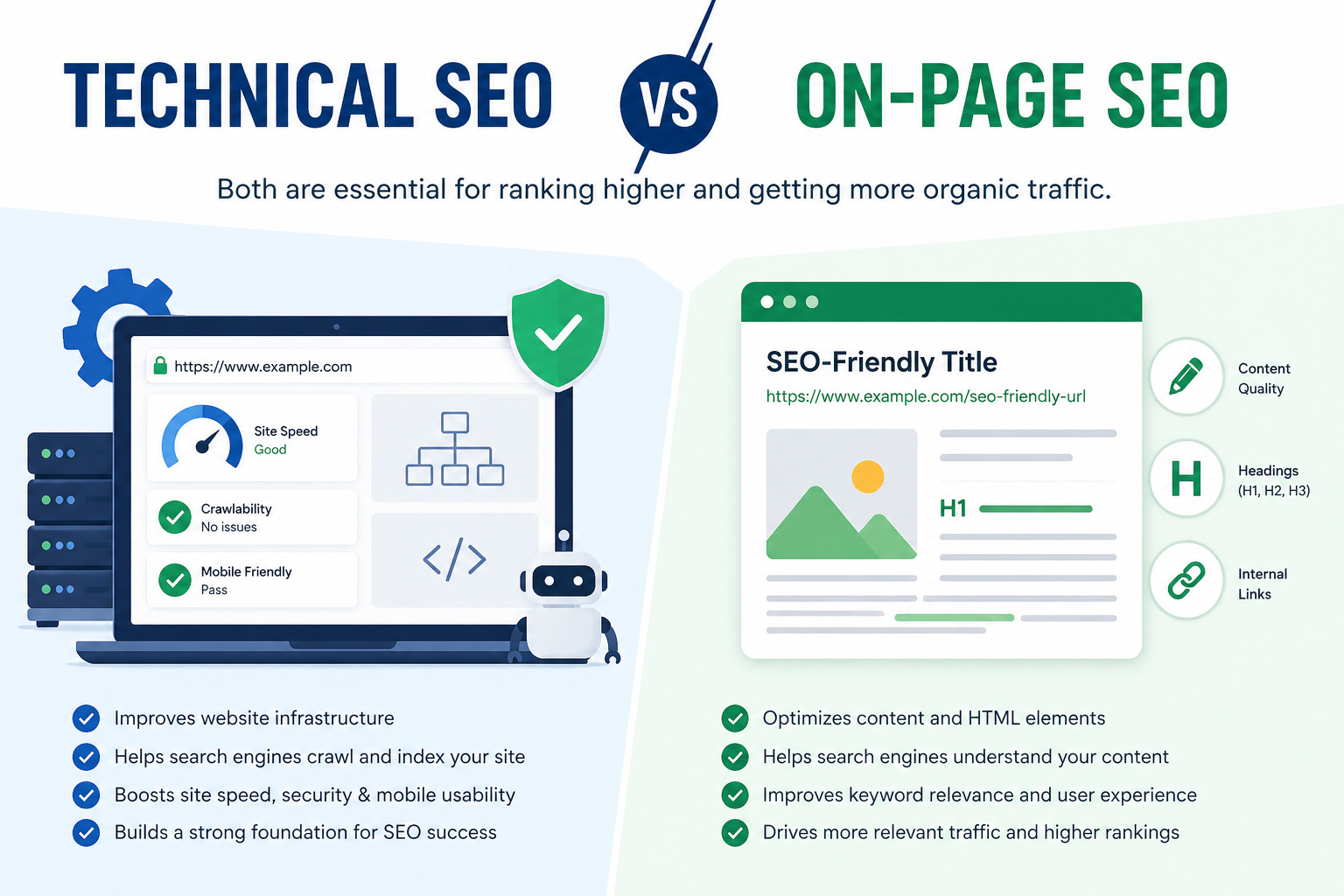
Answer Engine Optimization (AEO) is the discipline of structuring content so AI models are more likely to retrieve, trust, and cite it. It shares DNA with SEO but diverges significantly in what it rewards.
| Traditional SEO | Answer Engine Optimization (AEO) |
| Optimize for keyword density | Optimize for question-answer pairs |
| Build backlinks for authority | Build citations and mentions across authoritative sources |
| Target ranking positions 1–10 | Target being quoted directly in the AI answer |
| Focus on click-through rate | Focus on being the definitive source that needs no click |
| Use long-tail keyword clusters | Use natural language question clusters |
| Optimize meta descriptions | Optimize opening paragraphs and definitions |
| Page speed for crawl budget | Crawlability and clean HTML structure for AI parsing |
| ⚠️ Warning: Many marketers are applying traditional SEO tactics to AEO and wondering why they don’t work. Keyword stuffing is invisible to language models. What matters is whether your content is the clearest, most trustworthy answer available. |
The 8 Core Ranking Signals for ChatGPT Answers
Topical Authority
ChatGPT strongly favors sources that demonstrate deep, consistent expertise in a subject area. A website that has published 50 in-depth articles on personal finance will almost always outrank a general lifestyle blog that has one article on budgeting, even if that single article is well-written.
How to build topical authority:
- Create comprehensive topic clusters: a pillar page covering the main topic with dozens of supporting articles covering subtopics
- Publish consistently in your niche rather than across many unrelated topics
- Link internally between related articles to signal topical depth
- Cover a topic from every angle: beginner guides, advanced tutorials, comparisons, case studies, and FAQs
E-E-A-T Signals (Experience, Expertise, Authoritativeness, Trustworthiness)
Google’s E-E-A-T framework, originally designed for human quality raters, has become a de facto standard that AI training pipelines also reflect. ChatGPT is more likely to surface content from sources that meet these criteria:
- Experience: Content written by or featuring people with first-hand experience (case studies, personal accounts, original research)
- Expertise: Author credentials visible on the page, bylines linked to expert profiles, and citations of primary sources
- Authoritativeness: Being cited by Wikipedia, government sites, academic papers, and major publications
- Trustworthiness: HTTPS, accurate information, transparent ownership, and clear editorial standards
| 💡 Action Step: Add a detailed author bio to every article. Include credentials, years of experience, and links to other published work. AI models scan for these signals when evaluating content quality. |
Structured, Extractable Content
ChatGPT is essentially a text extraction and synthesis engine. Content that is easy to parse — clearly separated into logical chunks with descriptive headings — is more likely to be accurately extracted and cited.
Structural elements that help AI extraction:
- H2 and H3 headings that directly answer common questions
- Definition blocks: “[Term] is defined as…”
- Step-by-step numbered lists for processes
- Comparison tables for feature or option comparisons
- Summary paragraphs at the start or end of sections
- FAQ sections using explicit Q&A formatting
Question-Answer Optimization
The single most powerful structural technique for AEO is writing content that explicitly answers questions in the first sentence or two after the question is posed. This mirrors how ChatGPT itself is trained to respond, and makes extraction trivially easy for retrieval systems.
| ✅ Example Format: Instead of: “In this section we will explore the various factors that contribute to…” Write: “The primary factor is X. This matters because Y, and here’s how to address it: Z.” |
Schema Markup and Structured Data
For browsing mode, schema markup signals to AI crawlers what type of content they are reading and how it should be interpreted. Key schema types for AEO:
- FAQPage: Marks up question-and-answer content so AI can extract it directly
- HowTo: Marks up step-by-step process content
- Article / BlogPosting: Signals editorial content with author and date
- Organization: Establishes brand identity and expertise area
- Person: Links author profiles to credentials and published works
- Review / AggregateRating: Useful for product and service content
Citation and Brand Mention Frequency
When multiple authoritative sources reference the same piece of content or brand, AI models interpret this as a strong trustworthiness signal. This is the AEO equivalent of backlinks — but the emphasis is on being mentioned or cited as a source, not just linked to.
How to increase citation frequency:
- Publish original research, surveys, and data studies that others want to reference
- Get your brand and content mentioned in industry publications, podcasts, and newsletters
- Contribute expert quotes to journalists via platforms like Help a Reporter Out (HARO) or Qwoted
- Publish guest articles on authoritative sites in your niche
- Build a Wikipedia presence where appropriate and within guidelines
Content Freshness and Update Frequency
For topics where information changes rapidly — technology, finance, health, legal — ChatGPT’s browsing mode prioritizes recently updated content. A stale article from 2021 will lose to a refreshed article from 2025 on a fast-moving topic, even if the older article has more backlinks.
Freshness best practices:
- Add a visible “Last Updated” date to all articles
- Review and refresh key articles at least annually
- When you update an article, resubmit it to Google Search Console for re-indexing
- Add a “What’s New” section to long-form guides covering recent developments
Technical Accessibility
If AI crawlers cannot access your content, it cannot be retrieved. Technical barriers are among the most common and most fixable reasons content fails to appear in AI answers.
Technical checklist:
- Ensure your robots.txt does not block AI crawlers (GPTBot, ClaudeBot, PerplexityBot, Bingbot)
- Use clean, semantic HTML rather than JavaScript-rendered content when possible
- Ensure your site has a comprehensive, updated sitemap.xml
- Keep page load times under 3 seconds
- Use descriptive, keyword-rich URL slugs
Step-by-Step Action Plan to Rank in ChatGPT Answers

Step 1: Audit Your Current AI Visibility
Before optimizing, establish your baseline. Open ChatGPT (or Perplexity, Claude, or Gemini) and run 20–30 queries that your ideal customer would ask. Note:
- Which competitors are being cited?
- What types of content are being pulled (guides, studies, news, FAQs)?
- What format are the answers taking?
- Is your brand mentioned at all?
This audit will reveal exactly what type of content is winning in your category and give you a template to follow.
Step 2: Build a Question-Keyword Map
Identify the questions your audience is most likely to ask AI assistants. These are fundamentally different from the keywords you would target in traditional SEO — they tend to be longer, conversational, and intent-specific.
Tools and methods for question research:
- Answer the Public: surfaces question-format queries around any topic
- AlsoAsked: maps the related questions Google’s “People Also Ask” surfaces
- Reddit, Quora, and niche forums: find the exact language real people use
- Google Search Console: identify which queries are already driving impressions
- Customer interviews and support tickets: the most valuable source of real questions
Step 3: Create or Optimize Pillar Content
For each major topic cluster, create a comprehensive pillar page that:
- Opens with a direct, concise definition or answer to the main question
- Covers all major subtopics with individual H2 or H3 sections
- Includes a FAQ section addressing the top 8–12 questions on the topic
- Contains at least one original data point, case study, or expert quote
- Is written by or attributed to a named expert with visible credentials
- Ends with a clear summary of key takeaways
- Is minimum 2,000 words for competitive topics
Step 4: Implement FAQ Schema Markup
For every article that contains question-and-answer content, implement FAQPage schema markup. This is one of the highest-leverage technical changes you can make for AEO. The structured data makes it explicit to AI retrieval systems what the questions are and what the answers say.
Place the schema in the <head> of your page as a JSON-LD script. Validate it using Google’s Rich Results Test before publishing.
| 🔧 Technical Note: Do not simply copy-paste your body text into the schema. Write cleaner, more concise versions of each answer specifically for the schema markup. AI retrieval systems may prefer the schema version. |
Step 5: Earn Authoritative Citations
Producing great content is necessary but not sufficient. You need other authoritative sources to reference your content. A targeted link and mention acquisition strategy focused on quality rather than quantity:
- Identify the top 20 authoritative sites in your niche and study the types of content they reference
- Create data studies or surveys that journalists in your industry would want to cite
- Monitor HARO, Featured, and Qwoted daily and respond to relevant queries with expert commentary
- Pitch guest columns to industry publications, specifically targeting those with high domain authority
- Participate in podcasts and videos where you can direct listeners to your content
Step 6: Optimize for OpenAI’s Crawler (GPTBot)
ChatGPT’s web browsing relies on OpenAI’s own crawler, GPTBot. Ensure you have not accidentally blocked it. Check your robots.txt file and confirm it includes permission for GPTBot, or at minimum does not explicitly disallow it.
Additionally, consider submitting your site to Bing Webmaster Tools, as ChatGPT’s browsing mode uses Bing’s index for real-time retrieval.
Step 7: Develop a Brand Mention Strategy
Aim to make your brand name synonymous with your category in AI training data. This requires consistent, high-quality presence across multiple channels:
- Maintain an active Wikipedia presence (factual, well-cited entries where appropriate)
- Claim and optimize your Google Knowledge Panel
- Ensure your brand appears in directory listings and industry databases
- Publish thought leadership content on LinkedIn, which is frequently indexed
- Get your executives quoted in trade publications
Step 8: Monitor, Measure, and Iterate
AEO is not a set-it-and-forget-it discipline. AI models are retrained, retrieval algorithms evolve, and competitor content improves. Establish a monthly monitoring routine:
- Run your 20–30 baseline queries and track whether your content is being cited
- Monitor brand mentions using tools like Brand24, Mention, or Google Alerts
- Track organic traffic changes for AEO-optimized pages
- Review which new pages competitors are publishing and getting cited for
- Update and refresh your pillar content quarterly
Content Formats That AI Models Prefer

Based on patterns in AI-generated answers, certain content formats are cited far more often than others. Structure your content library to emphasize these formats:
Definitive Guides
Long-form, comprehensive resources on a single topic that genuinely cover everything a reader needs to know. ChatGPT frequently references these because they are likely to contain the answer to whatever specific question is being asked.
Original Research and Statistics
Data is the currency of AI citation. When you publish original survey results, proprietary data analysis, or new research findings, other sources cite your numbers — and AI models follow those citations. Even a simple 100-person survey can generate significant citation value if the findings are interesting and the methodology is sound.
Expert Roundups and Interviews
Content that synthesizes perspectives from multiple recognized experts is highly trusted by AI models because it aggregates authority. A roundup featuring 10 industry experts has, by association, the authority of all 10 individuals combined.
Step-by-Step How-To Guides
When someone asks ChatGPT “how to do X,” it naturally reaches for content formatted as numbered steps. Ensure your how-to content uses explicit numbered lists and not prose paragraphs.
Comparison and Vs. Content
Questions like “What is the difference between X and Y?” are extremely common in AI interfaces. Content formatted as direct comparisons — especially in table format — is highly extractable and frequently cited.
Definition and Glossary Content
When AI models need to explain a term or concept, they look for clear, authoritative definitions. Publishing a comprehensive glossary in your niche, with each term given its own well-optimized URL, can generate significant AI citation traffic.
Common Mistakes That Hurt AI Rankings
| Mistake | Why It Hurts — and What to Do Instead |
| Burying the answer | AI needs the answer in the first 1–2 sentences. Lead with the answer, then explain. |
| No author attribution | Anonymous content is treated as less trustworthy. Always attribute to a named expert. |
| Blocking AI crawlers | Check robots.txt for GPTBot, ClaudeBot, and PerplexityBot. Do not block them. |
| JavaScript-only rendering | AI crawlers often cannot execute JavaScript. Use server-side rendering or static HTML. |
| Thin, generic content | AI models ignore content that does not add unique value. Every page must have an original insight. |
| No schema markup | Missing schema means AI must infer structure. Add FAQPage and HowTo schema to all relevant pages. |
| Ignoring Bing indexing | ChatGPT browsing uses Bing. If you’re not indexed in Bing, you’re invisible to browsing mode. |
| Stale content with no update date | Outdated content signals low trustworthiness. Add dates and refresh content regularly. |
Advanced Strategies for AI Visibility
Claim Your Brand in AI Training Pipelines
Some platforms allow you to directly influence AI training data. Wikipedia is the most important: if your brand, product, or concept has a Wikipedia entry, it is almost certainly in every major AI model’s training data. Build and maintain an accurate, well-cited Wikipedia presence following Wikipedia’s neutrality and citation guidelines.
Leverage Bing’s Ecosystem
Since ChatGPT’s browsing mode uses Bing for real-time retrieval, Bing Webmaster Tools becomes as important as Google Search Console. Submit your sitemap to Bing, monitor your Bing crawl health, and track which queries are driving Bing impressions. Bing also offers its own structured data testing tool and guidance for AI-ready content.
Build Entities, Not Just Keywords
Modern AI models think in entities — named concepts, people, organizations, and relationships between them — rather than keywords. Establishing your brand as a recognized entity in AI’s knowledge graph requires consistent use of your brand name, consistent NAP data (name, address, phone), and structured data that explicitly declares your organization’s identity and area of expertise.
Develop a PR-Driven Content Strategy
The fastest path to AI citation is earned media. When major publications cite your content, AI models treat that citation as a strong authority signal. Develop a systematic PR strategy that treats content production and media outreach as integrated rather than separate functions.
Monitor Competitor AI Citations
Run regular audits querying topics where you compete directly, and study which competitors are being cited and why. Analyze the structure, depth, recency, and authority signals of their cited content, and use that analysis to benchmark your own content improvement priorities.
Measuring Your AEO Performance

Unlike traditional SEO, AEO does not yet have a single standardized measurement framework. Use this multi-signal approach:
Direct AI Citation Audits
The most direct measurement. Manually query ChatGPT, Perplexity, and other AI assistants with your target question set and track whether your brand or content is cited. Do this monthly and log the results. Track your citation rate (the percentage of queries where you are cited) as your primary KPI.
Organic Traffic Trends
Content cited in AI answers often receives validation traffic — users who want to read the original source. Track organic traffic to your AEO-optimized pages and correlate increases with your AI visibility audits.
Brand Mention Volume
Use tools like Brand24, Mention, or Ahrefs Alerts to monitor how frequently your brand is mentioned across the web. Increasing mention volume on authoritative sites is a leading indicator of improving AI citation rates.
Featured Snippet Performance
Featured snippets in Google Search and AI answer boxes share significant overlap in the content types and structures they favor. Tracking your Google featured snippet wins is a useful proxy for AEO performance.
Conclusion: The Future Belongs to Answer-Ready Content
The shift from search engines to AI assistants as the primary information discovery layer is not a future trend — it is happening right now. Businesses and content creators who adapt early will capture AI citation territory that latecomers will find increasingly difficult to claim.
The good news is that the principles of AEO are fundamentally aligned with the principles of great content: be clear, be authoritative, be specific, be trustworthy, and be the best answer to the question being asked. AI models are not rewarding manipulation — they are rewarding genuine expertise expressed with clarity.