Search has changed. Not gradually. Not quietly. It flipped the table.
In 2026, users aren’t scrolling through ten blue links anymore — they’re asking AI assistants complex, layered questions and getting synthesized answers in seconds. Instead of clicking five different websites, they’re reading one generated response. That’s exactly why following a GEO Checklist is becoming essential. And here’s the real kicker: that response is built from content across the web — but only from sources AI trusts and understands.
That’s where GEO — Generative Engine Optimization — comes in.
If SEO was about ranking on page one, GEO is about being included in the answer itself. Think about it. When ChatGPT, Gemini, or another AI system generates a response, it pulls information from structured, authoritative, and context-rich sources. If your content isn’t optimized for that extraction process, you’re invisible — even if you rank #1 in traditional search.
Sounds harsh? Maybe. But it’s also an opportunity.
Because while many businesses are still stuck in 2018 SEO tactics — keyword stuffing, shallow blog posts, backlink farming — the brands that adapt to GEO are becoming the go-to sources in AI-generated responses.
So the question isn’t, “How do I rank?”
It’s, “How do I become the source AI chooses?”
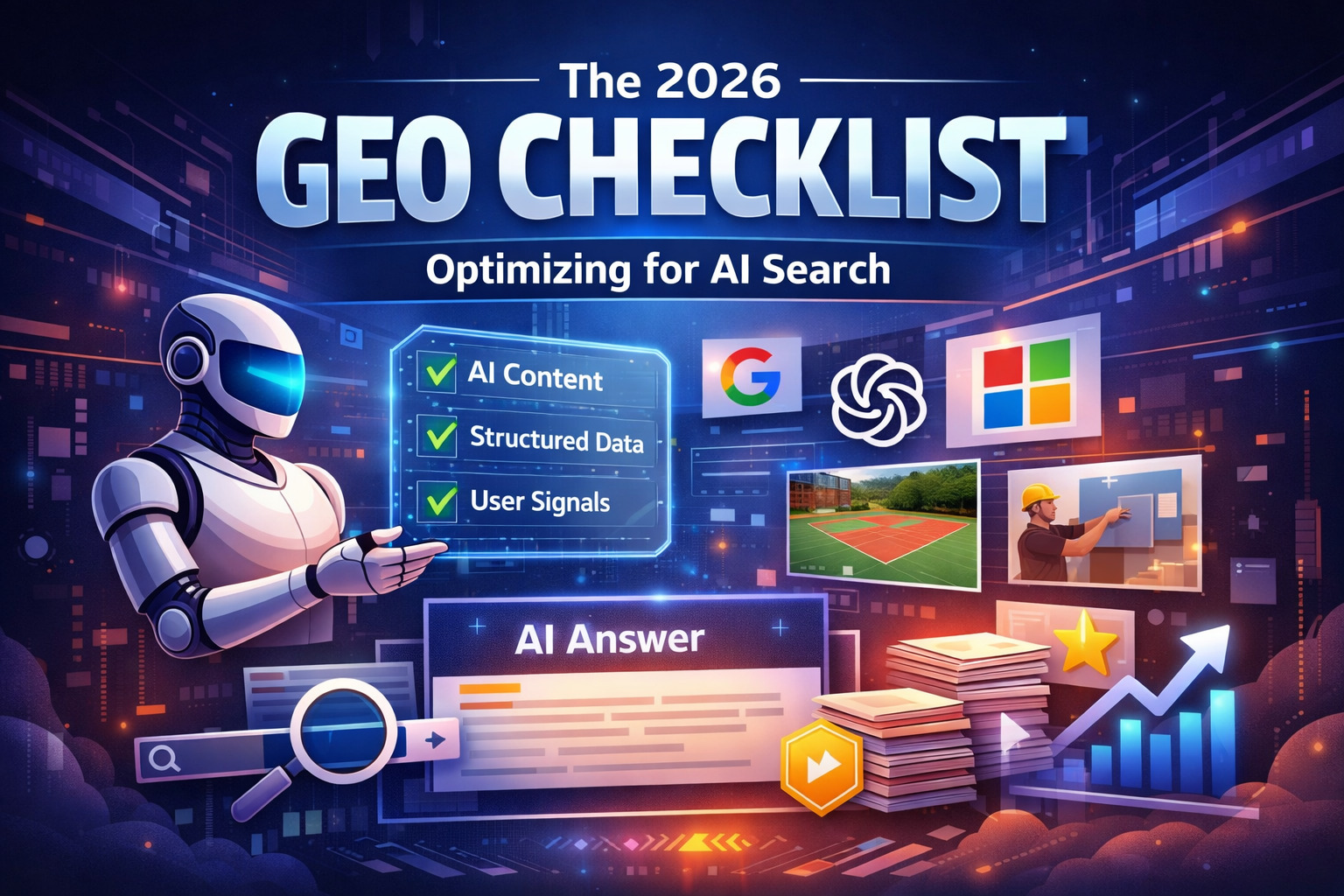
This guide is your 2026 GEO checklist — a practical, no-fluff roadmap to making your content AI-ready, citation-worthy, and future-proof.
Let’s break it down.
Understanding GEO (Generative Engine Optimization)
What Is GEO?
Generative Engine Optimization (GEO) is the practice of optimizing digital content so that AI-driven search systems can understand, extract, summarize, and cite it effectively.
Unlike traditional SEO, which focuses on improving rankings in search engine results pages (SERPs), GEO focuses on improving visibility inside AI-generated responses.
Imagine traditional SEO as trying to get your store placed on the busiest street in town. GEO? That’s about becoming the expert the town’s smartest robot personally recommends every time someone asks a question.
AI engines don’t just match keywords anymore. They:
- Interpret context
- Understand intent
- Analyze entity relationships
- Evaluate credibility signals
- Synthesize multiple sources into one response
So your content has to be:
- Clear
- Structured
- Authoritative
- Context-rich
- Easy to extract
GEO is about training AI to recognize your content as reliable fuel for its answers.
And here’s the nuance: AI doesn’t “rank” content the way Google used to. It evaluates usefulness, clarity, authority, and relevance in real time. That means shallow content won’t survive.
How AI Search Engines Work in 2026
AI search engines rely on large language models combined with real-time indexing systems. They process queries differently from traditional search engines.
Instead of asking, “Which page matches this keyword?” they ask:
- What is the user truly asking?
- What context surrounds the question?
- What information cluster answers this best?
- Which sources are trustworthy enough to cite?
They break content into entities, relationships, and semantic layers. If your article lacks structured clarity, AI may struggle to interpret it — even if a human reader loves it.
Think of AI as a hyper-intelligent research assistant. If your content is messy, vague, or bloated with fluff, it skips you. If it’s structured, detailed, and authoritative? You’re in the answer.
That’s GEO in action.
The Evolution from SEO to GEO
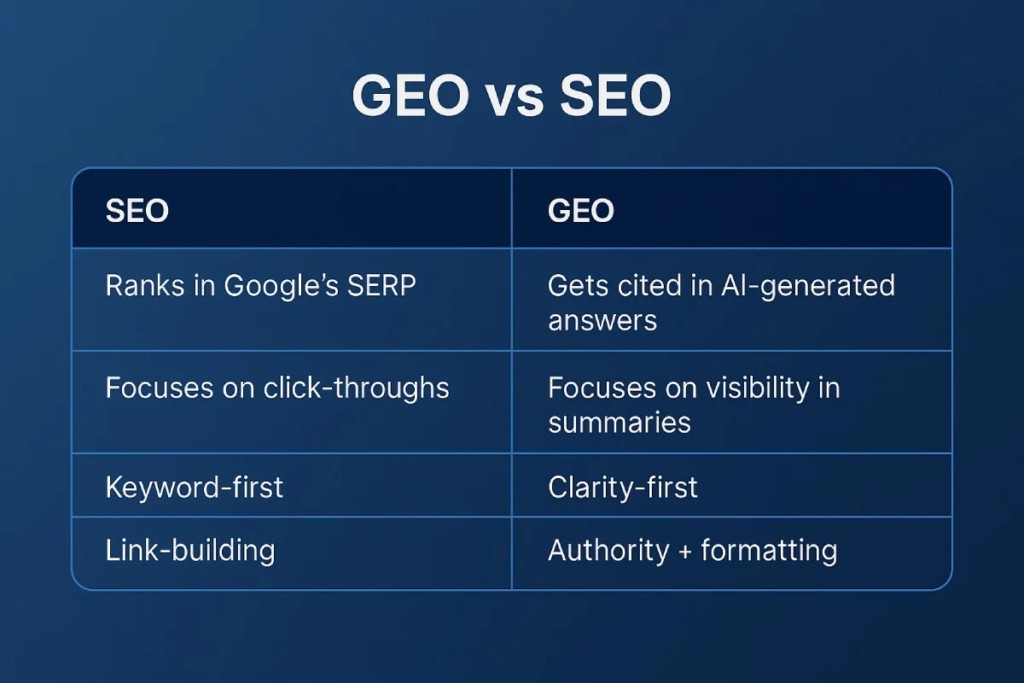
Key Differences Between SEO and GEO
Let’s be honest — SEO isn’t dead. But it’s evolved.
Here’s how GEO differs:
| Traditional SEO | GEO (2026) |
|---|---|
| Focuses on rankings | Focuses on inclusion in AI answers |
| Keyword-centric | Intent and entity-centric |
| Backlink-heavy | Authority and trust-signal heavy |
| Optimized for bots | Optimized for AI reasoning models |
| Page-based strategy | Topic ecosystem strategy |
In traditional SEO, you could rank with clever keyword placement and strong backlinks. In GEO, AI models evaluate depth, coherence, expertise, and contextual richness.
It’s less about gaming algorithms. More about demonstrating authority.
Why Ranking Is No Longer the Only Goal
Here’s the uncomfortable truth: you can rank #1 and still lose traffic.
Why? Because AI search answers the question before users ever click.
If your content contributes to that AI answer — and gets cited — your brand visibility increases dramatically. If not, you’re just background noise.
GEO shifts the goal from:
“Get the click”
to
“Become the trusted source behind the answer.”
That’s a completely different mindset.
How AI Search Interprets Content
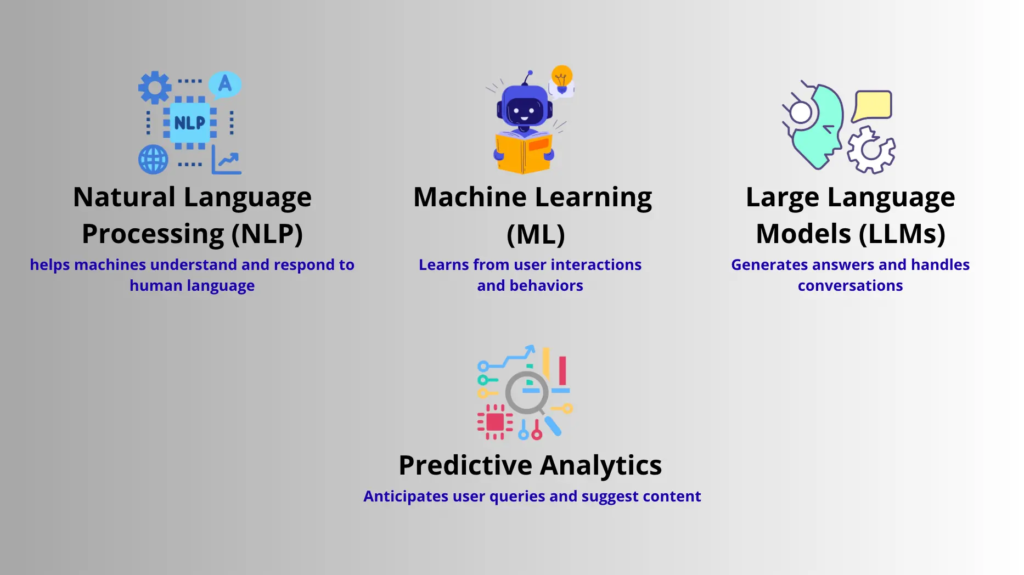
Semantic Understanding and Context
AI doesn’t read like humans. It analyzes patterns, probabilities, relationships, and contextual layers.
It understands:
- Synonyms
- Related entities
- Topic depth
- Logical structure
- Argument consistency
For example, if you write about “AI search optimization” but never mention related concepts like semantic indexing, structured data, entity relationships, or conversational queries, AI may interpret your content as shallow.
Semantic richness matters.
You need to:
- Cover subtopics thoroughly
- Connect ideas logically
- Use natural language variations
- Avoid keyword repetition without context
Think of your content as a web. The stronger and more interconnected it is, the easier AI can map it.
Entity Recognition and Knowledge Graphs
AI models rely heavily on entities — people, places, brands, concepts.
If your brand isn’t clearly defined as an entity, AI may struggle to connect it to relevant topics.
To strengthen entity recognition:
- Use consistent brand naming
- Build citations across platforms
- Create author profiles
- Implement schema markup
- Publish authoritative thought leadership
In 2026, being an “entity” in the knowledge graph is more powerful than ranking for a keyword.
The 2026 GEO Checklist Overview
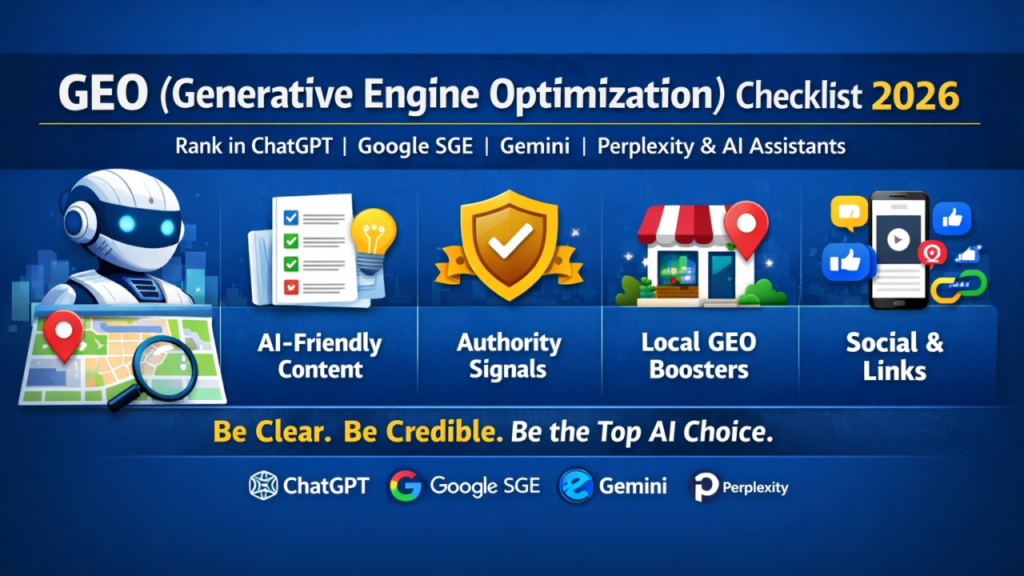
Core Principles of GEO
Here’s the big picture. Every GEO strategy should follow these principles:
- Clarity over cleverness
- Depth over volume
- Authority over virality
- Structure over randomness
- Value over manipulation
If your content doesn’t clearly answer questions, provide detailed insights, and demonstrate credibility, it won’t be prioritized by AI systems.
Human-Centered Optimization
Ironically, optimizing for AI requires writing better for humans.
Why?
Because AI models are trained on human preferences. They recognize:
- Logical flow
- Helpful explanations
- Clear formatting
- Direct answers
- Practical insights
So the best GEO content feels natural, useful, and conversational.
Not robotic.
Not keyword-stuffed.
Not generic.
Human-first is AI-approved.
Creating Content for AI Summaries
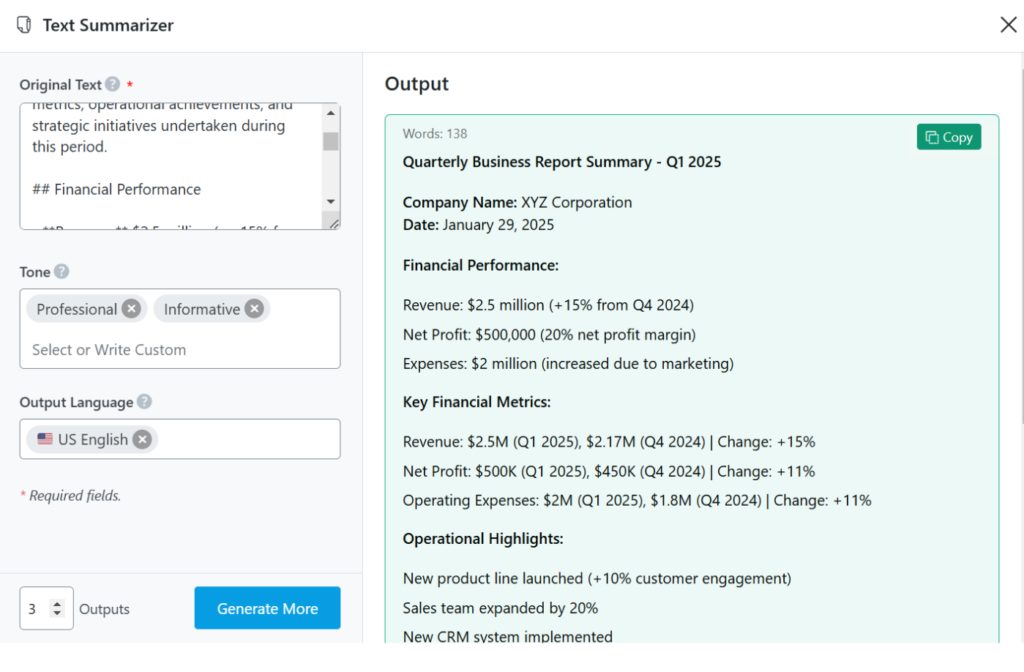
Structuring for Extractability
If you want to win in AI search, you need to make your content easy to “extract.” That’s the word most people ignore.
AI doesn’t scroll. It scans. It breaks your page into digestible chunks — definitions, steps, explanations, lists, comparisons. If your insights are buried inside long, rambling paragraphs without structure, they’re less likely to be pulled into a generated answer.
Think of it like this: imagine a researcher skimming your page for 15 seconds looking for clear, quotable insight. Would they instantly spot it?
To improve extractability:
- Use clear, bold headings that match user intent.
- Start sections with concise, direct answers before expanding.
- Use bullet points and numbered lists for processes.
- Include summary statements after complex explanations.
- Avoid fluff before delivering value.
For example, instead of slowly building up to a definition over 200 words, give the definition first. Then expand with context, examples, and nuance.
AI systems prioritize clarity. When your content has defined sections like “What Is GEO?”, “Why It Matters,” and “How to Implement It,” you’re essentially labeling your expertise in a way AI can easily interpret.
And here’s something subtle but powerful: write in complete, logical thoughts. Fragmented ideas confuse extraction models. A clean sentence like, “Generative Engine Optimization focuses on improving inclusion in AI-generated responses rather than traditional search rankings,” is far more useful than vague commentary.
When your content is structured like a well-organized toolkit instead of a scattered notebook, AI engines are more confident using it.
Clarity builds trust. Trust increases inclusion.
Answer-First Formatting
In 2026, attention spans are shorter — and AI systems know it. That’s why answer-first formatting is crucial.
What does that mean?
Give the core answer immediately. Then expand.
Here’s the pattern that works:
- Direct answer (1–3 sentences)
- Expanded explanation
- Examples or data
- Practical application
This format mirrors how AI models synthesize responses. When your content naturally follows this flow, it becomes easier for AI to incorporate your wording or cite your insights.
For example:
Bad structure:
- Story
- Background
- Tangent
- Finally… answer
Optimized structure:
- Clear answer
- Supporting explanation
- Practical steps
See the difference?
When someone asks, “How does GEO differ from SEO?” AI will search for concise, well-structured explanations. If your page buries that explanation under unnecessary narrative, it may skip you in favor of cleaner content.
This doesn’t mean writing boring content. It means respecting how information is processed today.
Give the steak first. Then the seasoning.
Optimizing for Conversational Queries

Long-Tail Intent Modeling
Search queries in 2026 look nothing like they did five years ago.
People don’t type:
“GEO checklist”
They ask:
“How do I optimize my website so AI tools like ChatGPT cite it in answers?”
That’s a different game.
AI search thrives on conversational, multi-layered queries. To optimize for this shift, you need to model long-tail intent. That means anticipating:
- Follow-up questions
- Contextual variations
- Specific scenarios
- Beginner vs. advanced perspectives
Instead of targeting a single phrase, build content that covers the entire question ecosystem.
Ask yourself:
- What would someone ask next?
- What confusion might they have?
- What objections need addressing?
- What related topics complete the picture?
When your content answers primary and secondary questions naturally, AI sees it as comprehensive. Comprehensive content gets chosen more often because it reduces the need to combine too many scattered sources.
This is how you become the “anchor source” for a topic.
Think of it like building a conversation, not just a blog post.
Voice and Multimodal Search Readiness
Voice search is no longer a trend — it’s default behavior. Add in visual search and multimodal queries (text + image + voice), and the landscape becomes even more layered.
AI assistants process natural speech patterns. That means your content should include:
- Natural phrasing
- Question-based headings
- Conversational tone
- Clear explanations without jargon overload
If your content reads like a legal contract, it’s not voice-friendly.
Additionally, multimodal readiness matters. For example:
- Images should have descriptive alt text.
- Videos should include transcripts.
- Audio should have structured metadata.
- Visual data should be explained in text.
AI systems can analyze multiple content formats, but they still rely heavily on text for interpretation.
So don’t just upload an infographic. Explain it. Don’t just embed a video. Summarize it.
The more accessible your content is across formats, the easier it is for AI to understand and reuse.
E-E-A-T in the Age of AI
Demonstrating Experience and Expertise
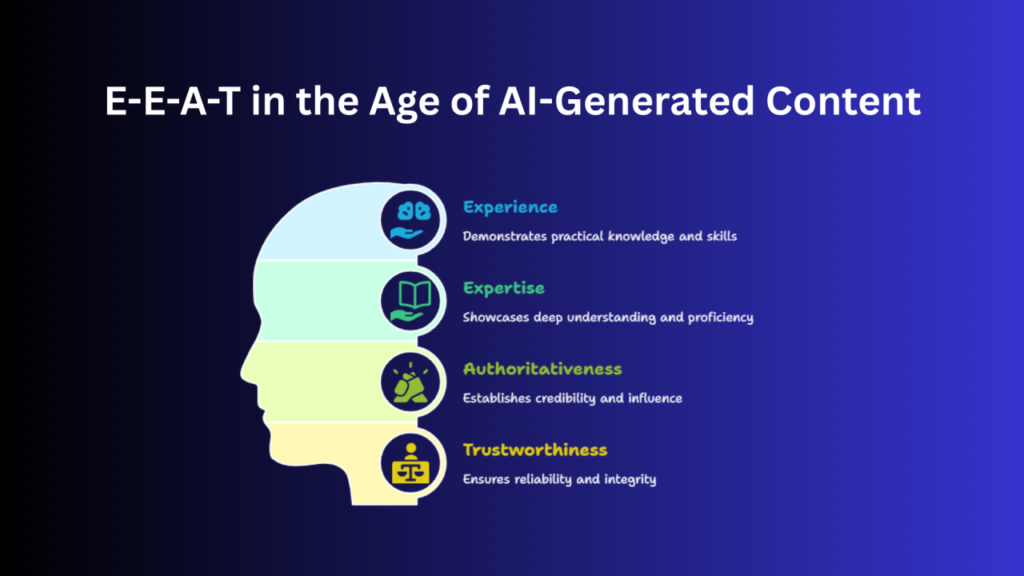
Experience, Expertise, Authoritativeness, and Trust (E-E-A-T) are no longer optional signals. They are foundational.
AI systems evaluate credibility using patterns such as:
- Author consistency
- Professional credentials
- Topical depth
- Citation frequency
- Cross-platform recognition
If your content lacks clear authorship, AI has fewer trust signals to rely on.
To strengthen E-E-A-T:
- Include detailed author bios.
- Highlight real-world experience.
- Use case studies and data.
- Reference credible sources.
- Maintain consistent publishing themes.
For example, if you regularly publish in-depth insights about AI search, digital marketing, and optimization frameworks, AI begins associating your entity with expertise in that domain.
But if you write randomly about everything under the sun? Authority weakens.
Specialization builds trust.
Trust increases citations.
Building Digital Authority Signals
Authority isn’t just about backlinks anymore. It’s about recognition across ecosystems.
In 2026, authority signals include:
- Brand mentions in reputable publications
- Podcast appearances
- Expert interviews
- Industry panel participation
- Consistent topical publishing
- Structured business data
AI systems cross-reference information. If your brand appears in multiple credible contexts, it strengthens your entity profile.
Think of authority like reputation in real life. If multiple respected people vouch for you, your credibility increases.
The same applies online.
Digital PR, thought leadership, and expert contributions now play a major role in GEO success.
Structured Data and Schema Markup
Essential Schema Types for 2026
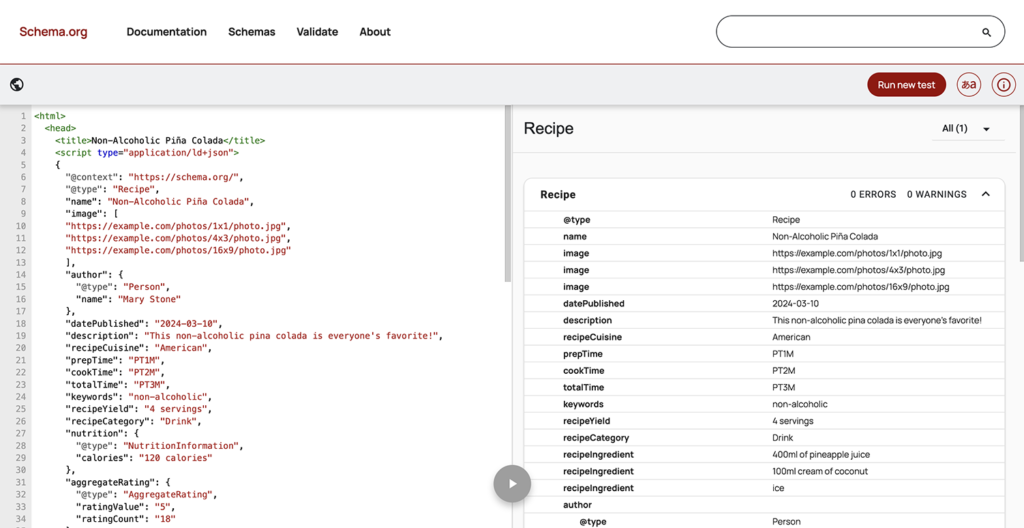
Structured data is one of the clearest signals you can send to AI systems.
Schema markup helps machines understand:
- Who you are
- What your content is about
- How information is organized
- Relationships between entities
Important schema types include:
- Article
- FAQ
- HowTo
- Organization
- Person
- Product
- Review
- Event
When properly implemented, schema clarifies your content’s purpose. It reduces ambiguity — and AI loves clarity.
Imagine giving AI a labeled blueprint instead of a messy paragraph. That’s what structured data does.
How AI Uses Structured Data
AI models combine language understanding with structured signals. Schema provides confirmation.
For example:
- Your article discusses “Generative Engine Optimization.”
- Schema identifies it as a detailed guide.
- Author schema confirms expertise.
- Organization schema reinforces brand identity.
Together, these signals strengthen confidence in your content.
Without schema, AI relies solely on interpretation. With schema, it has supporting evidence.
It’s like showing your ID at the door instead of just saying, “Trust me.”
Topical Authority and Content Clusters
Pillar and Cluster Strategy
One blog post won’t build authority.
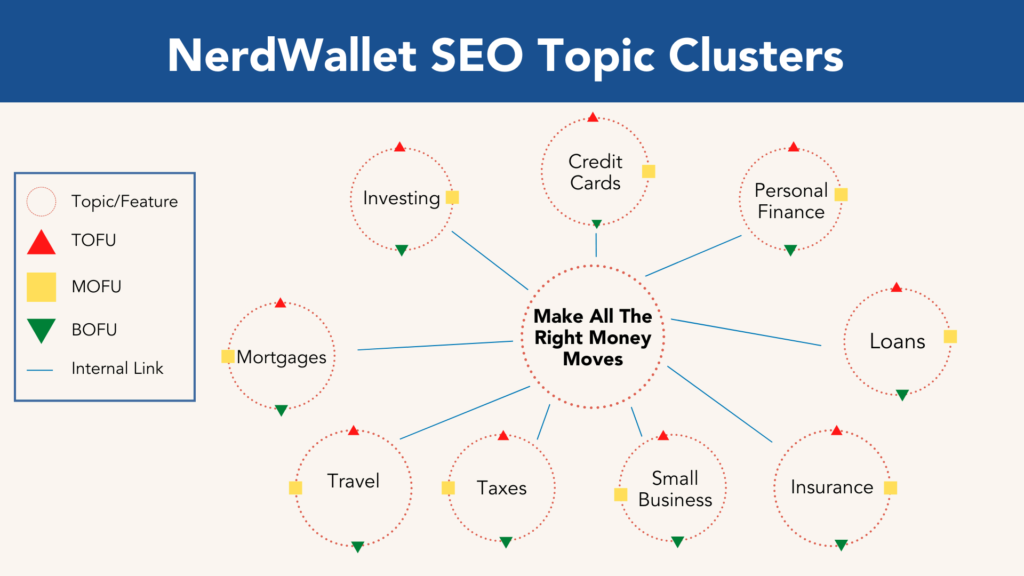
AI systems analyze topic depth across your domain. That’s why pillar and cluster strategies are critical.
A pillar page covers a broad subject comprehensively. Cluster pages dive into subtopics in detail and link back to the pillar.
For GEO, this approach:
- Demonstrates subject mastery
- Strengthens semantic connections
- Improves contextual clarity
- Reinforces entity authority
If your website contains dozens of interconnected, high-quality resources around AI search optimization, AI models see you as a domain expert — not a one-hit wonder.
Authority compounds.
Depth vs. Breadth in AI Indexing
Here’s the tension: should you cover many topics lightly or fewer topics deeply?
In 2026, depth wins.
AI values comprehensive coverage of specific domains more than surface-level coverage of everything.
It’s better to be the go-to authority in one niche than average in ten.
Ask yourself:
- Does my content thoroughly answer complex questions?
- Do I cover advanced perspectives?
- Do I update content regularly?
Depth signals commitment. Commitment builds trust.
Optimizing for AI Citations and Mentions

Becoming a Trusted Source
AI citations are the new backlinks.
To increase citation potential:
- Provide original insights.
- Include proprietary data.
- Offer unique frameworks.
- Publish research-backed analysis.
- Avoid generic rehashed advice.
If your content sounds like everyone else’s, AI has no reason to prefer you.
Original thinking stands out.
Digital PR for AI Visibility
Modern GEO requires visibility beyond your website.
Consider:
- Guest contributions on authoritative platforms
- Data-driven reports
- Collaborative research
- Industry commentary
The more your brand appears in high-trust ecosystems, the more AI models associate you with authority.
Visibility builds familiarity.
Familiarity builds trust.
Trust builds inclusion.
Technical GEO Foundations
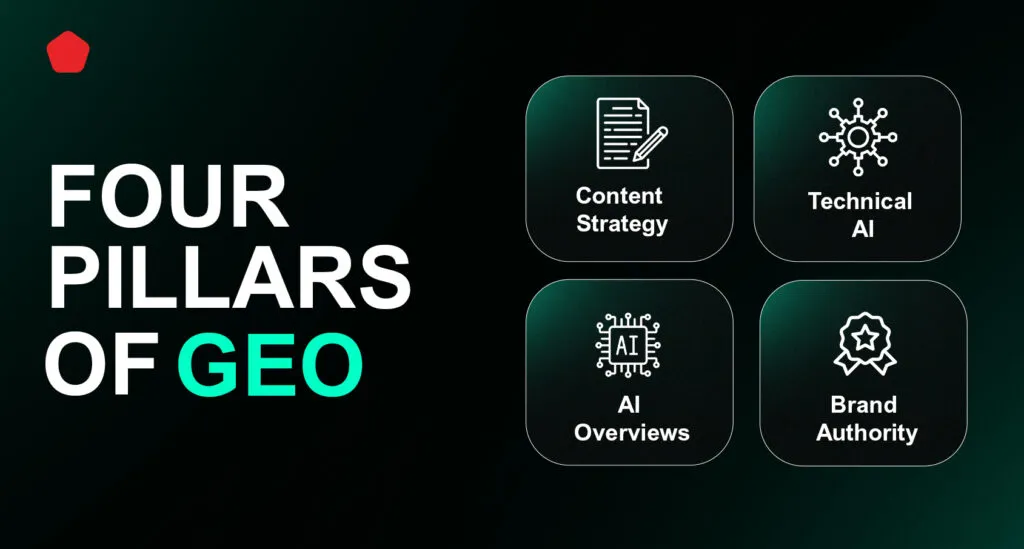
Technical GEO Foundations are the backend and structural elements of your website that help AI search systems and generative engines understand, trust, and surface your content in answers — not just traditional rankings.
Think of GEO as the evolution of SEO: instead of optimizing only for blue links, you’re optimizing so AI assistants and answer engines choose your content as a source.
These foundations make that possible.
🧱 Core Pillars of Technical GEO
1. Crawlability & Indexability
Your site must be easy for bots and AI systems to access:
- Clean site architecture
- Proper robots.txt and XML sitemaps
- No broken internal links
- Important pages not blocked by accident
If engines can’t crawl it, they can’t recommend it.
2. Structured Data (Schema Markup)
Structured data tells machines exactly what your content means.
Examples:
- Article schema
- FAQ schema
- Product / Service schema
- Organization schema
This helps generative engines extract precise answers, prices, locations, and FAQs.
3. Content Clarity & Entity Signals
AI prefers content that is:
- Clearly written
- Well-organized with headings
- Focused on one main topic per page
- Rich in context (who, what, where, why)
You should build strong entity relationships (brand, services, locations, topics) across your site so engines understand your authority.
4. Page Experience & Performance
Speed and usability still matter:
- Fast load times
- Mobile-friendly design
- Secure HTTPS
- Minimal layout shifts
Poor technical UX reduces trust signals for AI systems.
5. Internal Linking & Topic Clusters
Link related content together:
Example:
- Tennis court flooring
→ Installation guide
→ Cost guide
→ Maintenance tips
This creates topical authority, helping AI see you as a complete resource.
6. E-E-A-T Signals (Experience, Expertise, Authority, Trust)
Critical for GEO:
- Author bios
- Real business details
- Case studies / project photos
- Reviews
- Clear About + Contact pages
These prove you’re a real expert, not just content.
🎯 In Simple Terms
Technical GEO Foundations ensure:
✅ Your content is discoverable
✅ Your meaning is machine-readable
✅ Your site feels trustworthy
✅ Your pages load fast
✅ Your brand is recognized as an authority
Only after this foundation is strong does content GEO (answer-focused writing) truly work.
If you’d like, next we can cover:
👉 Technical GEO checklist (step-by-step)
👉 GEO vs traditional SEO
👉 GEO strategy for service businesses (like sports flooring)
👉 Tools for Technical GEO
Multimedia Optimization for AI Search
Multimedia optimization means structuring your images, videos, graphics, and visual assets so AI systems like Google, OpenAI, and Microsoft can:
✅ Understand what your media represents
✅ Connect it to your written content
✅ Use it in AI answers, summaries, and recommendations
In GEO (Generative Engine Optimization), multimedia is no longer decorative — it’s machine-readable evidence.
1. Descriptive File Names (Before Upload)
Instead of:
IMG_1234.jpg
Use:
tennis-court-acrylic-flooring-installation.jpg
This gives AI immediate topic context.
2. Alt Text = AI Vision Language
Alt text tells AI what your image means.
Bad:
image of court
Good:
Synthetic acrylic tennis court flooring installation in India with cushioning layers
Tip: Write alt text like you’re explaining the image to someone who can’t see it.
3. Surrounding Text Matters More Than You Think
AI connects visuals with nearby content:
- Headings
- Paragraphs
- Bullet points
Always place images near relevant explanations (not randomly in blogs).
This helps engines build semantic alignment.
4. Use Original, Real Images (Huge GEO Boost)
Generative systems prefer:
✅ Your project photos
✅ Before/after shots
✅ Installation process visuals
✅ On-site videos
Stock images = weak trust signals.
If you’re in sports flooring, showing real courts massively improves Experience + Authority.
5. Image & Video Structured Data
Add schema where possible:
- ImageObject
- VideoObject
- FAQ + image combos
- Product / Service schema
This allows AI to extract:
✔ visuals
✔ captions
✔ durations
✔ service context
6. Video Optimization for AI Discovery
If you publish videos on YouTube or embed them on your site:
Optimize:
- Video title (clear + keyword-rich)
- Description (300–500 words minimum)
- Chapters / timestamps
- Transcript on page
AI engines read transcripts heavily.
7. Compress Without Killing Quality
Large media slows pages — slow pages lose GEO trust.
Use modern formats:
- WebP for images
- MP4 / WebM for video
Fast loading = higher AI confidence.
🔑 GEO Tip (Very Important)
AI doesn’t “see” media like humans.
It relies on:
- File names
- Alt text
- Schema
- Nearby text
- Page topic
So always think:
“Can a machine understand this image without guessing?”
If yes — you’re doing GEO correctly.
✅ Simple Summary
Multimedia Optimization for AI Search ensures:
✔ Images explain themselves
✔ Videos are transcribed
✔ Visuals match page topics
✔ Media loads fast
✔ Real-world proof exists
This dramatically increases your chances of appearing in:
- AI answers
- Featured summaries
- Visual search
- Generative recommendations
User Signals That Influence AI Models
Modern AI-driven search systems from Google, OpenAI, and Microsoft don’t rely only on keywords or backlinks anymore.
They learn from real human behavior.
These are called user signals — and they help AI decide:
✅ Which content is helpful
✅ Which sources feel trustworthy
✅ Which pages deserve to be surfaced in answers
✅ Which brands show real-world authority
In GEO (Generative Engine Optimization), user signals act like crowd-sourced quality votes.
🔑 Most Important User Signals for AI Visibility
1. Dwell Time (Time Spent on Page)
If visitors stay longer, AI assumes:
“This content solved their problem.”
Short visits = weak signal
Long, engaged sessions = strong trust signal
How to improve:
- Clear headings
- Visuals + videos
- Step-by-step content
- Internal links to related guides
2. Click-Through Rate (CTR)
When users consistently choose your result over others, it tells AI:
“People prefer this source.”
This applies to:
- Search results
- AI citations
- Suggested answers
Better titles + meta descriptions = higher CTR.
3. Bounce Rate vs Engagement
If users land and instantly leave → negative signal.
If they:
- Scroll
- Click
- Watch videos
- Visit multiple pages
AI interprets this as content satisfaction.
4. Repeat Visits & Brand Searches
When people actively search your brand or return often, AI learns:
“This business is memorable and trusted.”
Example:
Users typing your company name directly is a powerful authority indicator.
5. Reviews & Reputation Signals
Google Business reviews, testimonials, and mentions across the web feed into AI trust models.
They help answer:
- Is this a real company?
- Do customers like them?
- Are services legitimate?
Especially important for local and service-based businesses.
6. Content Interaction Signals
AI tracks behavior like:
- FAQ clicks
- Video plays
- Image expansions
- Form submissions
More interaction = higher perceived usefulness.
7. Sharing & Mentions
When users share your content on social platforms or reference it elsewhere, AI sees:
“This content has external validation.”
Not traditional backlinks — but behavioral popularity.
🎯 Why This Matters for GEO
Traditional SEO focused on:
Links + keywords.
Generative AI focuses on:
🧍 Human satisfaction
📈 Engagement patterns
🏆 Brand recognition
🛠 Real-world usefulness
In simple terms:
AI promotes what people genuinely use and trust.
✅ Simple Summary
User signals tell AI models:
✔ Did this page help?
✔ Did users stay?
✔ Did they come back?
✔ Do people trust this brand?
✔ Is this content worth recommending?
If the answer is “yes” — you become a preferred AI source.
Measuring GEO Performance
Unlike traditional SEO (which mainly tracks rankings), GEO focuses on visibility inside AI answers + user satisfaction signals.
Platforms like Google, OpenAI, and Microsoft increasingly surface content through summaries, answer boxes, and generative results — so your metrics need to evolve too.
Let’s break this down.
🧭 1. AI Visibility Signals (Primary GEO KPIs)

These tell you whether generative engines are discovering and favoring your content.
✅ Appearing in AI / SGE Answers
Manually test your main queries and see:
- Are your pages being cited or summarized?
- Is your brand mentioned?
- Are your FAQs or explanations reused?
Track this weekly for your core keywords.
✅ Brand Mentions in Generative Results
Search your service topics + location and note:
- Does your company name appear?
- Are your explanations paraphrased?
This is a direct GEO success indicator.
📈 2. Behavioral Metrics (Human Signals = AI Training Signals)
Use Google Analytics 4 to track:
🔹 Average Engagement Time
Higher = users find value (strong GEO trust signal)
🔹 Scroll Depth
Shows whether people actually read your content.
🔹 Pages per Session
More internal clicks = topical authority.
🔹 Return Visitors
Repeat users = brand recognition (very powerful for GEO).
🔍 3. Search Performance Data (Still Important)
Inside Google Search Console, monitor:
✔ Impressions
Growing impressions = AI/search systems are testing your content more.
✔ CTR (Click Through Rate)
Low CTR? Your titles/descriptions need improvement.
✔ Query Expansion
Look for new long-tail queries appearing — this often means AI is discovering your topical depth.
🖼 4. Multimedia GEO Metrics
If you’re using images & videos:
Images
- Image search impressions
- Page engagement where images exist
Videos (especially on YouTube)
- Watch time
- Average retention
- Clicks back to your site
AI systems heavily favor media-rich, high-engagement content.
⭐ 5. Trust & Authority Indicators
These don’t show in one dashboard, but matter hugely:
- Google Business reviews growth
- Direct brand searches
- Contact form submissions
- Calls / enquiries
- Mentions on other websites
These prove real-world legitimacy, which GEO models care about deeply.
✅ Simple GEO Performance Scorecard
You’re doing GEO right if you see:
✔ Rising impressions in Search Console
✔ Longer engagement time in GA4
✔ More branded searches
✔ Users visiting multiple related pages
✔ Your content appearing in AI answers
✔ Increased enquiries/leads
If these move together → your GEO foundation is working.
🎯 Pro Tip (Important)
Don’t chase “rankings only.”
Instead, measure:
👉 Are people staying?
👉 Are they coming back?
👉 Is AI reusing your explanations?
👉 Is your brand becoming recognizable?
That’s real GEO success.
🔚 In One Line
GEO performance = AI visibility + human engagement + brand trust.
Common GEO Mistakes to Avoid in 2026

1. Still Optimizing Only for Keywords (Not Answers)
Old SEO mindset:
Target keyword → write article → done.
GEO reality:
AI looks for complete answers, not keyword density.
❌ Mistake
- Short, surface-level blogs
- Repeating keywords unnaturally
- No clear conclusions or summaries
✅ Fix
Create answer-focused content:
- Direct responses
- Step-by-step explanations
- FAQs
- Clear takeaways
Think: Would AI confidently reuse this paragraph as an answer?
2. Ignoring Entity Building
Many sites talk about services but never establish:
- Who they are
- What they specialize in
- Where they operate
AI needs strong entity clarity.
❌ Mistake
No About page, weak brand mentions, missing location context.
✅ Fix
Reinforce:
- Brand name across pages
- Services + locations
- Internal links between related topics
- Real project examples
This helps AI understand your business as a real-world authority.
3. Publishing Thin or Generic Content
AI filters out:
- Rewritten content
- Stock-image-only pages
- Generic “Top 10” blogs
❌ Mistake
Using AI to mass-produce shallow articles.
✅ Fix
Add:
- Original insights
- Photos of real work
- Local experience
- Case studies
- Pricing examples
Experience beats volume in 2026.
4. Poor Multimedia Optimization
Images and videos without context are invisible to AI.
❌ Mistake
- IMG_1234.jpg
- Missing alt text
- No captions
- Videos without transcripts
✅ Fix
Every media asset should have:
✔ Descriptive file names
✔ Proper alt text
✔ Surrounding explanatory content
✔ Schema (when possible)
Media = evidence for AI.
5. Ignoring User Engagement Signals
AI watches how humans behave.
❌ Mistake
- High bounce rates
- No internal links
- No interactive elements
✅ Fix
Improve:
- Dwell time
- Scroll depth
- Pages per session
Add FAQs, related guides, videos, and clear navigation.
Happy users = stronger GEO signals.
6. No Trust Signals (Big One)
This kills GEO performance.
❌ Mistake
No:
- Reviews
- Business address
- Contact info
- Author details
AI hesitates to recommend anonymous websites.
✅ Fix
Show:
✔ Real company details
✔ Testimonials
✔ Project photos
✔ Author bios
✔ Google Business presence
Trust is foundational.
7. Measuring Only Rankings
Rank tracking alone is outdated.
❌ Mistake
Celebrating #1 positions while traffic and leads drop.
✅ Fix
Track:
- Engagement time
- Return visitors
- Brand searches
- AI answer appearances
- Enquiries
GEO success = visibility + engagement + conversions.
🎯 Biggest Mistake of All
Treating GEO like “SEO with new words.”
It’s not.
GEO is about:
🧠 Helping AI understand
🧍 Satisfying real users
🏗 Building topical authority
⭐ Proving real-world expertise
✅ Quick Summary
Avoid these in 2026:
❌ Keyword-only content
❌ Thin AI-written blogs
❌ Weak brand/entity signals
❌ Unoptimized images/videos
❌ Ignoring user behavior
❌ Missing trust elements
❌ Tracking rankings only
Do this instead:
✔ Answer-first content
✔ Strong entity presence
✔ Real experience
✔ Media optimization
✔ Engagement focus
✔ Brand credibility