Why Voice Search in India Is Unlike Anywhere Else
India occupies a unique position in the global voice search landscape. It is not simply “adopting” a Western trend — it is shaping an entirely new paradigm of how a billion-plus people interact with the internet. Understanding this uniqueness is the foundation of any effective Voice Search Optimization strategy for the Indian market.
| 65% | of Indian internet users use voice search (Exchange4media, March 2026) — far above the global average of 20.5% |
| 3× | India’s voice search usage grew 3× faster than text-based search globally (WeAreSocial Digital 2026 Report) |
| 33.6% | of Indian internet users use voice assistants weekly, placing India 4th globally behind China (40.8%), UAE (35.8%), and Mexico (35%) |
| 600M+ | Voice search users expected in India by end of 2026, making it the largest voice search audience in any single language ecosystem |
The Three Drivers of India’s Voice Search Explosion
Three structural forces have converged to make India a voice-first internet market. Each represents both a challenge and an opportunity for businesses:
Driver 1: Smartphone + Affordable Data
India added hundreds of millions of smartphone users in the last five years, and Jio’s disruption of the mobile data market brought internet access to Tier-2 and Tier-3 cities at prices unimaginable in most other countries. Over 90% of Indian internet users now access the web via smartphones. Voice assistants — Google Assistant, Siri, and Alexa — are pre-installed on virtually every Android and iOS device shipped in India.
Driver 2: Linguistic Diversity Makes Typing Painful
India has 22 officially recognized languages and hundreds of dialects. Typing in Hindi, Tamil, Telugu, Bengali, or Marathi on a QWERTY smartphone is genuinely cumbersome. Speaking, however, is effortless in any language. This friction asymmetry between typing and speaking in regional languages is the single most powerful driver of voice adoption in India. Regional language voice searches have grown over 270% year-on-year — a figure with no parallel in English-dominant markets.
Driver 3: The Rise of Tier-2 and Tier-3 India
Cities like Patna, Surat, Indore, Coimbatore, and Lucknow are seeing 300%+ voice search growth. These users are often first-generation smartphone owners who have never used a desktop search engine. For them, voice search is not a convenience feature — it is their primary mode of internet interaction. They search in Hinglish, Hindi, or their local dialect, asking questions like: “Nearest JEE coaching open today?” or “Best biryani in Lucknow under ₹200?”
| Dimension | Global Average | India-Specific Reality |
| Primary Language | English-dominant | Hindi, Tamil, Telugu, Bengali, Marathi, + 18 more |
| Device Type | Mix of smart speakers + phones | 90%+ mobile (smartphone-first) |
| Query Style | Conversational English | Hinglish, code-switching, dialect variations |
| User Profile | Established internet users | First-gen smartphone users in Tier-2/3 cities |
| Weekly Usage Rate | ~20-33% globally | 33.6% — 4th highest worldwide |
| Growth Rate | 9% YoY globally | 3× faster than global text search |
The India-Specific Keyword Landscape for Voice Search
Voice search keywords in India are fundamentally different from both English voice queries and Indian text queries. Understanding this three-way distinction is critical for building a keyword strategy that actually captures voice traffic.
How Indian Voice Queries Differ from Text Queries
Consider how the same information need expresses itself across three different query modes:
| Intent | Text Query (English) | Text Query (Hindi) | Voice Query (Hinglish/Hindi) |
| Find a restaurant | best dosa near me | पास में अच्छा ढाबा | “Mujhe paas mein sabse achha dosa kahan milega?” |
| Find a service | AC repair Delhi | दिल्ली AC मरम्मत | “Meri AC kharab ho gayi hai, paas mein kaun theek karega?” |
| E-commerce | cheap mobile phone | सस्ता मोबाइल फोन | “Best budget smartphone Hindi mein kaun sa loon?” |
| Healthcare | doctor near me | पास में डॉक्टर | “Mere ghar ke paas kaun sa doctor hai jo abhi available ho?” |
| Travel | Mumbai Goa train | मुंबई गोवा ट्रेन | “Mumbai se Goa jaane ke liye sabse sasti train kaun si hai?” |
The Hinglish Phenomenon
Hinglish — the fluid mixing of Hindi and English — dominates urban Indian voice searches in a way that no keyword tool natively captures. Queries like “best chai café near me” or “budget hotel Mumbai mein” blend languages within a single sentence. This is not a mistake or approximation; it is a distinct linguistic register that millions of Indians use naturally.
For SEO purposes, this means:
- Your FAQ sections, title tags, and meta descriptions should include both Hindi and Hinglish variants of your target queries.
- Google’s Bhashini integration enables real-time translation, so content in one Indian language can surface for queries in another — but native optimization still outperforms machine translation.
- Schema markup in regional languages (using @language attributes) signals language context to search engines more precisely.
Question Word Patterns in Indian Voice Search
Voice queries are question-based. In Indian languages, the question triggers differ from English. Optimizing for these patterns significantly improves your voice search coverage:
| English | Hindi Transliteration | Devanagari | Example Query |
| What is / What are | Kya hai / Kaisa hai | क्या है / कैसा है | “Diabetes ke symptoms kya hain?” |
| Where is / Where can I | Kahan hai / Kahan milega | कहाँ है / कहाँ मिलेगा | “Petrol pump kahan hai?” |
| How to / How do I | Kaise kare / Kaise karu | कैसे करें / कैसे करूँ | “Aadhaar card update kaise kare?” |
| Which is the best | Kaun sa best hai | कौन सा बेस्ट है | “Kaun sa phone 15000 mein best hai?” |
| Is it open / available | Khula hai kya / Available hai | खुला है क्या | “Sunday ko khula hai kya?” |
| How much does it cost | Kitna paisa lagega | कितना पैसा लगेगा | “Passport banwane mein kitna paisa lagega?” |
Keyword Research Tools for Indian Voice Search
Standard keyword tools have limited coverage for Indian-language voice queries. A multi-tool approach is essential:
- Answer The Public — Use it in Hindi mode (set location to India) to uncover conversational question clusters
- AlsoAsked — Maps question trees around a topic; run searches in both English and Hindi for the same topic
- Google’s People Also Ask (PAA) — Search your core keywords in Google while geolocated in India (use VPN) to find PAA clusters in Hindi and regional languages
- Google Search Console — Filter for queries containing question words (kya, kahan, kaise, kaun) to identify existing voice-type queries bringing traffic
- Google Keyword Planner — Set language to Hindi/Tamil/etc. and look for long-tail question phrases
- SEMrush / Ahrefs — Use their question filter on keyword research with India geo-targeting
Content Strategy for Indian Voice Search
Content for voice search is structurally different from content written for text search. Voice assistants must be able to extract a specific, spoken-friendly answer from your page. This requires deliberate formatting, a conversational tone, and cultural authenticity.
The FAQ-First Content Architecture
Voice assistants pull answers from FAQ sections, featured snippets, and structured Q&A content. The most effective content architecture for voice search puts FAQ blocks at the heart of every page. This is not a supplementary section — it is the primary vehicle for voice traffic capture.
Best practices for FAQ content in the Indian context:
- Write questions exactly as users would speak them, including Hinglish variations: “Kya aapki delivery Sunday ko hoti hai?” alongside “Do you deliver on Sundays?”
- Keep answers under 40 words per question — voice assistants typically read a single concise answer, not a paragraph
- Use the @FAQPage schema markup on all FAQ sections to signal structured data to Google
- Group FAQs by user intent category (location, price, availability, process, comparison)
- Update FAQs seasonally — Indian festivals, harvest seasons, and local events create spikes in voice query patterns
Conversational Content Structure
Beyond FAQ sections, all content should be written in a conversational register. This does not mean informal — it means that sentences should mirror how people speak rather than how lawyers write. Compare:
| ❌ Text-Search Optimized (Not Voice-Friendly) “Our orthopedic services encompass a comprehensive range of musculoskeletal treatments including arthroscopic surgery, joint replacement, and sports medicine interventions.” |
| ✅ Voice-Search Optimized (India-Friendly) “We treat bone and joint problems like knee pain, fractures, and sports injuries. If you’re looking for the best orthopedic doctor near you in Delhi, we offer same-day appointments. Call us or ask: ‘Where is the nearest bone specialist open today?'” |
Multilingual Content — The Untapped Edge
Google supports voice search in more than 10 Indian languages. Yet the vast majority of Indian business websites are English-only or have low-quality machine-translated Hindi content. This represents a significant competitive gap. Businesses that invest in high-quality regional language content — especially for Hindi, Tamil, Telugu, Bengali, and Marathi — can dominate voice results in those language segments.
Key principles for multilingual content:
- Do not just translate — localize. A Hindi FAQ should use colloquial Hindi phrasing, not a literal translation of English sentences.
- Use native speakers or quality translators, not just machine translation. Machine-translated content sounds unnatural and will not match how users actually speak their queries.
- Start with high-traffic pages: service pages, FAQ pages, pricing pages, and location pages.
- Add language-specific metadata: titles, meta descriptions, and image alt texts in the target language.
- Use hreflang tags correctly when serving separate URLs for different language versions.
Content Length and Depth for Voice Ranking
Research consistently shows that pages ranking for voice search queries have an average word count of approximately 2,312 words. This seems counterintuitive — voice answers are short, but the pages that produce them are long. The explanation is that comprehensive, authoritative content on a topic signals expertise to Google, making a page more likely to be selected as the source for voice answers on related queries.
For Indian businesses, this translates to:
- Long-form service pages (1,500+ words) that thoroughly cover a topic, with embedded FAQs and voice-optimized answers
- Location-specific pages for each city or region you serve, with local landmark references, transport directions, and neighborhood names that appear in local voice queries
- “Ultimate Guide” or “Complete Guide” style blog content on topics where users ask multiple related questions
Local SEO — The Heart of Indian Voice Search
Local intent is the dominant driver of voice searches globally, and this effect is amplified in India. “Near me” searches, questions about business hours, service availability, and directions make up the majority of Indian voice queries. Over 55% of consumers globally use voice search to find local businesses, and in India, where physical-digital commerce integration is high, this percentage is likely higher.
| 76% | of smart speaker users perform local searches at least weekly globally — and Indian mobile voice search local intent is even higher |
| 50% | of businesses receive customers through voice search discovery — local optimization is not optional for brick-and-mortar India |
Google Business Profile (GBP) Optimization for India
Your Google Business Profile is the single most important asset for local voice search in India. Voice assistants pull directly from GBP data to answer queries like “Is [business name] open right now?” or “What is the phone number for [business] near me?”
Critical GBP optimizations for the Indian market:
- Business Name in Dual Script: Add your business name in both English and the regional script (e.g., हिंदी में नाम for Hindi-speaking markets). This allows voice search to match both language variants.
- NAP Consistency: Name, Address, and Phone Number must be identical across GBP, your website, Justdial, IndiaMart, Sulekha, and all other local directories. Inconsistency confuses search engines and degrades voice ranking.
- Use GBP Posts to Answer Voice Queries: Post weekly updates phrased as answers to common voice questions — “रविवार को खुला है क्या?” (Are you open on Sunday?) formats match voice query patterns exactly.
- Categories: Choose the most specific primary category available. “Orthopedic Surgeon” beats “Doctor.” Voice assistants match on category when answering “[type of business] near me” queries.
- Q&A Section: Proactively add common questions and answers to the GBP Q&A section. These can surface directly in voice answers.
- Photos: Add photos with geo-tagged filenames and local landmarks in descriptions to strengthen location signals.
- Reviews: Actively solicit reviews in local languages. Reviews containing natural language about your service (e.g., “Best ophthalmologist in Bhopal”) contribute to voice search relevance.
Beyond Google Business Profile: India’s Local Directories
Voice assistants, especially those integrated with Alexa, also pull from Indian-specific directories and aggregators. Ensuring your business is accurately listed on these platforms strengthens your voice search presence:
| Platform | Relevance for Voice | Action Required |
| Justdial | High — widely indexed by voice assistants | Claim listing, add regional language description |
| Sulekha | High for services | Optimize with FAQ-style service descriptions |
| IndiaMart | High for B2B | Complete product/service listing with pricing |
| Practo | High for healthcare | Full profile with voice-query-friendly bio |
| Zomato / Swiggy | High for restaurants | Complete menu, hours, keywords in description |
| MagicBricks / 99acres | High for real estate | Area-specific listings with local landmark references |
| Apple Maps | Growing with iPhone adoption | Claim and complete Apple Maps listing |
| Bing Places | Moderate but growing | Mirror your GBP setup |
Hyper-Local Content Pages
Create dedicated landing pages for each location you serve — not generic pages that mention a city name, but genuinely location-specific pages that reference:
- Local landmarks: “We are located 200 meters from Connaught Place Metro Station”
- Local area names used in voice search: “Best dentist in Lajpat Nagar” not just “Best dentist in South Delhi”
- Local transport: “10 minutes from Andheri station by auto-rickshaw”
- Regional service variations: “We offer Gulf Return visa documentation services” (relevant in Kerala), “We provide MSP rate guidance for farmers” (relevant in Punjab/Haryana)
Technical SEO for Voice Search in India

Technical optimization is the foundation that makes everything else possible. Voice search results load 52% faster than average search results, and the average voice search result page loads in 4.6 seconds. Indian mobile networks — while significantly improved — still have variability, especially in Tier-2/3 cities. Technical performance is therefore both a ranking factor and a user experience imperative.
Page Speed and Core Web Vitals
Google’s Core Web Vitals — Largest Contentful Paint (LCP), Interaction to Next Paint (INP), and Cumulative Layout Shift (CLS) — are direct ranking factors. For voice search, where 90%+ of searches happen on mobile devices, mobile Core Web Vitals scores matter most.
Actionable speed optimizations for Indian web contexts:
- Target LCP under 2.5 seconds on a 4G Indian mobile connection (test using WebPageTest with Bangalore server location)
- Implement lazy loading for images and off-screen resources
- Use next-generation image formats (WebP, AVIF) with Hindi/regional alt text for SEO context
- Enable browser caching and CDN distribution with Indian edge servers (Cloudflare, AWS Mumbai, Azure India)
- Minimize third-party scripts (chat widgets, social embeds, ad trackers slow pages significantly on low-end Android devices common in India)
- Use AMP (Accelerated Mobile Pages) for news, blog, and FAQ content — AMP pages load near-instantly and have historically had strong voice snippet selection rates
- Enable HTTP/2 and Brotli compression on your server
Schema Markup — Your Voice Search Signal System
Structured data (schema markup) is the most direct technical signal you can send to Google about what your content is about and how it should be used in voice answers. Over 50% of voice search results come from pages with featured snippets, and schema markup significantly increases your chances of winning those snippets.
Priority schema types for Indian businesses:
| Schema Type | Use Case | Voice Search Impact |
| FAQPage | FAQ sections on any page | HIGH — directly feeds voice Q&A answers |
| LocalBusiness | Any physical business location | HIGH — powers “near me” voice results |
| HowTo | Process/tutorial content | HIGH — “How do I…” voice queries |
| Speakable | Content designed to be read aloud | HIGH — explicitly signals voice-ready content |
| Product | E-commerce product pages | MEDIUM — voice commerce queries |
| Review / AggregateRating | Business reviews | MEDIUM — “best [business] near me” queries |
| Event | Events, festivals, workshops | MEDIUM — “events near me” voice queries |
| BreadcrumbList | Site navigation structure | LOW-MEDIUM — improves overall site authority |
| 🔧 SPEAKABLE SCHEMA — India’s Most Underused Voice SEO Tool The Speakable schema type explicitly marks sections of your content as suitable for text-to-speech. When Google Assistant reads content aloud, Speakable-marked sections are prioritized. Yet less than 5% of Indian websites implement this schema. Adding Speakable markup to your key FAQ answers and featured snippet targets can give you a significant edge in voice result selection. Currently available for news articles and general web content — mark your answer sections with cssSelector or xpath references. |
HTTPS and Mobile-First Indexing
Over 70% of pages ranking in voice search results are HTTPS-secured. Given that Google switched to Mobile-First Indexing several years ago, your mobile site IS your site from Google’s perspective. Ensure:
- SSL certificate is installed and all pages serve over HTTPS (no mixed content warnings)
- Your mobile version has the same content depth as your desktop version — do not hide FAQs or location information behind “Read More” on mobile
- Viewport is set correctly and touch targets are appropriately sized for mobile use
- No interstitials that block content on mobile (Google penalizes these for mobile-first indexing)
Structured Data for Multilingual Content
When implementing schema for multilingual Indian content, add the @language attribute to specify the language of your content. This helps Google correctly attribute content in Hindi, Tamil, or other regional languages and serve it to voice searchers using those languages.
For a business serving multiple language markets, consider implementing hreflang annotations in your site’s <head> to signal language and regional targeting relationships between different language versions of the same page.
Featured Snippets — The Gateway to Voice Search
Featured snippets (“position zero” on Google) are the primary source of voice search answers. When Google Assistant, Siri, or Alexa responds to a voice query, they are almost always reading from a featured snippet. Winning featured snippets is therefore synonymous with winning voice search visibility.
More than 80% of voice search answers on Google Assistant come from the top three search results, and approximately 40-50% of voice answers are drawn directly from featured snippets.
Types of Featured Snippets and How to Win Each
| Snippet Type | Triggers | How to Optimize | Indian Example |
| Paragraph Snippet | “What is…” “Who is…” “How does…” | Answer the question in 40-60 words immediately after the H2/H3 question heading | “What is GST in India?” — 2-3 sentence direct answer |
| List Snippet | “Best…” “Top…” “Steps to…” | Use numbered or bulleted lists with clear, short list items | “Top 5 places to visit in Rajasthan” |
| Table Snippet | Comparison queries, price tables | HTML tables with clear headers and concise data | “Train fare from Delhi to Mumbai” |
| Definition Snippet | “What does X mean” in any language | Bold the defined term, follow with a single clear sentence | “Kya hota hai SIP?” — Define clearly in Hindi |
The Inverted Pyramid Content Format
The most effective format for featured snippet capture is the Inverted Pyramid: put your direct, concise answer first, then expand with supporting detail. Most traditional content writers do the opposite — they build context before delivering the answer. Voice search rewards the inverted approach.
Structure your content pages like this:
- H2/H3 Question Heading: Phrase exactly as a user would ask it
- Direct Answer (30-50 words): Answer the question completely in the first paragraph under the heading
- Supporting Detail: Add 2-3 paragraphs of context, examples, and related information
- Related Questions: Add 3-5 related FAQ items below the main answer
Tracking Featured Snippet Wins
Google Search Console does not have a dedicated voice search filter. However, you can infer voice search traffic and featured snippet performance by monitoring:
- Queries with question words (what, how, where, why, kya, kahan, kaise, kaun) in the Search Console Performance report
- Queries averaging more than 5 words (voice queries are inherently longer than text queries)
- Position 0 rankings visible in the Position column (values <1 indicate featured snippet wins)
- Click-through rate drops on featured snippet queries — voice answers are often zero-click, so a ranking-traffic gap signals a featured snippet win
Voice Search Optimization by Industry — India Focus

Different industries face different voice query patterns in India. Here is an industry-by-industry breakdown of the most common voice searches and the specific optimizations that drive results:
E-Commerce (Flipkart, Amazon India Ecosystem)
Flipkart launched multilingual voice search features allowing users to shop in their preferred Indian languages. BigBasket enabled Hindi voice shopping. These integrations have normalized voice commerce for Indian e-commerce users.
Common e-commerce voice queries in India:
- “Best [product] under ₹[price]” — Price-anchored comparisons
- “[Product] available in [city] with same-day delivery”
- “Compare [Brand A] vs [Brand B] in Hindi”
- “Order [product name] — meri cart mein daalo”
E-commerce voice SEO actions:
- Add voice-friendly product descriptions that answer “What makes this product the best choice?” in 1-2 sentences
- Implement Product schema with price ranges and availability
- Create comparison pages structured as voice-answerable tables (e.g., “Best budget smartphones under ₹15,000 in 2026”)
- Optimize for “[category] under [price]” long-tail queries which are the dominant e-commerce voice format
Local Restaurants and Food Delivery
Zomato has optimized its platform for voice queries like “Where can I find the best biryani near me?” and integrates with Alexa for seamless ordering. Indian food voice queries are highly specific:
- “Best [dish] near me” — e.g., “Best chole bhature near me in Karol Bagh”
- “[Restaurant name] ka number kya hai?”
- “Kya [restaurant] Sunday ko khula hai?”
- “[Cuisine type] delivery available hoga kya?”
Optimization actions: Fully optimize Zomato and Swiggy profiles with voice-query-matching descriptions. Use GBP hours, menu items, and cuisine tags with regional spelling variants. Embed FAQs answering “open now?”, “delivery available?”, “veg/non-veg options?” questions on your website.
Healthcare (Hospitals, Clinics, Diagnostic Centers)
Practo added voice-based appointment booking, signaling the healthcare sector’s recognition of voice search importance. Indian healthcare voice queries combine urgency with locality:
- “Nearest doctor open right now”
- “[Specialty] doctor near me in [city]”
- “[Symptom] ke liye kya karna chahiye?”
- “[Hospital name] mein appointment kaise book karein?”
Healthcare voice SEO actions: Implement HospitalClinic and Physician schema. Create symptom-based FAQ pages in Hindi. Optimize for “[symptom] treatment” questions with medically accurate, voice-friendly 40-word answers. Ensure same-day appointment information is in GBP and on your website.
Real Estate
Voice is increasingly used in Indian real estate discovery, particularly for rental queries and new project launches in Tier-2 cities:
- “1 BHK flat rent near [landmark] in [city]”
- “[Builder name] ke new project kahan hain?”
- “[Area name] mein property rate kya hai?”
Implement RealEstateListing schema, create neighborhood guide pages with voice-friendly local context, and optimize for price-per-sqft queries in major metro areas.
Financial Services and Banking
ICICI Bank’s voice-enabled banking services allow customers to perform tasks like checking account balances through voice commands. Voice queries in Indian finance include:
- “SBI ka customer care number kya hai?”
- “Home loan EMI calculator for ₹50 lakh”
- “Nearest ATM of [bank name]”
- “Mutual fund mein invest kaise karein?”
Financial institutions should optimize their FAQ pages for Hindi and regional language queries around rates, documentation, eligibility, and branch locations. Use FinancialProduct schema and ensure branch locator pages are mobile-fast and voice-crawlable.
Tools, Tracking, and Measurement Framework
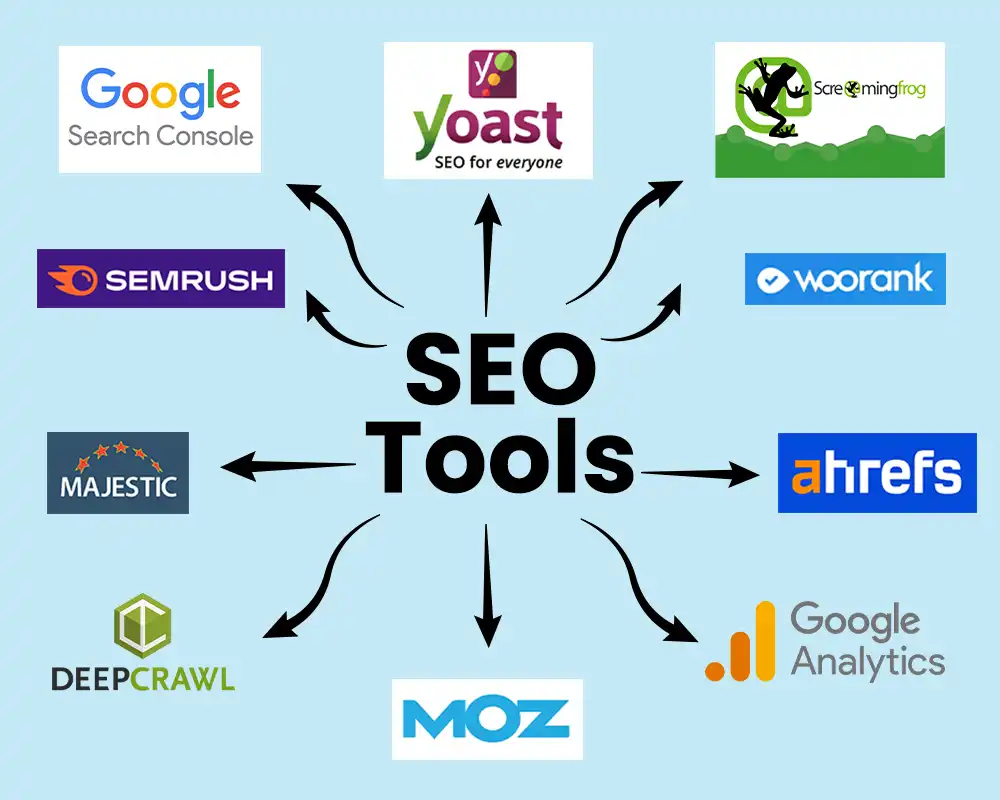
Measuring voice search performance requires an indirect approach since no platform provides a dedicated voice search analytics filter. A combination of tools and interpretation methods gives you the clearest picture.
Research and Keyword Tools
| Tool | Primary Use for India VSO | Cost |
| Google Search Console | Identify question-format queries, track featured snippet wins, monitor regional language traffic | Free |
| Answer The Public | Discover conversational question clusters in Hindi and English | Free / Paid |
| AlsoAsked | Map question trees for topic clusters across languages | Free tier available |
| SEMrush | Long-tail question keyword research with India geo-targeting | Paid |
| Ahrefs | Featured snippet tracking, competitor snippet analysis | Paid |
| Nightwatch | Voice-specific rank tracking (tracks position 0) | Paid |
| BrightLocal | Local SEO audit for citation and GBP performance | Paid |
| Google PageSpeed Insights | Mobile speed scores — critical for voice ranking | Free |
| Schema.org Markup Validator | Validate all structured data implementations | Free |
| Google Structured Data Testing Tool | Test FAQ, LocalBusiness, Speakable schema | Free |
Inferring Voice Traffic from Google Search Console
Follow this process to identify voice search traffic patterns in your existing data:
- Open Search Console → Performance → Search Results
- Filter: Query contains “how”, “what”, “where”, “why”, “when”, “which” — run each separately
- Then repeat with Hindi question words: “kya”, “kaise”, “kahan”, “kaun”, “kyun”
- Sort by Impressions — high-impression, low-CTR queries often indicate featured snippet wins (voice answer, no click)
- Identify queries averaging 5+ words — these are your likely voice queries
- Check which pages rank for these queries and analyze their current format — do they have the inverted pyramid, FAQ structure, and schema?
- Set up quarterly comparison reports to track growth in question-format query impressions as you optimize
Voice Testing Protocol
Test your voice search presence manually using the following protocol:
- Use an Android device with Google Assistant, an iPhone with Siri, and an Amazon Echo/smart speaker
- Ask the 10 most common questions your customers ask, in English and in Hindi
- Ask 5 local intent queries: “[Business type] near me in [your city]”
- Note which results are read aloud — is your business mentioned? Is a competitor?
- Ask the same questions from different locations within your service area
- Repeat this test monthly and track improvement over time
The 90-Day Voice Search Optimization Roadmap for India
Implementation should be phased to deliver early wins while building toward comprehensive voice search coverage. This 90-day roadmap is designed for Indian businesses of any size:
Days 1-30: Foundation
| MONTH 1 FOCUS Audit → Claim → Fix technical issues → Quick wins on existing pages |
- Conduct a full voice search audit: Test 20 common customer queries on Google Assistant, Siri, and Alexa in both English and Hindi
- Claim and complete Google Business Profile: Dual-script business name, all categories, hours, services, photos, Q&A section
- Check NAP consistency: Audit your business listings on Justdial, Sulekha, IndiaMart, and other relevant directories
- Technical baseline: Run PageSpeed Insights on your top 5 pages; target LCP under 2.5 seconds on mobile
- Install HTTPS if not already done
- Implement FAQPage schema on your top 3 most-trafficked pages
- Identify your top 10 featured snippet opportunities using Search Console question-word filter
Days 31-60: Content and Keyword Expansion
| MONTH 2 FOCUS Content creation → Hindi optimization → Featured snippet targeting |
- Create or rewrite your top 5 service/product pages using the Inverted Pyramid format with embedded FAQs
- Add Hindi FAQ sections to all major pages — 10-15 questions per page in conversational Hindi
- Build 2-3 hyper-local landing pages for your primary service areas with local landmarks, directions, and local voice-query FAQ sections
- Implement LocalBusiness schema with regional language address fields
- Create your first “Complete Guide” or “Ultimate Guide” long-form piece targeting a high-volume question cluster in your industry
- Add Speakable schema to all FAQ sections and featured snippet target paragraphs
- Start building GBP posts weekly, phrased as answers to common voice queries
Days 61-90: Advanced Optimization and Measurement
| MONTH 3 FOCUS Regional languages → Voice testing → Measurement framework |
- Launch Tamil, Telugu, or Bengali FAQ content for any of these languages relevant to your market
- Conduct the full voice testing protocol (Section 8.3) — document all results
- Set up your Search Console question-word filter reports and save them for quarterly comparison
- Implement HowTo schema on any process-related content (“How to apply for X”, “Steps to book Y”)
- Run a competitor analysis: test what answers voice assistants give for your industry’s top 10 queries. If a competitor is being cited, analyze their page structure and schema
- Review and update all GBP listings with any seasonal information relevant to the coming quarter (festival hours, seasonal services)
- Set up monthly voice search manual testing schedule
Common Voice Search Mistakes Indian Businesses Make

Awareness of common errors is as valuable as knowing best practices. These are the most frequently observed mistakes in Indian voice search optimization:
| Mistake | Why It Hurts | The Fix |
| English-only content strategy | Over 50% of Indian voice searches are in Hindi and regional languages — English-only sites miss most of this traffic | Create FAQ sections and key pages in Hindi; expand to other regional languages based on your target market |
| Machine translation for Hindi content | Machine-translated Hindi sounds unnatural and will not match how users speak their voice queries | Use native Hindi speakers for content creation or review machine-translated drafts thoroughly |
| No FAQPage schema implementation | Without schema, search engines cannot efficiently extract your Q&A content for voice answers | Add FAQPage schema to all pages with FAQ sections — this is the single highest-ROI schema type for voice |
| Ignoring Tier-2/3 city keywords | Cities like Indore, Surat, Patna, Coimbatore see 300%+ voice growth — most businesses only optimize for metros | Create location-specific pages for all cities in your service area, not just Delhi/Mumbai/Bangalore |
| Slow mobile site | Voice search results load 52% faster than average pages; a slow site cannot rank for voice | Target LCP under 2.5s on 4G Indian mobile connections; use Indian CDN edge servers |
| No Google Business Profile optimization | Most local voice queries resolve via GBP data — incomplete profiles result in competitor citations | Complete all GBP fields, add dual-script name, and post weekly voice-query-formatted updates |
| Keyword-stuffed, non-conversational content | Voice assistants skip content that reads like it was written for text search; they need conversational, readable prose | Audit your top pages for conversational readability; rewrite using the Inverted Pyramid format |
| No Hinglish keyword coverage | Urban Indian voice searches constantly blend Hindi and English — targeting neither language captures only a fraction | Research and target Hinglish query variants alongside pure Hindi and English versions |
The Future of Voice Search in India — What to Prepare For

Voice search in India is still in its growth phase. The trends emerging now will define the landscape for the next three to five years. Businesses that build for these directions today will have a significant advantage as the market matures.
AI-Powered Conversational Search
Google is transitioning from Google Assistant to Gemini as its primary voice engine in 2026. Gemini’s generative AI capabilities enable multi-turn voice conversations — a user can ask a follow-up question without repeating context. This changes how answers are assembled: Gemini can synthesize information from multiple sources, not just read a single featured snippet.
Implication: Content authority and comprehensiveness become more important, not less. Sites that thoroughly cover a topic (covering the 2,300+ word benchmark) will be more likely to be cited as a source in multi-turn AI voice conversations.
Voice Commerce in India
Voice-driven shopping globally is projected to exceed $40 billion by 2026, with a CAGR of approximately 25%. In India, voice commerce is nascent but accelerating. BigBasket’s Hindi voice shopping and Flipkart’s multilingual voice search are early indicators of where the market is heading. Businesses with physical products should:
- Ensure product schema is implemented with price, availability, and review data
- Optimize product descriptions for voice-query intent (“best for,” “works well for”) not just feature lists
- Consider building Alexa Skills or Google Actions for high-frequency purchase categories
- Enable frictionless reorder flows that can be initiated by voice command
Bhasha AI and Regional Language Explosion
The Government of India’s Bhashini project — a national language technology platform — is enabling real-time translation across Indian languages for digital services. As AI models become more accurate in Bhojpuri, Kannada, Assamese, and other languages beyond the top tier, the addressable voice search market in India will expand dramatically.
Businesses serving regional markets (Assam, Odisha, Chhattisgarh, etc.) should begin investing in regional language content now, before these markets are contested by larger competitors.
IoT and Smart Home Integration
The Indian smart speaker market is growing at a CAGR of over 20%. As Amazon Echo and Google Nest penetration increases in Indian upper-middle-class households, smart home voice search will add a new channel. This channel is particularly relevant for home services, grocery, utilities, and entertainment queries.
Privacy and Trust
As voice-enabled devices become ubiquitous, privacy concerns will grow. India’s Digital Personal Data Protection Act (DPDPA) of 2023 creates new obligations around data collection from voice interactions. Businesses should ensure their privacy policies clearly address voice data, and should communicate data protection practices to build user trust — a factor increasingly weighted in how AI assistants recommend businesses.
The Complete Voice Search Optimization Checklist for India
Use this master checklist to audit your current voice search readiness and track implementation progress:
Keyword Research & Content Strategy
- Researched question-based long-tail keywords in English, Hindi, and relevant regional languages
- Identified Hinglish query variants for top 20 target keywords
- Created or audited FAQ sections on all major pages (min. 10 Q&As per page)
- Written conversational content using Inverted Pyramid format (answer first, detail second)
- Produced at least one long-form guide (2,000+ words) for primary keyword cluster
- Published location-specific pages for all service cities with local landmark references
Local SEO
- Claimed and fully completed Google Business Profile with dual-script business name
- NAP consistent across all Indian directories (Justdial, Sulekha, IndiaMart, Practo)
- Added Q&A section to GBP with 10+ common voice query answers
- Publishing weekly GBP posts formatted as voice query answers
- Claimed Apple Maps and Bing Places listings
- Actively generating reviews in Hindi and regional languages
Technical SEO
- HTTPS installed and no mixed content warnings
- Mobile LCP under 2.5 seconds on 4G Indian connection
- Core Web Vitals passing (LCP, INP, CLS) — verified in Search Console
- Mobile-first responsive design with no hidden content on mobile
- No intrusive interstitials on mobile pages
Schema Markup
- FAQPage schema on all pages with FAQ sections
- LocalBusiness schema with complete address, hours, services, and @language
- Speakable schema on featured snippet target paragraphs and FAQ answers
- HowTo schema on process/tutorial content
- Product schema on all e-commerce product pages
- Review/AggregateRating schema on business and product pages
- All schema validated with Schema.org Markup Validator
Multilingual Optimization
- Hindi FAQ sections published on top 5 pages (written by native speakers)
- Regional language pages published for any non-Hindi dominant markets served
- Language-specific meta descriptions, title tags, and image alt texts
- hreflang tags implemented correctly for multilingual page variants
- Hinglish keyword variants included in FAQ questions and GBP posts
Measurement and Iteration
- Search Console question-word filter reports set up and saved
- Monthly manual voice testing protocol scheduled and documented
- Quarterly featured snippet audit planned
- Competitor voice search audit completed
- Baseline measurements recorded for all key metrics
| The Future of Search in India Is Spoken With 65% of Indian internet users already using voice search and the market growing 3× faster than text search, voice optimization is no longer a future consideration — it is a present competitive necessity. The businesses that invest in conversational content, multilingual FAQ structures, local SEO, and technical schema today will be the brands that voice assistants recommend tomorrow. Optimize for voice. Speak your customers’ language. Be the answer. |